

Airdrops
Airdrops are free distributions of cryptocurrency tokens to wallets, often used to promote projects, reward users, or encourage adoption.
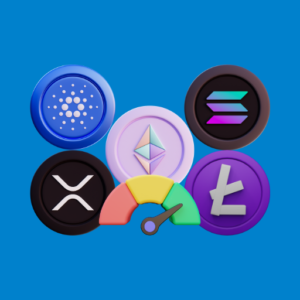
Altcoin season
Altcoin season is a market phase when alternative cryptocurrencies outperform Bitcoin, often seeing rapid price increases.

Altcoins
The word “altcoin” stands for alternative coin. It refers to any cryptocurrency that is not Bitcoin.

AML (Anti-Money Laundering)
AML (Anti-Money Laundering) refers to rules and procedures that prevent illegal funds from being hidden or moved through financial systems.

Automated Market Makers (AMM)
Automated Market Makers (AMMs) are DeFi protocols that use liquidity pools and algorithms instead of order books to enable token trading.
Bitcoin
Bitcoin is a decentralized digital currency that enables secure peer-to-peer transactions without relying on a central authority.

Bitcoin halving
Bitcoin halving is a scheduled event where mining rewards are cut in half, reducing new supply and controlling inflation.

Blockchain
Think of blockchain as a public notebook that everyone owns a copy of. Whatever gets written in it is permanent and visible to all.

Blockchain consensus mechanisms
A consensus mechanism is a method for validating transactions and securing a blockchain without relying on a central authority.

Blockchain Forks
Blockchain forks are splits in a blockchain’s code or history, creating separate versions; either temporary (soft fork) or permanent (hard fork).

Blockchain Layers
Blockchain layers are the different levels of a blockchain ecosystem, typically including Layer 1 (base network), Layer 2 (scaling), and Layer 3 (applications).

Blockchain Network
A blockchain network is a system of computers connected to each other that follow the same set of rules to record, share, and validate transactions.

Blockchain Nodes
A node is simply a computer that participates in a blockchain network. Each node stores a copy of the blockchain and helps verify transactions.

Blockchain Protocol
A blockchain protocol is the set of rules and standards that govern how a blockchain network operates, validates transactions, and reaches consensus.

Blockchain Security
Blockchain security is the protection of blockchain networks and assets against attacks, fraud, and vulnerabilities using cryptography and consensus mechanisms.

Buy-Borrow-Die Strategy
Buy-Borrow-Die is a wealth strategy where assets are bought, borrowed against for cash, and passed on without selling to defer taxes.
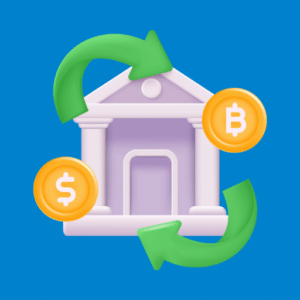
CeFi
CeFi (Centralized Finance) refers to financial services in crypto that are managed by centralized companies acting as intermediaries for users.
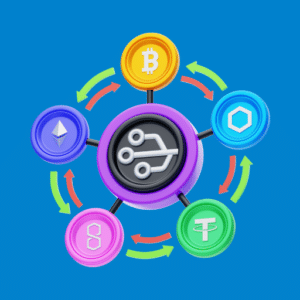
CEXs (Centralized Exchanges)
Centralized exchanges (CEXs) are platforms run by companies that facilitate crypto trading by acting as intermediaries between buyers and sellers.

Cross-Chain Bridges
Cross-chain bridges let users move assets or data between different blockchains, enabling interoperability across otherwise separate networks.

Crypto Arbitrage
Crypto arbitrage is exploiting price differences of cryptocurrency assets across markets to buy low and sell high for profit.

Crypto Cards
Crypto cards are payment cards linked to crypto wallets that allow users to spend cryptocurrency in everyday transactions by converting it to fiat at checkout.
Crypto Coins
Crypto coins are digital assets native to their own blockchains, used for payments, transactions, or network operations.

Crypto Derivatives
Crypto derivatives are financial contracts whose value is based on the price of cryptocurrencies, such as futures, options, and swaps.

Crypto Environmental Considerations
Crypto environmental considerations refer to the energy use, carbon footprint, and sustainability impacts associated with cryptocurrency activity and networks.
Crypto ETFs
Crypto ETFs are exchange-traded funds that track the price of cryptocurrencies, letting investors gain exposure without directly owning the assets.

Crypto Investing
Crypto investing is the practice of allocating capital into cryptocurrencies or blockchain projects with the expectation of long-term value growth.

Crypto Mining
Crypto mining is the process of using computing power to validate blockchain transactions and earn cryptocurrency rewards.

Crypto Regulations
Crypto regulations are government rules and legal frameworks that govern the use, trading, taxation, and compliance of cryptocurrencies and related services.

Crypto Slang
Crypto slang is informal language used in crypto communities to describe trends, behaviors, and market events (e.g. HODL, FOMO, degen, etc.).

Crypto Swaps
Crypto swaps are the direct exchange of one cryptocurrency for another, typically through decentralized exchanges or automated protocols without intermediaries.

Crypto Tax Optimization
Crypto tax optimization is the strategic management of trades and holdings to reduce taxable events and overall tax liability within legal rules.

Crypto Taxes
Crypto taxes are government-imposed taxes on cryptocurrency activities such as trading, selling, earning rewards, or spending digital assets.

Crypto Tokens
Crypto tokens are digital assets built on existing blockchains that represent value, access, or utility within a specific project or ecosystem.
Crypto Trading
Crypto trading is the buying and selling of cryptocurrencies to profit from price movements in the market.
Crypto Wallets
A crypto wallet doesn’t store coins like a piggy bank. Instead, it keeps keys that let you access your crypto on the blockchain.

Crypto-backed Loans
Crypto-backed loans are loans where borrowers use cryptocurrency as collateral to receive fiat or stablecoin funds without selling their assets.

Cryptocurrency
Cryptocurrency, often called “crypto,” is a form of digital currency that uses cryptography (advanced math and code) to keep it secure.

Cryptography
Cryptography is the science of securing information using mathematical techniques to protect data, ensure privacy, and verify authenticity.

Custody
Custody in crypto is the secure storage and management of private keys or assets, handled either by the user (self-custody) or a third party.

DAOs
A DAO is an organization governed by code and community members rather than a central authority.

dApps
dApps are decentralized applications that run on blockchains, using smart contracts to operate without central control or single points of failure.

Decentralization
Decentralization is the distribution of control and decision-making across a network instead of a single central authority.

DeFi
DeFi stands for Decentralized Finance. It refers to a collection of applications and platforms built on blockchain that allow people to transact without banks.

DeFi Protocols
DeFi protocols are blockchain-based apps that offer financial services like lending, trading, and earning interest without traditional intermediaries.

Deflation
Deflation is a decrease in the overall supply of money or assets, often increasing their scarcity and potential value over time.

Democracy
Democracy is a system of government where power is held by the people, who exercise it directly or through elected representatives.

DePIN (Decentralized Physical Infrastructure Networks)
DePIN (Decentralized Physical Infrastructure Networks) are blockchain-based systems that coordinate real-world infrastructure using token incentives.

DEX Aggregator
A DEX aggregator is a platform that sources liquidity from multiple decentralized exchanges to find the best prices and lowest slippage for trades.

DEXs (Decentralized Exchanges)
DEXs are decentralized exchanges that let users trade cryptocurrencies directly from their wallets using smart contracts, without a central authority.

Digital currency
Digital currency is any form of money that exists electronically and can be used for transactions, like cryptocurrencies and government-issued digital money.

Digital Scarcity
Digital scarcity is the concept of limiting the supply of digital assets so they cannot be easily duplicated or inflated, giving them value.

Digital Signatures
Digital signatures are cryptographic proofs that verify the authenticity and integrity of digital messages or blockchain transactions.
Ethereum
Ethereum is a decentralized blockchain platform that runs smart contracts and dApps, using its native cryptocurrency (ETH) for transactions and fees.

Ethereum Virtual Machine (EVM)
EVM (Ethereum Virtual Machine) is the software environment that executes smart contracts and decentralized applications on compatible blockchains.
Fiat currency
Fiat currency is government-issued money, like dollars, that is not backed by a physical commodity but derives value from trust in the issuing authority.

Flash Loan Arbitrage
Flash loan arbitrage is using uncollateralized loans in a single transaction to exploit price differences across DeFi markets and repay instantly.

Flash Loans
Flash loans are uncollateralized crypto loans that must be borrowed and repaid within one blockchain transaction, often used in DeFi strategies.

GameFi
GameFi is the combination of gaming and decentralized finance, where players earn crypto or tokens through gameplay and in-game economic systems.

Gas Fees
Gas fees are transaction costs paid to network validators to process and secure operations on a blockchain, varying with demand and complexity.

Governance
Governance in crypto is how decisions about a blockchain or protocol are made, often through token holders voting on changes and proposals.

Governance Tokens
Governance tokens are cryptocurrencies that give holders voting power to influence decisions, upgrades, and policies within a blockchain protocol or DAO.

Hashing
Hashing is the process of converting data into a fixed-length code using a cryptographic function, ensuring data integrity and security.

ICOs (Initial Coin Offerings)
ICOs (Initial Coin Offerings) are fundraising events where new crypto projects sell tokens to investors to raise capital for development.

IDOs (Initial DEX Offerings)
IDOs (Initial DEX Offerings) are token launches on decentralized exchanges, allowing projects to raise funds directly from users without intermediaries.

IEOs (Initial Exchange Offerings)
IEOs (Initial Exchange Offerings) are token sales conducted on crypto exchanges, which handle fundraising, listing, and investor access.

Impermanent Loss
Impermanent loss is the temporary reduction in value liquidity providers face when token prices change compared to simply holding the assets.

Inflation
Inflation is the increase in prices over time that reduces the purchasing power of money.

KYC (Know Your Customer)
KYC (Know Your Customer) is the identity verification process exchanges use to confirm users and comply with financial regulations.

Layer 0 Blockchain
Layer 0 blockchain is the underlying infrastructure that connects and supports multiple blockchains, enabling communication and interoperability between them.

Layer 1 Blockchain
Layer 1 blockchain is the base network of a blockchain system that processes transactions and provides security without relying on another chain.

Layer 2 Blockchain
Layer 2 blockchain is a secondary protocol built on top of a Layer 1 chain to improve scalability, reduce fees, and speed up transactions.

Layer 3 Blockchain
Layer 3 blockchain refers to application-level protocols built on top of Layer 1 and Layer 2, focusing on user-facing apps and interoperability between systems.

Lending and Borrowing Protocols
Lending and borrowing protocols are DeFi platforms where users supply crypto to earn interest or borrow assets by providing collateral.

Liquid Staking
Liquid staking is a process where users stake crypto to secure a network while receiving a tradable token that represents their staked assets.

Liquidation
Liquidation is the forced selling of a borrower’s collateral when its value falls below required thresholds in a loan or trading position.

Liquidity
Liquidity is the ease with which an asset can be bought or sold without significantly affecting its market price.

Liquidity Mining
Liquidity mining is the process of providing tokens to a DeFi platform’s liquidity pool in exchange for rewards.

Liquidity Pools
Liquidity pools are collections of crypto assets locked in smart contracts that enable decentralized trading by providing liquidity to exchanges.

Liquidity Providing
Liquidity providing is supplying crypto assets to a pool on a decentralized exchange so others can trade, earning a share of trading fees in return.

litepaper
A litepaper is a shorter, simplified version of a whitepaper that outlines a crypto project’s key ideas, use case, and value proposition.

Loan-to-Value (LTV)
Loan-to-Value (LTV) is the ratio of a loan amount to the value of the collateral securing it, used to measure lending risk.

Market Capitalization
Market capitalization is the total value of a cryptocurrency or company, calculated by multiplying its price by the circulating supply or shares outstanding.

Meme coins
Meme coins are cryptocurrencies inspired by internet jokes, viral content, or pop culture references.

Metaverse
The metaverse is a shared virtual digital environment where users interact, socialize, work, and trade using immersive technologies and digital assets.

Minting
Minting is the process of creating new tokens or NFTs on a blockchain, recording them on-chain and adding them to circulation.

Money Lending
Money lending is the act of providing funds to borrowers with the expectation of repayment, usually with interest over time.

NFTs
An NFT is a unique digital asset stored on a blockchain that proves ownership of something.

On-ramps and Off-ramps
On-ramps are services that let users convert fiat money into crypto, while off-ramps let users convert crypto back into fiat currency.

Oracles
A crypto oracle is a service that feeds external real-world data into blockchains so smart contracts can react to off-chain events.

Order book
An order book is a real-time list of buy and sell orders for an asset, showing market depth and current supply and demand.

Ownership
Ownership in crypto means control over assets via private keys, allowing users to hold, transfer, or manage funds without intermediaries.

Peer-to-Peer systems
Peer-to-peer (P2P) systems are decentralized networks where participants (peers) directly share data or resources without a central server.

Permissionless vs Permissioned Blockchains
Permissionless blockchains are open to all users, while permissioned blockchains restrict access to approved participants for control and privacy.

Play-to-Earn (P2E)
Play-to-Earn (P2E) is a gaming model where players earn crypto or tokens by playing games and completing in-game activities.

Privacy coins
Privacy coins are digital currencies that hide transaction information, such as the sender, receiver, and amount.

Privacy vs Pseudonymity vs Anonymity
Privacy hides transaction details, pseudonymity hides real identity behind a public address, and anonymity makes actions unlinkable to any identity at all.

Private Keys
Private keys are secret cryptographic codes that give users full control over their crypto assets and are used to sign and authorize transactions.

Proof of History
Proof of History is a cryptographic timekeeping method used by Solana to order transactions efficiently before they are processed by the network.

Proof of Stake
Proof of Stake is a consensus method where validators stake tokens to secure the network and earn rewards for validating transactions.

Proof of Work
Proof of Work (PoW) is a consensus mechanism where miners use computing power to validate transactions and secure the blockchain.

Real-World Assets (RWAs)
Real-World Assets (RWAs) are physical or traditional financial assets, like real estate or bonds, represented and traded on blockchain networks.

Recursive Lending (or Looping)
Recursive lending (or looping) is a DeFi strategy where users repeatedly borrow and redeposit assets as collateral to amplify exposure and yield.

Satoshi Nakamoto
Satoshi Nakamoto is the pseudonymous individual or group who created Bitcoin and authored its original whitepaper.

Scalability
Scalability is the ability of a blockchain or system to handle increasing numbers of transactions or users efficiently without performance loss.

Security Tokens
Security tokens are blockchain-based assets that represent ownership in real-world financial assets and are regulated like traditional securities.
Seed phrases
Seed phrases are a set of words that back up and restore a crypto wallet, giving full access to its funds if the private keys are lost.

Semi-Fungible Tokens (SFTs)
Semi-fungible tokens (SFTs) are blockchain assets that start as fungible tokens but can become unique items after certain conditions are met.

Smart Contracts
A smart contract is a self-executing computer program deployed on a blockchain. It contains rules and conditions written directly into code.

Social Tokens
Social tokens are cryptocurrencies created by individuals, creators, or communities that represent membership, access, or influence within a social ecosystem.
Solana
Solana is a high-performance blockchain designed for fast, low-cost transactions and scalable decentralized applications.

Soulbound Tokens
Soulbound tokens (SBTs) are non-transferable blockchain tokens that represent identity, reputation, or credentials tied permanently to a specific wallet.

Spot market
The spot market is where assets are bought and sold for immediate delivery and settlement at the current market price.

Staking
Crypto staking is the process of locking up cryptocurrency to support a blockchain network and earn rewards in return.

The Blockchain Trilemma
The blockchain trilemma is the challenge of balancing decentralization, security, and scalability in blockchain systems, where improving one impacts the others.

Tokenization
Tokenization is converting real or digital assets into blockchain tokens, enabling easier transfer, ownership, and fractionalization.

Tokenomics
Tokenomics refers to a cryptocurrency’s economic design, including supply, distribution, utility, and incentives that influence its value and behavior.

Trading Orders
Trading orders are instructions placed on an exchange to buy or sell an asset at a specific price or under certain conditions.
Transaction fees
Transaction fees are charges paid to process and validate transactions on a blockchain network.

Trust
Trust is the confidence that a system, person, or institution will behave reliably and as expected without needing constant verification.

Unspent Transaction Output (UTXO)
UTXO (Unspent Transaction Output) is a blockchain transaction output that has not yet been spent and can be used as input in a future transaction.

Utility Tokens
Utility tokens are cryptocurrencies that provide access to a product or service within a blockchain ecosystem, rather than representing ownership or equity.


Whitepaper
A whitepaper is a detailed document that explains a project’s concept, technology, goals, and how it plans to work or solve a problem.

Yield Farming
Yield farming is a DeFi strategy where users move crypto assets across protocols to maximize returns from interest, rewards, and incentives.