
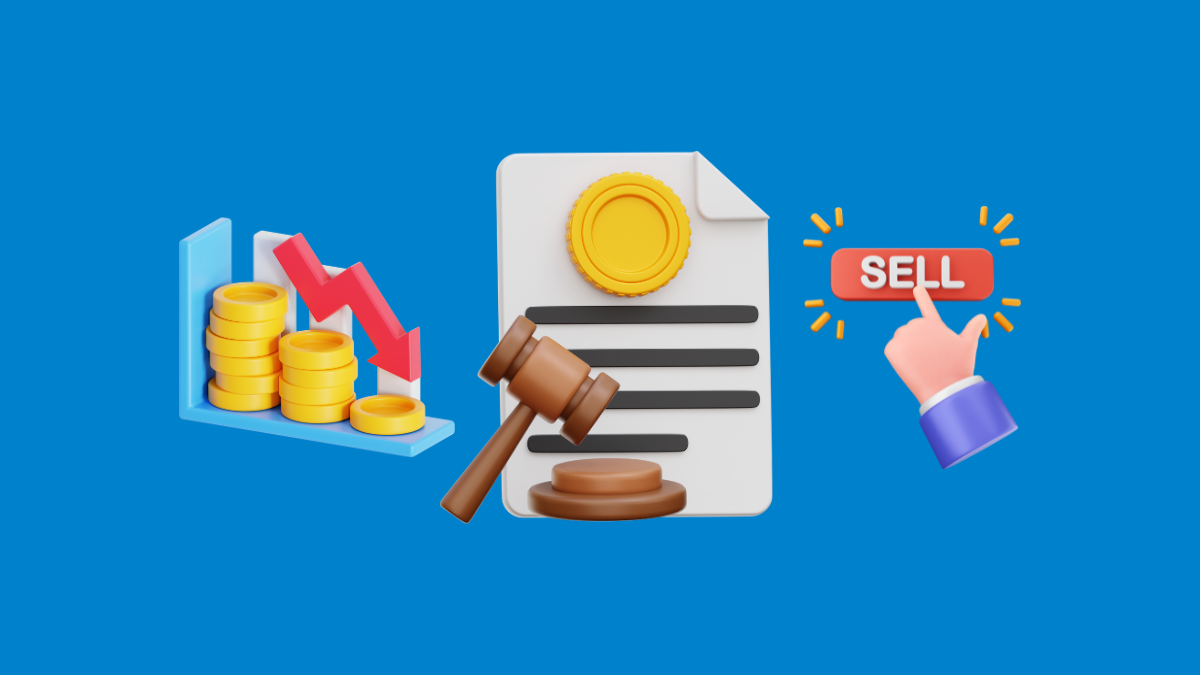
What Liquidation Is
A liquidation happens when your Loan‑to‑Value (LTV) rises above the protocol’s safety threshold.
This can occur because:
- Your collateral drops in price
- The asset you borrowed rises in price
- Interest accumulates and increases your debt
- Protocol parameters change
When this happens, the protocol automatically sells your collateral to repay your loan.
A Simple Example
You deposit $1,000 of ETH as collateral.
You borrow $600 of USDC (60% LTV).
The liquidation threshold is 75%.
If ETH drops to $800, your LTV becomes:
[ 600 / 800 = 75% ]
You are now at the liquidation point.
If ETH drops further, liquidation triggers.
How Liquidation Works
Liquidation is fully automated:
- Your LTV exceeds the liquidation threshold
- A liquidator (bot or user) repays part of your debt
- The protocol sells a portion of your collateral
- The liquidator receives a bonus (liquidation penalty)
- Your position becomes safe again; or is fully closed
This ensures the protocol stays solvent.
Key Terms
- Collateral — the asset you deposit
- Debt — what you borrowed
- LTV — debt divided by collateral value
- Liquidation threshold — the LTV at which liquidation begins
- Liquidation penalty — fee taken from your collateral
Understanding these terms is essential for safe borrowing.
Why Liquidation Happens
Liquidation protects the protocol and lenders from:
- Borrowers defaulting
- Collateral becoming insufficient
- Market crashes
- Price manipulation
Without liquidation, lending markets would collapse during volatility.
What You Lose in a Liquidation
When liquidation occurs, you lose:
- A portion of your collateral
- A liquidation penalty (often 5–15%)
- Potential upside if the collateral rebounds
- Gas fees (in some cases)
Liquidation is costly and should be avoided whenever possible.
How to Avoid Liquidation
Borrowers can reduce risk by:
- Keeping LTV well below the threshold
- Using stablecoins as collateral
- Monitoring markets during volatility
- Setting up alerts for price drops
- Adding collateral when needed
- Repaying part of the loan early
Risk management is everything in DeFi DeFiDeFi stands for Decentralized Finance. It refers to a collection of applications and platforms built on blockchain that allow people to transact without banks.Keep learning.
Types of Liquidation Models
Different protocols use different liquidation mechanisms:
- Partial liquidation — only part of your position is liquidated
- Full liquidation — entire position is closed
- Auction‑based liquidation — used by MakerDAO
- Dutch auctions — price decreases until filled
- Keeper‑based systems — bots compete to liquidate
Each model balances fairness, efficiency, and protocol safety.
Liquidation vs Margin Call
| Feature | Liquidation | Margin Call |
|---|---|---|
| Trigger | Automatic | Warning to add collateral |
| Action | Collateral sold | User intervention required |
| Control | None | User can respond |
| Speed | Instant | Depends on platform |
DeFi has no margin calls; liquidation is immediate.
The tags found in our glossary are there to help you better understand presented definitions. They showcase how certain concepts integrate and interact within the ecosystem.
Rectangular tags signal a concept related to Blockchain BlockchainThink of blockchain as a public notebook that everyone owns a copy of. Whatever gets written in it is permanent and visible to all.Keep learning as a technology. Whereas rounded tags represent Cryptocurrency
 CryptocurrencyCryptocurrency, often called “crypto,” is a form of digital currency that uses cryptography (advanced math and code) to keep it secure.Keep learning in more of a financial aspect. You’ll also see rectangular dashed tags for Web3
 Web3Web3 is the idea of a decentralized internet powered by blockchain.Keep learning and rounded dashed tags for DeFiDeFiDeFi stands for Decentralized Finance. It refers to a collection of applications and platforms built on blockchain that allow people to transact without banks.Keep learning specifically.
Learn more about the relationship between all the tags and their respective concept with our Free Interactive Courses.

Liquidity Pools
Liquidity pools are collections of crypto assets locked in smart contracts that enable decentralized trading by providing liquidity to exchanges.
Keep learning
DeFi
DeFi stands for Decentralized Finance. It refers to a collection of applications and platforms built on blockchain that allow people to transact without banks.
Keep learning
Lending and Borrowing Protocols
Lending and borrowing protocols are DeFi platforms where users supply crypto to earn interest or borrow assets by providing collateral.
Keep learning
Yield Farming
Yield farming is a DeFi strategy where users move crypto assets across protocols to maximize returns from interest, rewards, and incentives.
Keep learning