
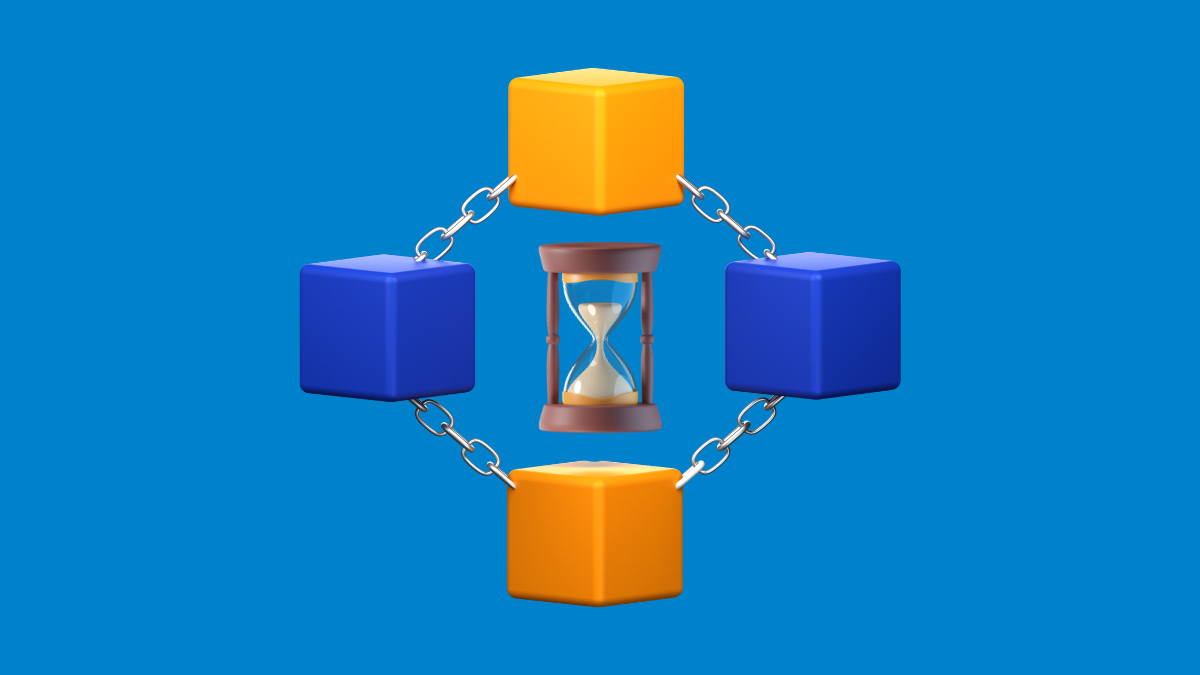
What Proof of History Is
Proof of History is not a consensus mechanism by itself. Instead, it is a cryptographic timestamping system that:
- Orders transactions before consensus
- Creates a historical record that cannot be altered
- Allows validators to process data without waiting for others
PoH works by generating a continuous sequence of hashes, where each hash depends on the previous one. Because this sequence is verifiable and impossible to fake, it acts as a timeline.
Why Proof of History Exists
Traditional blockchains must coordinate heavily to agree on the order of transactions. This slows down throughput. PoH solves this by:
- Providing a built‑in, verifiable order of events
- Reducing the amount of communication required between validators
- Allowing parallel processing of transactions
- Enabling extremely fast block production
In short, PoH lets Solana scale without sacrificing decentralization.
How Proof of History Works
PoH uses a verifiable delay function (VDF); a computation that takes a known amount of time to complete and cannot be parallelized.
Here’s the simplified process:
- A validator repeatedly hashes a value using SHA‑256.
- Each hash depends on the previous one.
- The sequence of hashes forms a cryptographic timeline.
- Events (transactions, messages, etc.) are inserted into this timeline.
- Anyone can verify the timeline by recomputing the sequence.
Because the sequence must be computed step‑by‑step, it proves that a certain amount of time has passed between events.
Key Properties of PoH
- Deterministic ordering — events are placed in a strict, verifiable sequence
- Low communication overhead — validators don’t need to constantly coordinate
- High throughput — thousands of transactions can be processed in parallel
- Fast finality — blocks are produced quickly because ordering is pre‑established
These properties make PoH a foundational part of Solana’s performance.
Proof of History + Proof of Stake
Solana combines PoH with Proof of Stake:
- PoH orders events
- PoS validates and finalizes them
This hybrid model allows Solana to maintain security while achieving high speed.
Strengths of Proof of History
- Massive scalability — reduces bottlenecks in transaction ordering
- Low latency — validators know the order of events instantly
- Efficient block production — less coordination required
- Supports parallel execution — ideal for high‑performance applications
PoH is one of the most innovative contributions to blockchain BlockchainThink of blockchain as a public notebook that everyone owns a copy of. Whatever gets written in it is permanent and visible to all.Keep learning architecture in recent years.
Limitations and Considerations
- Hardware requirements — PoH’s speed demands powerful validator hardware
- Complexity — more intricate than traditional consensus designs
- Centralization concerns — high performance can reduce validator diversity
- Novelty — fewer years of real‑world testing compared to older systems
These trade‑offs reflect Solana’s design philosophy: prioritize performance while maintaining sufficient decentralization.
The tags found in our glossary are there to help you better understand presented definitions. They showcase how certain concepts integrate and interact within the ecosystem.
Rectangular tags signal a concept related to BlockchainBlockchainThink of blockchain as a public notebook that everyone owns a copy of. Whatever gets written in it is permanent and visible to all.Keep learning as a technology. Whereas rounded tags represent Cryptocurrency CryptocurrencyCryptocurrency, often called “crypto,” is a form of digital currency that uses cryptography (advanced math and code) to keep it secure.Keep learning in more of a financial aspect. You’ll also see rectangular dashed tags for Web3
 Web3Web3 is the idea of a decentralized internet powered by blockchain.Keep learning and rounded dashed tags for DeFi
 DeFiDeFi stands for Decentralized Finance. It refers to a collection of applications and platforms built on blockchain that allow people to transact without banks.Keep learning specifically.
Learn more about the relationship between all the tags and their respective concept with our Free Interactive Courses.

Proof of Work
Proof of Work (PoW) is a consensus mechanism where miners use computing power to validate transactions and secure the blockchain.
Keep learning
Tokenomics
Tokenomics refers to a cryptocurrency’s economic design, including supply, distribution, utility, and incentives that influence its value and behavior.
Keep learning
Real-World Assets (RWAs)
Real-World Assets (RWAs) are physical or traditional financial assets, like real estate or bonds, represented and traded on blockchain networks.
Keep learning
Blockchain
Think of blockchain as a public notebook that everyone owns a copy of. Whatever gets written in it is permanent and visible to all.
Keep learning