
What are Centralized Exchanges (CEXs)?
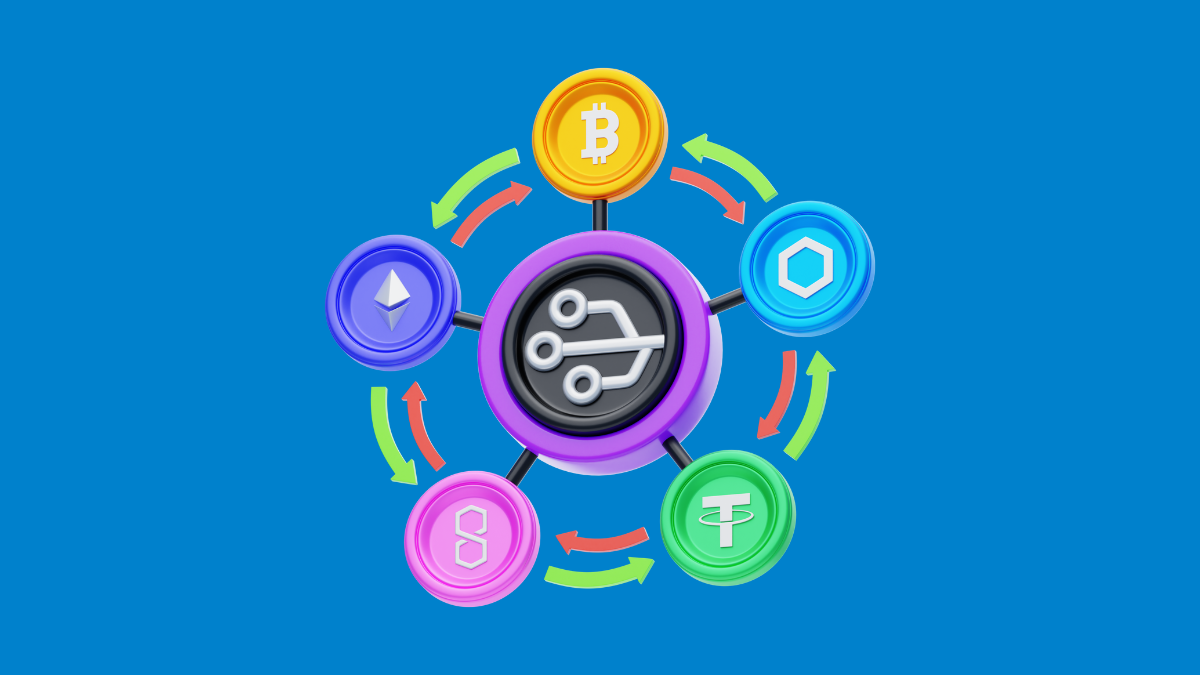
A centralized exchange, or CEX, is a platform where users buy, sell, and trade cryptocurrencies through an intermediary that manages the entire process. Instead of interacting directly with other traders or with the blockchain What is a Blockchain?Think of blockchain as a public notebook that everyone owns a copy of. Whatever gets written in it is permanent and visible to all.Keep learning itself, users place orders on the exchange, and the platform matches them internally. This structure resembles traditional stock exchanges, where a central operator oversees transactions to ensure speed, fairness, and liquidity.
A helpful analogy is to imagine a busy airport. Travelers move through terminals because a central authority organizes flights, schedules, security, and logistics. Without such coordination, the system would be chaotic. A CEX plays a similar role in the crypto world: it organizes the flow of trades, ensures markets remain active, and provides clear interfaces for users who might otherwise find blockchain interactions too complex.
One of the primary advantages of CEXs is convenience. These platforms handle private keys, custody, and technical operations on behalf of users. Someone who has never used crypto before can sign up, complete identity verification, deposit money through a bank card, and immediately start trading. Features like market charts, limit orders, stop-loss tools, and customer support further lower the learning curve. Because the exchange aggregates millions of users, it can offer deep liquidity; meaning trades execute quickly and at predictable prices.
Security is another major element, though it comes in two forms. On the one hand, CEXs invest heavily in cybersecurity, storing most customer funds in cold wallets, employing multi-signature setups, and running around-the-clock monitoring systems. On the other hand, using a centralized platform means giving up personal custody. If the exchange is hacked, mismanages funds, or collapses internally; as seen in the infamous Mt. Gox and FTX cases; users may lose access to their assets. The platform’s strength lies in its infrastructure, but its weakness lies in the trust users must place in it.
Regulations also strongly influence CEXs. Most exchanges require KYC (Know Your Customer) processes to verify user identity and comply with Anti-Money Laundering rules. These measures bring legitimacy and help governments monitor illicit activity, but they reduce privacy and may restrict access in certain regions. Some exchanges obtain licenses similar to those used by traditional financial institutions, adding oversight and consumer protections. This balance between compliance and accessibility shapes how each exchange operates globally.
Another key characteristic of CEXs is that they often go beyond simple spot trading. Many offer staking services, derivatives like futures and options, yield products, lending, and even token launches. These additions create a one-stop ecosystem where users can hold, grow, and manage their portfolios. However, they can also introduce new risks if users don’t fully understand the mechanisms behind leveraged trading or yield-bearing products.
Despite their centralized nature, CEXs play a crucial role in crypto adoption. They serve as the bridge between fiat currencies and digital assets, helping people convert their money into crypto and vice versa. They simplify complex processes, cater to beginners, and maintain high-speed trading environments that would be difficult to replicate on purely decentralized What is Decentralization?Home January 8, 2026 Blockchain, Crypto Decentralization Decentralization is distributing control and decision-making across a network instead of relying on...Keep learning systems.
But the trade-off remains: ease of use comes with a reliance on a third party. Understanding both sides helps users decide how much control they want to keep and how much responsibility they are willing to place in the hands of a centralized operator.
The tags found in our glossary are there to help you better understand presented definitions. They showcase how certain concepts integrate and interact within the ecosystem.
Rectangular tags signal a concept related to BlockchainWhat is a Blockchain?Think of blockchain as a public notebook that everyone owns a copy of. Whatever gets written in it is permanent and visible to all.Keep learning as a technology. Whereas rounded tags represent Cryptocurrency What is Cryptocurrency?Cryptocurrency, often called “crypto,” is a form of digital currency that uses cryptography (advanced math and code) to keep it secure.Keep learning in more of a financial aspect. You’ll also see rectangular dashed tags for Web3
 What is Web3?Web3 is the idea of a decentralized internet powered by blockchain.Keep learning and rounded dashed tags for DeFi
 What is DeFi?DeFi stands for Decentralized Finance. It refers to a collection of applications and platforms built on blockchain that allow people to transact without banks.Keep learning specifically.
Learn more about the relationship between all the tags and their respective concept with our Interactive Mind Map.
What is Bitcoin?
Home January 8, 2026 Bitcoin, Blockchain, Crypto, Whitepaper Bitcoin Bitcoin is a decentralized digital currency that allows peer-to-peer payments without intermediaries, secured by blockchain...
Keep learning
What is Cryptocurrency?
Cryptocurrency, often called “crypto,” is a form of digital currency that uses cryptography (advanced math and code) to keep it secure.
Keep learning
What is Proof of Work?
Home January 8, 2026 Bitcoin, Blockchain, Crypto, Mining Proof of Work Proof of Work is a consensus method where miners solve complex puzzles to...
Keep learning
What are Crypto Wallets?
A crypto wallet doesn’t store coins like a piggy bank. Instead, it keeps keys that let you access your crypto on the blockchain.
Keep learning