What is Web3 What is Web3?Web3 is the idea of a decentralized internet powered by blockchain.Keep learning?
Web3 refers to a new vision of the internet built around decentralization, digital ownership What is Ownership?Ownership in crypto means control over assets via private keys, allowing users to hold, transfer, or manage funds without intermediaries.Keep learning, and user-controlled identity. Instead of relying on large corporations to manage data, accounts, and online interactions, Web3 uses blockchains, smart contracts, and cryptographic systems to let users own their digital assets directly.
A helpful analogy is comparing the internet to a series of eras.
- Web1 (the 1990s) was “read-only” - static pages you could browse but not interact with much.
- Web2 (2000s–present) became “read-write” - social media, apps, and user-generated content, but all controlled by centralized platforms such as Facebook, Google, and Amazon.
- Web3 aims for “read-write-own” - where users keep their assets, identity, and data, and applications run on decentralized networks rather than corporate servers.
At the core of Web3 is the idea that people should control their digital lives in the same way they control physical possessions. With Web2 services, someone else holds the keys: companies can change rules, ban accounts, or lose data. In Web3, your wallet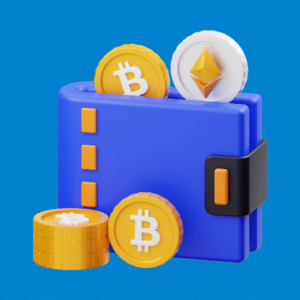 What are Crypto Wallets?A crypto wallet doesn’t store coins like a piggy bank. Instead, it keeps keys that let you access your crypto on the blockchain.Keep learning becomes your identity, storing tokens, credentials, and ownership records that no one else can modify or seize without your consent.
This vision relies on several key technologies:
Blockchains:
Distributed ledgers that store data transparently and securely across many computers. They allow trustless interactions; meaning you don’t need a company or intermediary to verify things.
Smart Contracts:
Programs that run automatically on blockchains. They enable decentralized applications What are dApps?dApps are decentralized applications that run on blockchains, using smart contracts to operate without central control or single points of failure.Keep learning (dApps) to exist without central control. A smart contract can hold funds, manage transactions, or execute rules with no human administrator.
Tokens and Digital Ownership:
Assets like cryptocurrencies, NFTs, governance What is Governance?Governance in crypto is how decisions about a blockchain or protocol are made, often through token holders voting on changes and proposals.Keep learning tokens, or digital certificates represent ownership of something. Instead of a company saying “you own this digital item,” the blockchain
 What is a Blockchain?Think of blockchain as a public notebook that everyone owns a copy of. Whatever gets written in it is permanent and visible to all.Keep learning records it, making ownership portable across platforms.
Decentralized Identity (DID):
Systems that let users authenticate without giving personal data to corporations. Instead of logging in with an email and password, you connect a wallet—you become your own identity provider.
Web3 proponents envision many benefits:
True digital ownership of items, from game assets to domain names.
Financial access without traditional banks or borders.
Peer-to-peer marketplaces run by communities, not corporations.
Interoperable online identities that move freely between apps.
Reduced dependence on centralized servers vulnerable to hacks or censorship.
However, Web3 also faces challenges. Blockchains are still slower and more expensive than centralized services. Users must handle their own security, meaning losing a private key can be catastrophic. And many “decentralized” projects still rely on partially centralized components behind the scenes.
One real-world example of Web3 principles in action is decentralized finance (DeFi What is DeFi?DeFi stands for Decentralized Finance. It refers to a collection of applications and platforms built on blockchain that allow people to transact without banks.Keep learning). Instead of using a bank or brokerage, users interact directly with protocols that let them lend, borrow, or trade assets via automated smart contracts. Another example is blockchain-based gaming, where items earned in one game can potentially move into another or be sold on open markets.
A simple analogy is the difference between renting and owning.
Web2 apps are rented spaces: your data, posts, and digital goods exist only as long as the platform allows it.
Web3 aims to make the internet a place where users truly own their contributions and move freely without relying on centralized landlords.
In short, Web3 represents a shift from platform-owned experiences to user-owned ecosystems. It’s a work in progress, full of experimentation, but it introduces a fundamentally different way of thinking about the internet: an internet where users have control, transparency is built in, and ownership is native to the digital world.
The tags found in our glossary are there to help you better understand presented definitions. They showcase how certain concepts integrate and interact within the ecosystem.
Rectangular tags signal a concept related to BlockchainWhat is a Blockchain?Think of blockchain as a public notebook that everyone owns a copy of. Whatever gets written in it is permanent and visible to all.Keep learning as a technology. Whereas rounded tags represent Cryptocurrency What is Cryptocurrency?Cryptocurrency, often called “crypto,” is a form of digital currency that uses cryptography (advanced math and code) to keep it secure.Keep learning in more of a financial aspect. You’ll also see rectangular dashed tags for Web3
 What is Web3?Web3 is the idea of a decentralized internet powered by blockchain.Keep learning and rounded dashed tags for DeFiWhat is DeFi?DeFi stands for Decentralized Finance. It refers to a collection of applications and platforms built on blockchain that allow people to transact without banks.Keep learning specifically.
Learn more about the relationship between all the tags and their respective concept with our Interactive Mind Map.
What are NFTs?
An NFT is a unique digital asset stored on a blockchain that proves ownership of something.
Keep learning
What are Smart Contracts?
A smart contract is a self-executing computer program deployed on a blockchain. It contains rules and conditions written directly into code.
Keep learning
What are DAOs?
A DAO is an organization governed by code and community members rather than a central authority.
Keep learning
What are Gas Fees?
Gas fees are transaction costs paid to network validators to process and secure operations on a blockchain, varying with demand and complexity.
Keep learning