
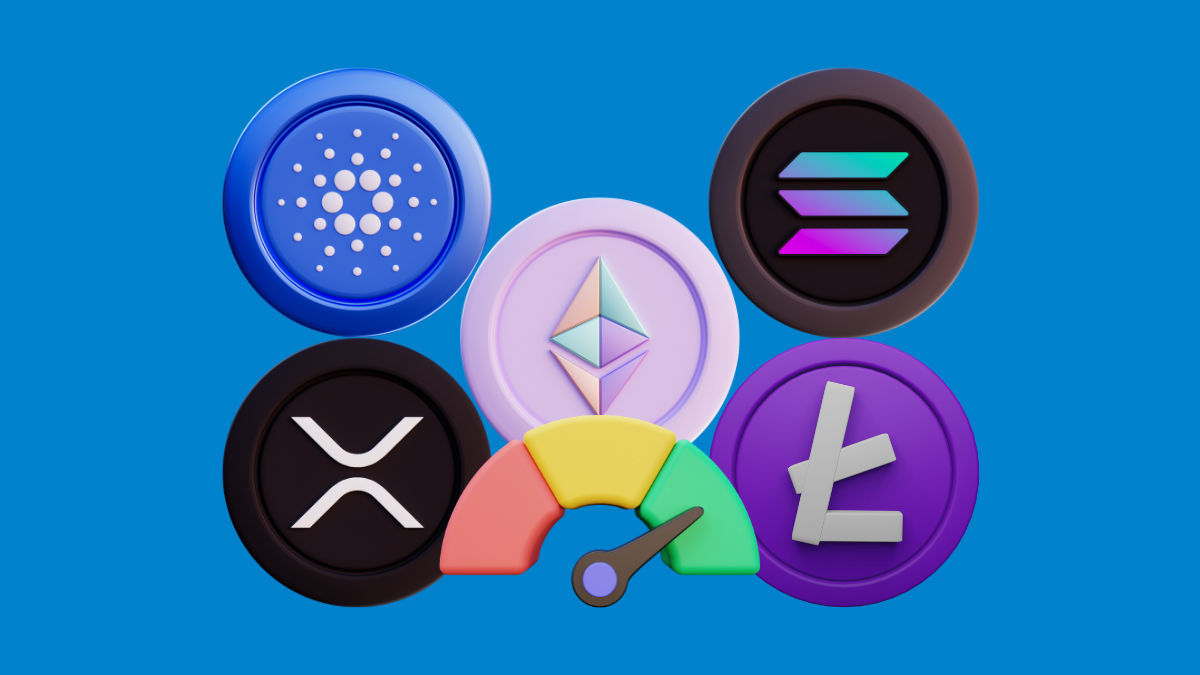
What Is Altcoin Season?
Introduction
If you’ve been in the crypto world for a while, you’ve probably heard traders excitedly talk about “Altcoin Season”; often shortened to “Alt Season.” It’s that thrilling time in the market when alternative cryptocurrencies (altcoins) outperform Bitcoin in price gains and trading volume.
For many investors, Altcoin Season is a chance to find high returns in projects beyond Bitcoin; from Ethereum and Solana to smaller, emerging tokens. But to understand it fully, you need to know why it happens, how to recognize it, and what risks come with it.
What Are Altcoins?
Altcoins are any cryptocurrencies other than Bitcoin. The term covers everything from established blockchains like Ethereum (ETH) to meme coins like Dogecoin (DOGE) and DeFi What is DeFi?DeFi stands for Decentralized Finance. It refers to a collection of applications and platforms built on blockchain that allow people to transact without banks.Keep learning tokens like Aave (AAVE).
While Bitcoin remains the market leader, altcoins often offer unique innovations, such as:
Smart contracts (e.g., Ethereum, Cardano)
Privacy features (e.g., Monero, Zcash)
Speed and scalability improvements (e.g., Solana, Avalanche)
Community-driven memes or culture (e.g., Dogecoin, Shiba Inu)
Each cycle of excitement around these projects contributes to the phenomenon known as Altcoin Season.
What Is Altcoin Season?
Altcoin Season refers to a period in the crypto market when altcoins outperform Bitcoin; both in price appreciation and market dominance.
During this time, investors shift capital from Bitcoin into altcoins, believing they offer higher short-term profit potential. As more people chase gains, altcoin prices surge across the board, often resulting in spectacular rallies.
Altcoin Season isn’t constant; it’s cyclical and tends to happen when:
Bitcoin’s price stabilizes after a big rally.
Market sentiment becomes optimistic.
Traders look for “the next big thing.”
Why Altcoin Season Happens
Several factors contribute to the rise of Altcoin Season:
Bitcoin Consolidation:
After major Bitcoin rallies, its price tends to move sideways. Traders then seek higher returns elsewhere; leading them to altcoins.Increased Risk Appetite:
When confidence in the market is high, investors are more willing to take risks on smaller or newer projects.Innovation and Hype:
New technologies or narratives; like DeFi in 2020, NFTs in 2021, or AI tokens in 2023; often attract waves of attention and investment.Rotation of Profits:
Early investors in Bitcoin take profits and reinvest them into altcoins, causing capital to flow across the market.Market Psychology:
Social media hype, influencer discussions, and community excitement can amplify price moves, creating a feedback loop of enthusiasm and buying pressure.
How to Identify Altcoin Season
There’s even a tool for this: the Altcoin Season Index (from Blockchain Center).
It defines Alt Season as when 75% of the top 50 altcoins outperform Bitcoin over the past 90 days.
Other signs include:
Bitcoin dominance (its share of total crypto market value) dropping.
Sharp price increases in mid- and small-cap coins.
Rising trading volumes on altcoin-focused exchanges.
Trending tokens on social media or news platforms.
Historical Examples
2017 Altcoin Season:
Fueled by the ICO (Initial Coin Offering) boom.
Projects like Ethereum, Ripple (XRP), and Litecoin (LTC) skyrocketed.
Many coins saw gains of over 1,000% before the 2018 crash.
2021 Altcoin Season:
Driven by DeFi, NFTs, and meme coins.
Tokens like Solana (SOL), Avalanche (AVAX), and Dogecoin (DOGE) surged massively.
Retail investors flooded into the market, inspired by social media hype and celebrity endorsements.
How Traders Approach Altcoin Season
Smart traders see Altcoin Season as an opportunity; but also a time to be strategic.
Common approaches include:
Diversification: Spreading investments across several altcoins rather than chasing one.
Rotation Strategy: Moving profits from Bitcoin to large-cap altcoins, then to smaller caps, and back to stable assets.
Technical Analysis: Watching for breakout patterns and volume spikes.
Exit Planning: Knowing when to take profits before the hype fades.
Risks of Altcoin Season
While the potential rewards are high, Altcoin Season also carries significant risks:
Volatility: Prices can rise and fall by 50% or more in days.
Speculation: Many altcoins pump due to hype, not real utility.
Liquidity Traps: Smaller coins can be hard to sell at peak prices.
Scams and Rug Pulls: Rapid hype attracts fraudulent projects.
In short, Altcoin Season can create life-changing profits; but also painful losses for those who enter too late.
How to Stay Safe During Altcoin Season
Do Your Own Research (DYOR): Always check the project’s fundamentals, team, and utility.
Avoid FOMO: Don’t buy just because a token is trending.
Take Profits: Set exit targets and stick to them.
Use Risk Management: Never invest more than you can afford to lose.
Watch Bitcoin Dominance: When it starts rising again, Altcoin Season may be ending.
Conclusion
Altcoin Season is one of the most exciting; and unpredictable; phases in the crypto market. It represents innovation, optimism, and the search for the next major breakthrough beyond Bitcoin.
However, the same energy that drives massive gains can also fuel bubbles and crashes. The key to thriving during Alt Season is balance: embrace the opportunity, but stay grounded in research and risk awareness.
The tags found in our glossary are there to help you better understand presented definitions. They showcase how certain concepts integrate and interact within the ecosystem.
Rectangular tags signal a concept related to Blockchain What is a Blockchain?Think of blockchain as a public notebook that everyone owns a copy of. Whatever gets written in it is permanent and visible to all.Keep learning as a technology. Whereas rounded tags represent Cryptocurrency
 What is Cryptocurrency?Cryptocurrency, often called “crypto,” is a form of digital currency that uses cryptography (advanced math and code) to keep it secure.Keep learning in more of a financial aspect. You’ll also see rectangular dashed tags for Web3
 What is Web3?Web3 is the idea of a decentralized internet powered by blockchain.Keep learning and rounded dashed tags for DeFiWhat is DeFi?DeFi stands for Decentralized Finance. It refers to a collection of applications and platforms built on blockchain that allow people to transact without banks.Keep learning specifically.
Learn more about the relationship between all the tags and their respective concept with our Interactive Mind Map.

What are ICOs (Initial Coin Offerings)?
ICOs (Initial Coin Offerings) are fundraising events where new crypto projects sell tokens to investors to raise capital for development.
Keep learning
What is Proof of Work?
Proof of Work (PoW) is a consensus mechanism where miners use computing power to validate transactions and secure the blockchain.
Keep learning
Crypto Environmental Considerations
Crypto environmental considerations refer to the energy use, carbon footprint, and sustainability impacts associated with cryptocurrency activity and networks.
Keep learning
What is Cryptocurrency?
Cryptocurrency, often called “crypto,” is a form of digital currency that uses cryptography (advanced math and code) to keep it secure.
Keep learning