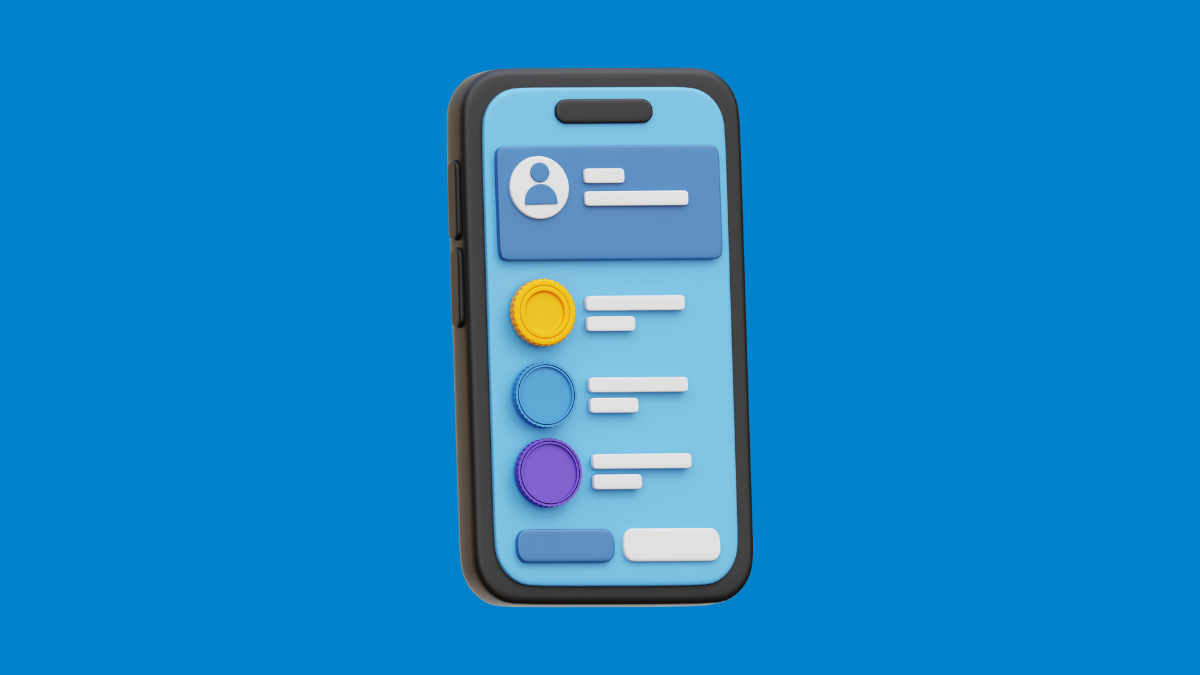
What are dApps?
A dApp, or decentralized DecentralizationDecentralization is the distribution of control and decision-making across a network instead of a single central authority.Keep learning application, is a software application that runs on a blockchain
 BlockchainThink of blockchain as a public notebook that everyone owns a copy of. Whatever gets written in it is permanent and visible to all.Keep learning instead of relying on a centralized server controlled by a single company. The key idea is that the logic, data, and rules of the application are enforced by smart contracts; self-executing programs on the blockchain; rather than by a company that can change or shut down the system at any time.
You can think of a dApp like a vending machine. A traditional app is like a restaurant where the owner takes your order and decides whether to serve you. A vending machine, however, follows strict rules: insert money, push the button, and you automatically get the product. No manager, no permission, no gatekeeper. Smart contracts give dApps that same vending-machine quality; predictable, automatic, and outside the control of a central authority.
How dApps Work
A dApp typically has two parts:
A front end, which looks like a regular website or mobile app.
A back end, made of smart contracts running on a blockchain such as Ethereum, Solana, or Polygon.
Instead of interacting with a company’s database, your wallet Crypto WalletsA crypto wallet doesn’t store coins like a piggy bank. Instead, it keeps keys that let you access your crypto on the blockchain.Keep learning interacts directly with the smart contract. You authorize actions; like sending tokens, minting NFTs, or placing a trade; by signing the transaction with your private key.
Why dApps Matter
Because they run on blockchains, dApps provide features that traditional apps cannot easily offer:
Censorship resistance: No one can block you from using the app if the smart contract is deployed.
Transparency: All transactions and rules are visible on-chain.
Permissionless access: Anyone with a wallet can use the app; no account creation or platform approval required.
User ownership
 OwnershipOwnership in crypto means control over assets via private keys, allowing users to hold, transfer, or manage funds without intermediaries.Keep learning: Assets (tokens, NFTs, positions) stay in your wallet, not on a company’s server.
This flips the traditional online power structure: instead of users relying on platforms, platforms rely on users.
Examples of dApps
Decentralized exchanges: Like Uniswap or GMX, where users trade tokens directly with smart contracts.
Lending platforms: Such as Aave or Compound, allowing users to lend or borrow without banks.
NFT marketplaces: Like OpenSea or Blur, enabling on-chain buying and selling of digital items.
Games: Blockchain games where in-game items are owned as NFTs and can be traded freely.
Identity and social apps: Decentralized profiles, messaging, or social networks built to resist censorship.
Each example highlights the dApp idea: no permission, no intermediaries, and user-controlled assets.
Strengths and Weaknesses
The strengths are clear; freedom, openness, transparency; but dApps also come with challenges:
They depend on blockchain performance, meaning slower transactions during congestion.
Users must manage their own security; losing private keys means losing access.
Some dApps still rely partly on centralized components (servers, APIs, governance
GovernanceGovernance in crypto is how decisions about a blockchain or protocol are made, often through token holders voting on changes and proposals.Keep learning teams), making “decentralization” a spectrum rather than a binary state.
A good analogy is early electricity. At first, not every device could run directly on electrical grids; they needed hybrid systems. Similarly, many dApps today mix decentralized and centralized parts while the infrastructure evolves.
Why dApps Are Significant for the Future
They represent a shift from platform-owned software to user-owned ecosystems. Instead of trusting a corporation to store data or handle assets, users interact with unchangeable code. This transforms apps from businesses that control data into open protocols that anyone can build on, remix, or integrate.
At its core, a dApp is more than a type of software; it’s a new way to design digital services where power, control, and ownership flow outward to the users rather than upward to centralized institutions.
The tags found in our glossary are there to help you better understand presented definitions. They showcase how certain concepts integrate and interact within the ecosystem.
Rectangular tags signal a concept related to BlockchainBlockchainThink of blockchain as a public notebook that everyone owns a copy of. Whatever gets written in it is permanent and visible to all.Keep learning as a technology. Whereas rounded tags represent Cryptocurrency CryptocurrencyCryptocurrency, often called “crypto,” is a form of digital currency that uses cryptography (advanced math and code) to keep it secure.Keep learning in more of a financial aspect. You’ll also see rectangular dashed tags for Web3
 Web3Web3 is the idea of a decentralized internet powered by blockchain.Keep learning and rounded dashed tags for DeFi
 DeFiDeFi stands for Decentralized Finance. It refers to a collection of applications and platforms built on blockchain that allow people to transact without banks.Keep learning specifically.
Learn more about the relationship between all the tags and their respective concept with our Free Interactive Courses.
Semi-Fungible Tokens (SFTs)
Semi-fungible tokens (SFTs) are blockchain assets that start as fungible tokens but can become unique items after certain conditions are met.
Keep learning
Web3
Web3 is the idea of a decentralized internet powered by blockchain.
Keep learning
Play-to-Earn (P2E)
Play-to-Earn (P2E) is a gaming model where players earn crypto or tokens by playing games and completing in-game activities.
Keep learning
NFTs
An NFT is a unique digital asset stored on a blockchain that proves ownership of something.
Keep learning