What are DAOs?
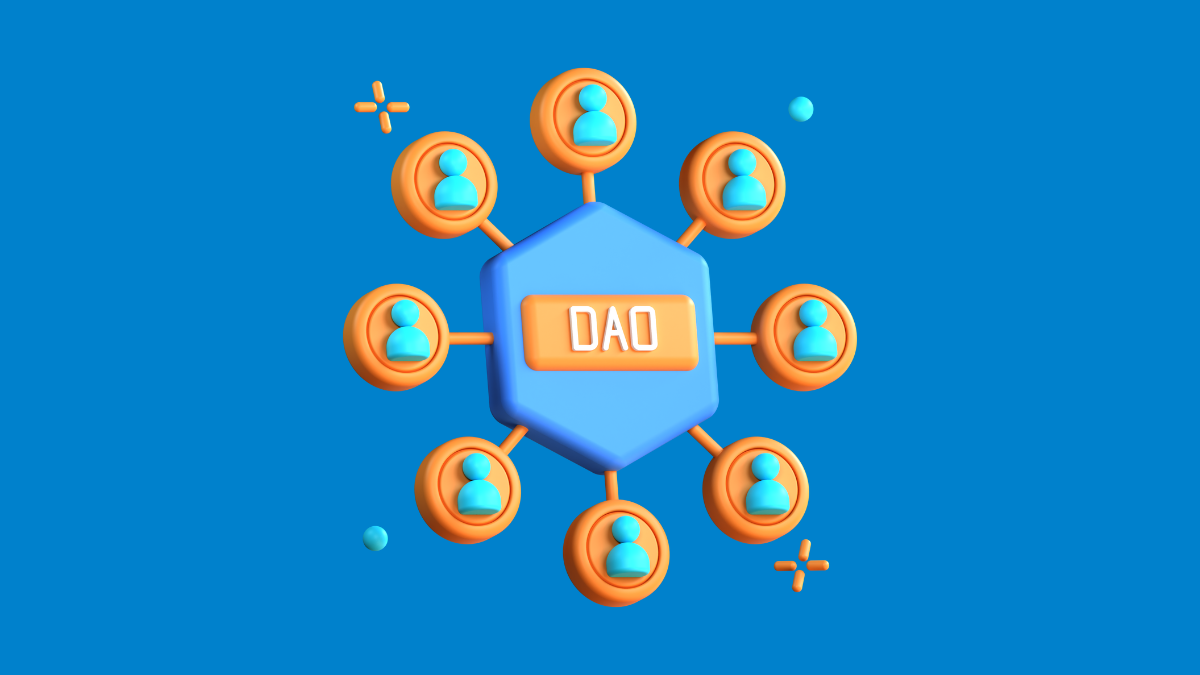
A DAO, or Decentralized Autonomous Organization, is a community-run organization governed by rules written into smart contracts on a blockchain BlockchainThink of blockchain as a public notebook that everyone owns a copy of. Whatever gets written in it is permanent and visible to all.Keep learning. Instead of having a CEO, board of directors, or traditional management structure, decisions in a DAO are made collectively by its members; usually through token-based voting. The idea is to create an organization where no single individual is in charge and where rules cannot be quietly changed behind closed doors.
A simple analogy is comparing a DAO to a group project with a shared, automatic rulebook. In a regular group project, someone usually ends up unofficially leading, deciding tasks, and possibly overruling others. In a DAO, the instructions for how decisions are made are locked in the code from the start. If the group wants to change the rules, they must vote, and the smart contract executes the outcome automatically.
How DAOs Work
A DAO typically includes:
Smart contracts that define rules, actions, and voting mechanics.
A governance
 GovernanceGovernance in crypto is how decisions about a blockchain or protocol are made, often through token holders voting on changes and proposals.Keep learning token that members use to vote on proposals.
A treasury holding funds controlled collectively by the DAO.
A community that creates ideas, submits proposals, and reviews changes.
Nothing happens unless the community approves it. For example, if a DAO wants to fund a new project, adjust its fee structure, hire contributors, or change features, members submit proposals and vote with tokens to decide the outcome.
Why DAOs Matter
DAOs aim to solve a deep problem: traditional organizations depend on trust. You trust leaders to make decisions, handle money responsibly, communicate transparently, and follow rules. But people can be biased, secretive, or corrupt. DAOs replace parts of that trust with verifiable code and public governance.
Some key advantages include:
Transparency: All proposals, votes, and treasury movements are on-chain.
Community control: Power is distributed among members.
Borderless participation: Anyone in the world can join if rules allow.
Automatic execution: Smart contracts carry out decisions without intermediaries.
In many ways, DAOs are an experiment in digital democracy.
Examples of DAO Use Cases
Investment DAOs: Members pool funds to invest in startups, NFTs, or crypto projects.
Protocol DAOs: Major DeFi
DeFiDeFi stands for Decentralized Finance. It refers to a collection of applications and platforms built on blockchain that allow people to transact without banks.Keep learning platforms like Uniswap or Aave use DAOs to govern upgrades.Service DAOs: Groups of contributors offering work; development, marketing, design; under a collective structure.
Collector DAOs: Communities buying rare NFTs or physical items collectively.
Social DAOs: Online clubs with token-gated membership and shared goals.
A good real-world example is the MakerDAO community, which governs the DAI stablecoin through a decentralized process. Another example is ENS DAO, which manages upgrades to the Ethereum Name Service and funds ongoing development.
DAO Challenges
DAOs aren’t perfect, and many issues still need refinement:
Voter participation is often low, with only a small fraction of members actively voting.
Large token holders can dominate, creating imbalances in power.
Smart contract bugs or governance exploits can lead to losses or freezes.
Coordination can be slow, especially when decisions require broad consensus.
One historic example of a failure is The DAO in 2016, one of the first large decentralized organizations. A smart contract vulnerability allowed an attacker to drain its funds, leading to a major crisis that resulted in Ethereum’s famous hard fork. This incident showed how powerful; and risky; DAO structures can be.
The Bigger Picture
DAOs push the idea that the internet can have its own native organizational structure: transparent, collective, and global. They challenge the traditional corporate hierarchy by giving communities actual ownership OwnershipOwnership in crypto means control over assets via private keys, allowing users to hold, transfer, or manage funds without intermediaries.Keep learning and control. While still early and sometimes messy, DAOs represent a blueprint for digital governance where code, not CEOs, enforces the rules.
In essence, a DAO is an experiment in building trustless, programmable collaboration; where human goals meet blockchain automation to create organizations that can run themselves.
The tags found in our glossary are there to help you better understand presented definitions. They showcase how certain concepts integrate and interact within the ecosystem.
Rectangular tags signal a concept related to BlockchainBlockchainThink of blockchain as a public notebook that everyone owns a copy of. Whatever gets written in it is permanent and visible to all.Keep learning as a technology. Whereas rounded tags represent Cryptocurrency CryptocurrencyCryptocurrency, often called “crypto,” is a form of digital currency that uses cryptography (advanced math and code) to keep it secure.Keep learning in more of a financial aspect. You’ll also see rectangular dashed tags for Web3
 Web3Web3 is the idea of a decentralized internet powered by blockchain.Keep learning and rounded dashed tags for DeFi
 DeFiDeFi stands for Decentralized Finance. It refers to a collection of applications and platforms built on blockchain that allow people to transact without banks.Keep learning specifically.
Learn more about the relationship between all the tags and their respective concept with our Free Interactive Courses.
Semi-Fungible Tokens (SFTs)
Semi-fungible tokens (SFTs) are blockchain assets that start as fungible tokens but can become unique items after certain conditions are met.
Keep learning
Web3
Web3 is the idea of a decentralized internet powered by blockchain.
Keep learning
Play-to-Earn (P2E)
Play-to-Earn (P2E) is a gaming model where players earn crypto or tokens by playing games and completing in-game activities.
Keep learning
NFTs
An NFT is a unique digital asset stored on a blockchain that proves ownership of something.
Keep learning