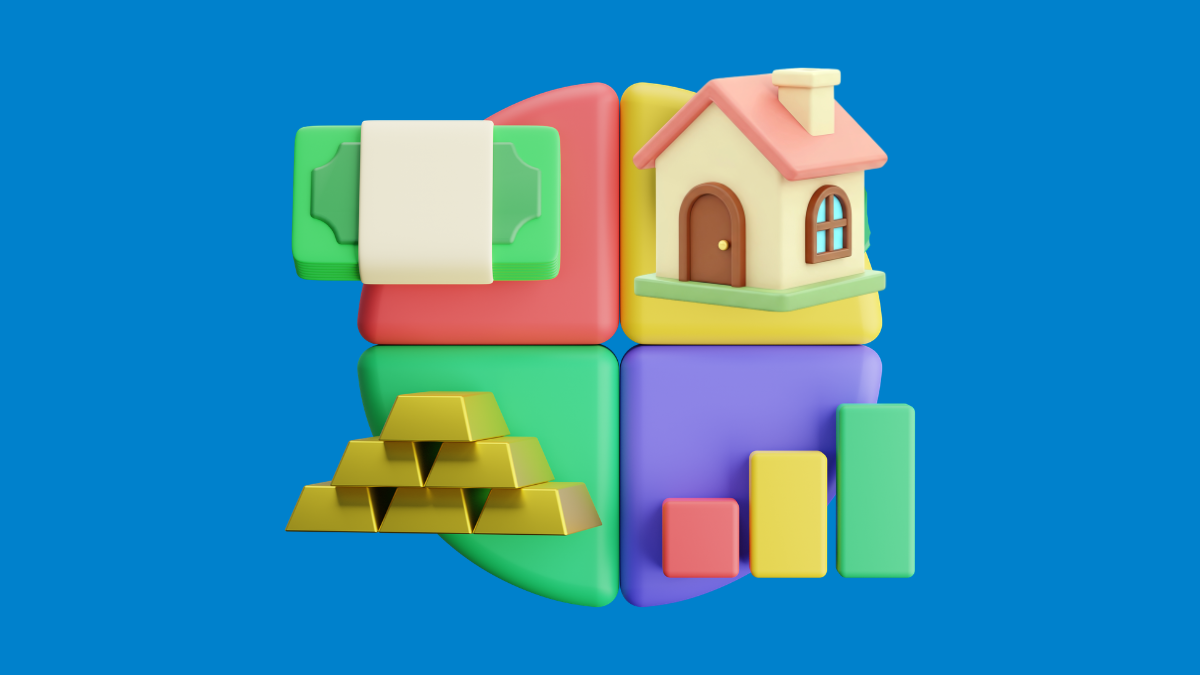
What Real‑World Assets (RWAs) Are
A Real‑World Asset is any off‑chain asset that is tokenized and represented digitally on a blockchain BlockchainThink of blockchain as a public notebook that everyone owns a copy of. Whatever gets written in it is permanent and visible to all.Keep learning.
Examples include:
- Real estate
- U.S. Treasury bills
- Corporate bonds
- Gold and commodities
- Invoices and receivables
- Carbon credits
- Fine art and collectibles
Tokenization makes these assets programmable, divisible, and globally accessible.
How RWAs Work
RWAs rely on a combination of:
- Tokenization — creating a digital token that represents ownership
 OwnershipOwnership in crypto means control over assets via private keys, allowing users to hold, transfer, or manage funds without intermediaries.Keep learning or rights
 - Legal frameworks — ensuring the token is backed by the real asset
- Custodians — holding the physical or financial asset
- Smart contracts — automating transfers, payouts, and compliance
Typical RWA flow
- A real‑world asset is identified (e.g., a treasury bill).
- A legal entity acquires and holds the asset.
- A token is issued on‑chain representing ownership or yield rights.
- Investors buy the token.
- Yield or value flows back to token holders via smart contracts.
This bridges off‑chain value with on‑chain liquidity.
Types of RWAs
RWAs come in several categories:
- Tokenized securities — bonds, equities, treasuries
- Tokenized commodities — gold, oil, metals
- Tokenized real estate — fractional property ownership
- Tokenized credit — loans, invoices, receivables
- Tokenized collectibles — art, luxury goods
Each category has different regulatory and technical requirements.
Why RWAs Matter
RWAs solve major problems in traditional finance:
- Illiquidity — real estate or bonds become tradable 24/7
- High minimums — fractional ownership lowers barriers
- Slow settlement — blockchain enables instant transfers
- Limited access — global investors can participate
- Opaque systems — smart contracts increase transparency
RWAs bring trillions of dollars of off‑chain value into crypto ecosystems.
RWAs in DeFiDeFiDeFi stands for Decentralized Finance. It refers to a collection of applications and platforms built on blockchain that allow people to transact without banks.Keep learning
RWAs are increasingly used in DeFi protocols for:
- Yield generation — tokenized treasuries offer stable returns
- Collateral — RWAs can back loans or stablecoins
- Liquidity pools — mixing on‑chain and off‑chain assets
- Institutional DeFi — banks and funds interacting with smart contracts
RWAs are becoming a core pillar of DeFi’s next growth phase.
Risks and Challenges
RWAs introduce new risks:
- Regulatory complexity — securities laws vary by country
- Custodial risk — someone must hold the real asset
- Legal enforcement — token ownership must map to real‑world rights
- Centralization — issuers and custodians create trust dependencies
- Valuation risk — off‑chain assets may fluctuate or default
RWAs require strong legal and operational frameworks.
RWAs vs Traditional Crypto Assets
A simple comparison:
| Feature | RWAs | Native Crypto |
|---|---|---|
| Backing | Physical/financial assets | Purely digital |
| Volatility | Lower | Higher |
| Regulation | High | Variable |
| Use Cases | Yield, collateral, diversification | Payments, DeFi, governance GovernanceGovernance in crypto is how decisions about a blockchain or protocol are made, often through token holders voting on changes and proposals.Keep learning GovernanceGovernance in crypto is how decisions about a blockchain or protocol are made, often through token holders voting on changes and proposals.Keep learning |
| Risk | Legal/custodial | Market/technical |
RWAs complement, rather than replace, native crypto assets.
Why RWAs Are Growing Fast
RWAs are expanding because they offer:
- Attractive yields (e.g., tokenized T‑bills)
- Institutional‑grade assets on‑chain
- Safer collateral for DeFi
- Real‑world utility beyond speculation
- A bridge between TradFi and Web3Web3Web3 is the idea of a decentralized internet powered by blockchain.Keep learning
Many analysts see RWAs as one of the strongest long‑term narratives in crypto.
The tags found in our glossary are there to help you better understand presented definitions. They showcase how certain concepts integrate and interact within the ecosystem.
Rectangular tags signal a concept related to BlockchainBlockchainThink of blockchain as a public notebook that everyone owns a copy of. Whatever gets written in it is permanent and visible to all.Keep learning as a technology. Whereas rounded tags represent Cryptocurrency CryptocurrencyCryptocurrency, often called “crypto,” is a form of digital currency that uses cryptography (advanced math and code) to keep it secure.Keep learning in more of a financial aspect. You’ll also see rectangular dashed tags for Web3
 Web3Web3 is the idea of a decentralized internet powered by blockchain.Keep learning and rounded dashed tags for DeFi
 DeFiDeFi stands for Decentralized Finance. It refers to a collection of applications and platforms built on blockchain that allow people to transact without banks.Keep learning specifically.
Learn more about the relationship between all the tags and their respective concept with our Free Interactive Courses.

GameFi
GameFi is the combination of gaming and decentralized finance, where players earn crypto or tokens through gameplay and in-game economic systems.
Keep learning
Web3
Web3 is the idea of a decentralized internet powered by blockchain.
Keep learning
Semi-Fungible Tokens (SFTs)
Semi-fungible tokens (SFTs) are blockchain assets that start as fungible tokens but can become unique items after certain conditions are met.
Keep learning
NFTs
An NFT is a unique digital asset stored on a blockchain that proves ownership of something.
Keep learning