
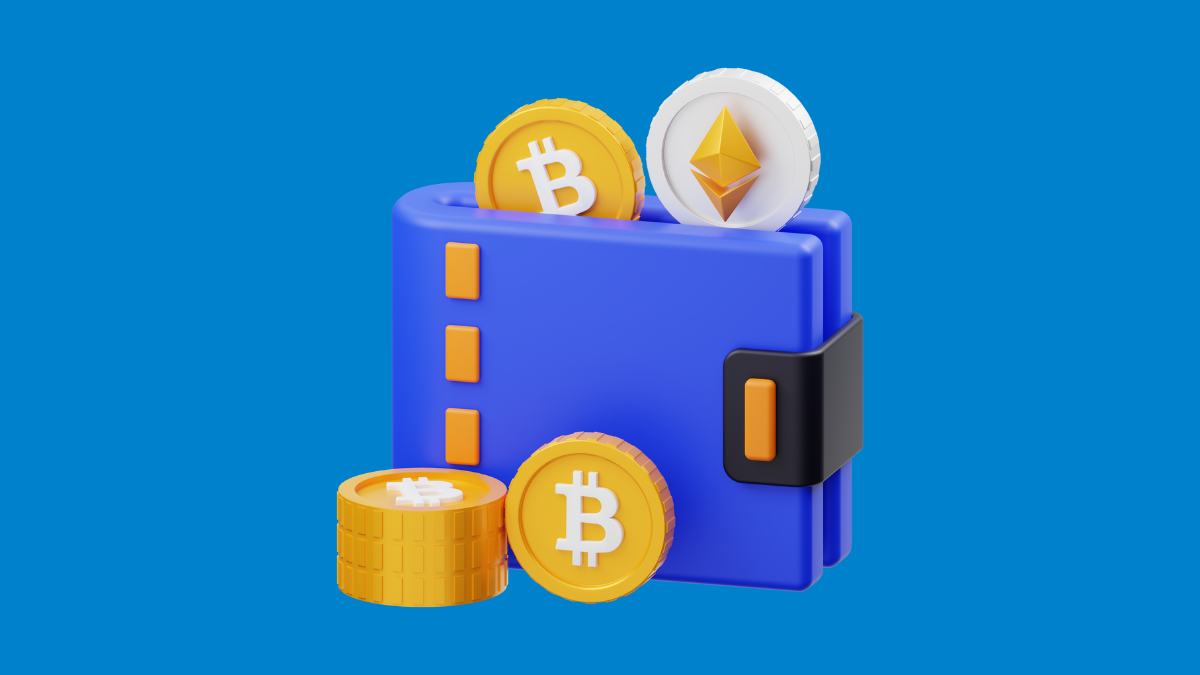
What are Crypto Wallets?
A crypto wallet Crypto WalletsA crypto wallet doesn’t store coins like a piggy bank. Instead, it keeps keys that let you access your crypto on the blockchain.Keep learning is the tool that lets you control your digital assets. It doesn’t store coins inside it like a physical wallet. Instead, it stores the cryptographic keys; especially your private key; that prove ownership
 OwnershipOwnership in crypto means control over assets via private keys, allowing users to hold, transfer, or manage funds without intermediaries.Keep learning of funds recorded on a blockchain
 BlockchainThink of blockchain as a public notebook that everyone owns a copy of. Whatever gets written in it is permanent and visible to all.Keep learning. Whoever controls the key controls the coins. A wallet is less like a container and more like a keyring for unlocking value.
The basic structure is straightforward. A wallet gives you a public address, which you can safely share so others can send you crypto, and a private key, which must remain secret. A simple analogy is a mailbox: the public address is the box number anyone can send to, and the private key is the unique key that lets you open it.
Different types of wallets exist because people have different needs around convenience, security, and control.
Hot wallets are connected to the internet. These include mobile apps, browser extensions, or desktop software. They’re easy to use and perfect for beginners or frequent transactions. But being online increases exposure to risks such as malware or phishing attacks.
Cold wallets stay offline. Hardware wallets; like Ledger or Trezor; store private keys on a physical device, while paper wallets involve writing or printing your keys on paper. Cold storage dramatically reduces the likelihood of remote attacks, making it ideal for long-term or high-value storage.
Another distinction is custodial versus non-custodial control:
Custodial wallets:
Private keys held by an exchange or service
Easier recovery options
Useful for beginners or traders
Requires trust in a central entity
Non-custodial wallets:
You hold your own keys
No one can freeze or seize your funds
Higher responsibility; lose your key, lose your assets
Essential for interacting with Web3
 Web3Web3 is the idea of a decentralized internet powered by blockchain.Keep learning and DeFiDeFiDeFi stands for Decentralized Finance. It refers to a collection of applications and platforms built on blockchain that allow people to transact without banks.Keep learning
Wallets often come with additional features beyond simple storage. Many support built-in swaps, staking, NFT management, portfolio tracking, or dApp connections. As the crypto ecosystem evolves, wallets increasingly serve as digital financial dashboards rather than just vaults.
A few essential points clarify why wallets matter:
They determine who controls the assets; you or a custodian.
They shape your security level and recovery options.
They act as your gateway to blockchain applications.
They influence how easily and safely you can transact.
Using a wallet also requires learning certain habits: verifying addresses before sending funds, storing seed phrases securely, avoiding suspicious links, and keeping devices updated. These practices protect the keys that ultimately protect your wealth.
In the end, a wallet is your personal interface with the blockchain. It’s the tool that signs transactions, manages your digital identity, and secures your assets. Whether simple or advanced, hot or cold, custodial or non-custodial, every wallet revolves around the same principle: control of the key equals control of the money.
The tags found in our glossary are there to help you better understand presented definitions. They showcase how certain concepts integrate and interact within the ecosystem.
Rectangular tags signal a concept related to BlockchainBlockchainThink of blockchain as a public notebook that everyone owns a copy of. Whatever gets written in it is permanent and visible to all.Keep learning as a technology. Whereas rounded tags represent Cryptocurrency CryptocurrencyCryptocurrency, often called “crypto,” is a form of digital currency that uses cryptography (advanced math and code) to keep it secure.Keep learning in more of a financial aspect. You’ll also see rectangular dashed tags for Web3
 Web3Web3 is the idea of a decentralized internet powered by blockchain.Keep learning and rounded dashed tags for DeFi
 DeFiDeFi stands for Decentralized Finance. It refers to a collection of applications and platforms built on blockchain that allow people to transact without banks.Keep learning specifically.
Learn more about the relationship between all the tags and their respective concept with our Free Interactive Courses.

ICOs (Initial Coin Offerings)
ICOs (Initial Coin Offerings) are fundraising events where new crypto projects sell tokens to investors to raise capital for development.
Keep learning
Proof of Work
Proof of Work (PoW) is a consensus mechanism where miners use computing power to validate transactions and secure the blockchain.
Keep learning
Crypto Environmental Considerations
Crypto environmental considerations refer to the energy use, carbon footprint, and sustainability impacts associated with cryptocurrency activity and networks.
Keep learning
Cryptocurrency
Cryptocurrency, often called “crypto,” is a form of digital currency that uses cryptography (advanced math and code) to keep it secure.
Keep learning