
IceRiver KS5L: the dominant name in Kaspa mining, currently losing money on every single unit at typical electricity rates.
We're continuing our Crypto ASIC Mining Hardware series with the IceRiver KS5L, our first entry from the manufacturer that dominates Kaspa (kHeavyHash) mining specifically, a genuinely different competitive landscape than the Bitcoin-focused brands reviewed so far. Real, disclosed genuine strengths: officially-sourced, well-confirmed specs, a genuinely useful independent buyer comparison against its own higher-tier sibling, and a real, disclosed universal-voltage option most competitors don't offer. What we don't think should be set aside: current profitability is severely and consistently negative across every independent source we checked, at least one reseller explicitly won't honor refunds tied to price volatility, and the manufacturer has issued an active customer-impersonation fraud warning. We weighted all of it below.
Our take, up front: The IceRiver KS5L is a KHeavyHash ASIC miner for Kaspa (KAS), launched in April 2024 by IceRiver, a manufacturer directly described as specializing in "algorithms used by emerging networks like kHeavyHash, zkSNARK, and Alephium" rather than competing head-on with Bitcoin-focused brands like Bitmain or Canaan. Real, disclosed genuinely well-confirmed core specs, officially sourced from IceRiver's own site: the KS5L family spans 9-12 TH/s (top bin) at a fixed 3,400W, for 283.33 J/TH efficiency, with a legitimate binning structure similar to what we found reviewing the Antminer L9. Real, disclosed genuinely useful independent buyer guidance, rare in this series: at least one source directly compares the KS5L against its own higher-tier sibling, the KS5M (15 TH/s at the same 3,400W, for a meaningfully better 226.67 J/TH), concluding "unless the KS5M costs proportionally more per terahash, it is the smarter buy." Real, disclosed genuinely useful power flexibility: a universal 100-240V variant exists alongside more restrictive 170-300V wide-voltage variants, adding real, disclosed complexity a buyer must navigate carefully. Real, disclosed, severely and consistently negative current profitability across multiple independent sources: -$8.16/day (KS5L at $0.10/kWh), -$3.48/day (KS5L at $0.07/kWh), and -$2.27/day (KS5M at $0.07/kWh), reflecting genuinely difficult current Kaspa mining economics. Real, disclosed active fraud risk directly disclosed by the manufacturer's own channel: "someone impersonated our customer service staff," with a direct warning to verify contact information through official channels only. Real, disclosed explicit no-refund policy tied to price volatility from at least one reseller: "Refund requests based on these factors cannot be honored." We weighted all of it below.
Real, disclosed genuinely well-confirmed specs, officially sourced from IceRiver's own site: the KS5L family spans 9-12 TH/s (top bin) at a fixed 3,400W, for 283.33 J/TH efficiency, a legitimate binning structure similar to what we found reviewing the Antminer L9. Real, disclosed genuinely useful independent buyer guidance, rare in this series: at least one source directly compares the KS5L against its higher-tier sibling, the KS5M, concluding "unless the KS5M costs proportionally more per terahash, it is the smarter buy."
Pros
- Specs are officially confirmed via the manufacturer's own site, with a legitimate, disclosed binning structure across the KS5L family
- A rare, disclosed independent buyer comparison recommends the higher-efficiency KS5M over the base KS5L when price allows
Cons
- The KS5M's meaningfully better efficiency (226.67 J/TH vs 283.33 J/TH) at the same power draw makes the base KS5L a harder sell on its own
Real, disclosed standard air-cooled design with four high-speed fans, consistent 75 dB noise, disclosed dimensions and weight consistent across sources checked.
Pros
- Four high-speed fans and a disclosed, consistent physical footprint reflect a well-understood, proven design approach
Cons
- A disclosed 75 dB noise level firmly limits this to dedicated industrial or farm-style deployment
Real, disclosed genuinely significant market positioning: IceRiver is directly described as a fast-growing manufacturer specializing in alt-coin algorithms (kHeavyHash, zkSNARK, Alephium) rather than competing head-on with Bitcoin-focused brands. Real, disclosed active impersonation-fraud warning directly from the manufacturer's own channel: "someone impersonated our customer service staff," a real, disclosed buyer-safety concern shared with at least one other manufacturer already reviewed in this series.
Pros
- A real, disclosed dominant market position in Kaspa-specific mining hardware reflects genuine specialization and scale
Cons
- An active, disclosed customer-service impersonation warning is a real, concrete safety concern buyers should take seriously
Real, disclosed genuinely substantial power draw (3,400W) requiring appropriate circuit capacity; real, disclosed genuinely useful universal 100-240V variant exists alongside more restrictive 170-300V wide-voltage variants, adding real, disclosed complexity a buyer must navigate carefully.
Pros
- A disclosed universal 100-240V variant offers genuinely broader worldwide deployment compatibility than restricted-voltage alternatives
Cons
- Multiple, disclosed voltage variants at similar hashrate add real complexity a buyer must carefully confirm before ordering
Real, disclosed, severely and consistently negative current profitability across multiple independent sources: -$8.16/day (KS5L at $0.10/kWh), -$3.48/day (KS5L at $0.07/kWh), and -$2.27/day (KS5M at $0.07/kWh), reflecting genuinely difficult current Kaspa mining economics at real, disclosed industrial scale and cost.
Pros
- Multiple independent calculators are at least directionally consistent with each other on the severity of the current loss
Cons
- Losses of $2 to $8 per day represent real, substantial, disclosed financial exposure at this unit's industrial capital scale
We did not find one single, clear, officially disclosed price in this specific research; at least one reseller explicitly discloses that "refund requests based on [price volatility] factors cannot be honored," a real, disclosed buyer-risk consideration tied to this hardware category's inherent price volatility.
Pros
- Multiple, disclosed independent resellers exist, offering at least some basis for comparison shopping
Cons
- A disclosed, explicit no-refund policy tied to price volatility is a real, substantial buyer-risk consideration
Real, disclosed warranty variance: a short disclosed baseline (180 days, per at least one reseller) versus a genuinely notable disclosed upgrade offer from that same reseller, "up to two years warranty instead of 180 days," alongside a real, disclosed active impersonation-scam warning specific to customer support channels.
Pros
- A disclosed warranty-upgrade option (up to two years) from at least one reseller is a genuine, concrete positive worth seeking out
Cons
- A short disclosed baseline term (180 days) and an active impersonation-scam warning around support channels are real, disclosed limitations
Genuinely capable hardware for a genuinely difficult moment in Kaspa mining economics.
Given the severely negative current profitability we found across every independent source, we would not recommend the KS5L for new deployment at typical electricity rates right now; if you're already committed to Kaspa mining, prioritize the KS5M over the base KS5L per the independent buyer math we found, confirm your specific voltage variant carefully, and verify you're dealing with an official channel given the manufacturer's own active impersonation warning.
IceRiver built the machine Kaspa mining actually needed. The problem isn't the machine, it's what mining Kaspa currently pays.
We want to give real credit here: IceRiver occupies a genuinely distinctive position in this series, the dominant specialist in an algorithm none of the Bitcoin-focused brands we've reviewed even touch, and the hardware itself is well-documented, officially sourced, and thoughtfully tiered, right down to an independent source doing the buyer's math for them on which variant to choose. That's a real, disclosed strength. What we can't set aside is the honest state of Kaspa mining economics right now: every independent calculator we checked, across both the KS5L and its higher-tier KS5M sibling, shows a real, meaningful daily loss at typical electricity rates, not a marginal one. Layer on a manufacturer that's had to publicly warn customers about impersonation scams, and at least one reseller explicitly refusing refunds tied to this market's price swings, and we think the honest picture is: good hardware, arriving in a genuinely difficult moment for the specific coin it was built to mine. That's a real distinction from a badly-built or badly-documented machine, and we don't want to blur the two.
The scorecard above is deliberately general. Whether the IceRiver KS5L is right for you depends heavily on which of these you already are.
The existing Kaspa miner or enthusiast who prioritizes network participation over near-term profit and understands current difficulty
This is exactly where the KS5L's real, disclosed, well-documented hardware delivers genuine value despite the tough market.
The buyer who prices the KS5M against the base KS5L using the independent per-terahash math before choosing a tier
Given the real, disclosed efficiency gap at identical power draw, this specific comparison genuinely matters here.
The buyer who carefully confirms their specific voltage variant (universal vs. wide-voltage) before ordering
This is a real, disclosed, genuinely important detail worth resolving directly with the seller rather than assuming.
New buyers seeking near-term profit at typical electricity rates, or anyone not prepared to verify official contact channels
A real, disclosed severely negative current profitability picture and an active impersonation-fraud warning make this a poor fit for that expectation.
The scorecard covers the headline judgment calls. These four tables cover the specifics we didn't want to bury in prose; the KS5L placed directly against the KS5M using the independent buyer math, the profitability figures across variants and rates, the voltage variants explained, and all twelve units reviewed together.
The KS5L, placed directly against the KS5M
| KS5L (top bin) | KS5M | |
|---|---|---|
| Hashrate | 12 TH/s | 15 TH/s |
| Power | 3,400W | 3,400W (identical) |
| Efficiency | 283.33 J/TH | 226.67 J/TH |
| Daily loss at $0.07/kWh | -$3.48 | -$2.27 |
We're placing these directly side by side because the identical power draw means the KS5M's extra hashrate is essentially "free" efficiency, exactly the math an independent source used to recommend it as the smarter buy when price allows.
The profitability figures, across variants and rates
| Variant | Electricity cost | Daily result |
|---|---|---|
| KS5L | $0.10/kWh | -$8.16 (loss) |
| KS5L | $0.07/kWh | -$3.48 (loss) |
| KS5M | $0.07/kWh | -$2.27 (loss) |
We're showing multiple rates and variants together because the loss doesn't disappear even at the more favorable end, a real, disclosed, consistent picture across every combination we checked.
The voltage variants, explained
| Variant | Voltage range | Compatibility |
|---|---|---|
| Universal | 100-240V | Standard worldwide compatibility |
| Wide-voltage | 170-300V | Restricted to higher-voltage commercial circuits |
We're spelling this out because ordering the wrong variant for your available circuit is a real, disclosed, avoidable mistake worth checking before you buy, not after.
All twelve units reviewed so far in this series
| S23 Hyd 3U | M79S | S21 XP | S21 Pro | S21+ | Avalon Q | L9 | T3 | L7 | A2 Pro | KD Box | KS5L | |
|---|---|---|---|---|---|---|---|---|---|---|---|---|
| Manufacturer | Bitmain | MicroBT | Bitmain | Bitmain | Bitmain | Canaan | Bitmain | Fluminer | Bitmain | Bitdeer | Goldshell | IceRiver |
| Algorithm | SHA-256 | SHA-256 | SHA-256 | SHA-256 | SHA-256 | SHA-256 | Scrypt | SHA-256 | Scrypt | SHA-256 | Kadena | KHeavyHash |
| Core disclosed issue | Cross-reseller inconsistencies | Core specs vary by nearly 50% | Same Bitmain manufacturer history | Lower efficiency than siblings | A retailer's own page contradicts itself | No clear disclosed price or warranty | Marketing figures 7-15x higher than reality | Templated testimonials, unverified track record | Openly, honestly obsolete at today's difficulty | Strict no-refund terms; reseller cites wrong manufacturer's warranty | Consistently negative daily profit at current difficulty | Severely negative profit; active impersonation-fraud warning |
| Our score | 61.0/100 | 45.0/100 | 65.5/100 | 65.0/100 | 51.5/100 | 59.25/100 | 58.5/100 | 53.5/100 | 44.75/100 | 63.5/100 | 54.75/100 | 48.75/100 |
The KS5L lands near the lower end of this series, driven almost entirely by Kaspa's currently difficult mining economics rather than any specific defect in the hardware itself.
We don't just want to hand you our number; we want to show you how it sits next to what other sources have published. We're flagging directly that most reseller-affiliated coverage of this unit leans on "powerhouse" and "top-notch performance" language without giving comparable weight to the severe, disclosed current losses or the manufacturer's own active impersonation-fraud warning.
Our score lands modestly below the aggregated industry average; reseller-affiliated coverage credits the hardware's specifications and market position heavily, while giving considerably less direct weight to the disclosed current profitability picture and impersonation-fraud warning than our methodology does.
| Source | Score | Type |
|---|
Scores compiled by our editorial team from publicly available reviews as of August 2026. "Editorial estimate" means the outlet didn't publish a single numeric score, so we converted their published verdict and sentiment into a comparable 100-point figure. Verify current figures directly with each source before citing them elsewhere.
9-12 TH/s (variant-dependent) at a fixed 3,400W, for 283.33 J/TH efficiency, using the KHeavyHash algorithm for Kaspa. Launched in April 2024, roughly 75 dB noise, weighing about 15 kg.
At the same 3,400W power draw, the KS5M delivers 15 TH/s versus the KS5L's 12 TH/s, for meaningfully better efficiency (226.67 J/TH vs. 283.33 J/TH). At least one independent source recommends the KS5M unless it costs proportionally more per terahash.
No, not currently at typical electricity rates. Independent calculators show losses ranging from -$3.48/day at $0.07/kWh to -$8.16/day at $0.10/kWh, reflecting genuinely difficult current Kaspa mining economics.
IceRiver, a manufacturer specializing in alt-coin mining algorithms (kHeavyHash, zkSNARK, Alephium) rather than Bitcoin-focused hardware. The company has issued an active warning about customers being targeted by impersonators posing as its support staff; always verify contact channels are official.
It depends on the variant. A universal 100-240V variant offers broad worldwide compatibility, while a wide-voltage 170-300V variant is restricted to higher-voltage commercial circuits. Confirm which variant you're ordering before purchase.
A baseline of 180 days is disclosed by at least one reseller, though the same reseller separately offers an upgrade to "up to two years." Confirm which term applies to your specific order.
We did not find one single, clear, officially disclosed price. At least one reseller explicitly states that refund requests tied to price volatility, network difficulty, or exchange-rate changes cannot be honored, so confirm current pricing and terms before ordering.
It scores 48.75/100, near the lower end of this series, driven largely by Kaspa's currently difficult mining economics rather than any specific defect in the hardware, which is otherwise well-documented and officially sourced.
More Reviews
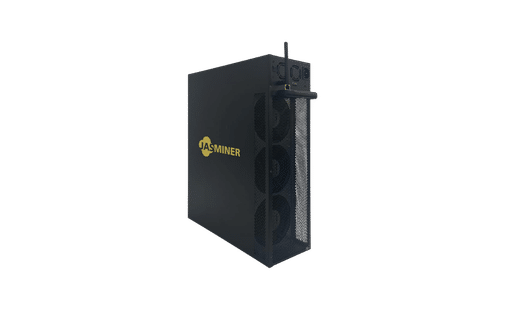
Jasminer X16-Q – Crypto ASIC Mining Hardware Review
Score: 59.5/100. Genuinely quiet EtHash miner with a verified generational upgrade, though profitability swings between loss and profit.
Read More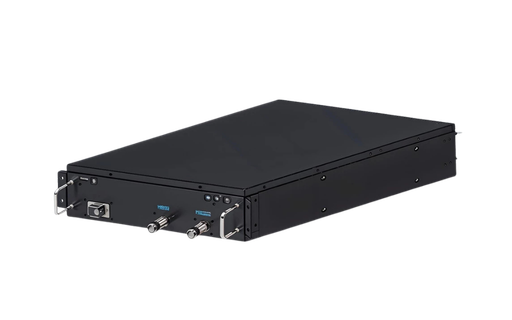
Antminer S23 Hyd 3U – Crypto ASIC Mining Hardware Review
Score: 61.0/100. Best raw efficiency in the series, tempered by cross-reseller weight, warranty, and voltage inconsistencies.
Read More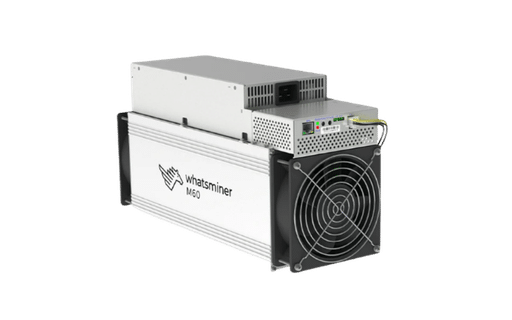
WhatsMiner M60S – Crypto ASIC Mining Hardware Review
Score: 57.25/100. Chosen to test the M79S's chaos; specs proved consistent, showing that mess was product-specific, not company-wide.
Read More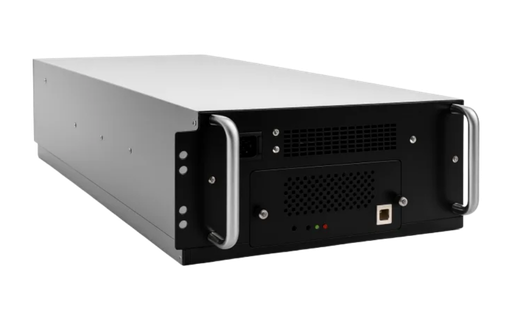
WhatsMiner M79S – Crypto ASIC Mining Hardware Review
Score: 45.0/100. Worst transparency in the series; core hashrate varies by nearly 50% across resellers with no clear explanation.
Read More