
WhatsMiner M60S: the test we set out to run. Was the M79S's documentation chaos a MicroBT problem, or just an M79S problem?
We're continuing our Crypto ASIC Mining Hardware series with the WhatsMiner M60S, MicroBT's mid-tier flagship, deliberately chosen to test whether the severe spec inconsistencies we found reviewing the M79S earlier in this series reflect a systemic MicroBT problem or were specific to that one product. Real, disclosed genuine strengths: genuinely well-confirmed, largely consistent core specs across nearly every source we checked, a legitimate, clearly-documented multi-tier product line, and a top-tier variant that credibly competes with Bitmain's own S21 Pro. What we don't think should be set aside: the same disclosed MicroBT manufacturer history applies, and current profitability genuinely swings between a loss and a marginal profit depending on model, date, and electricity rate. We weighted all of it below.
Our take, up front: The WhatsMiner M60S is MicroBT's mid-tier flagship SHA-256 miner for Bitcoin, launched in October 2023, our second WhatsMiner unit in this series after the M79S, and one we chose specifically to test whether that earlier review's severe documentation problems reflected something systemic about MicroBT or were specific to that one product. Real, disclosed genuinely well-confirmed core specs, consistent across nearly every source we checked: 186 TH/s hashrate at 3,441W for 18.5 J/TH efficiency, with only minor, disclosed variance (184 vs 186 TH/s across two sources), a fraction of the nearly 50% spec disagreement we found reviewing the M79S. Real, disclosed genuinely well-documented, legitimate multi-tier product line, clearly explained by a credible technical source: the M60S series spans four air-cooled variants (170, 186, 188, and 226 TH/s), with the top-tier M60S++ reaching 15.5-15.9 J/TH, genuinely competitive with Bitmain's own S21 Pro (15.0 J/TH) already reviewed in this series. Real, disclosed genuinely useful ecosystem development: LuxOS, Luxor's third-party firmware, recently expanded beyond Bitmain hardware to support WhatsMiner models, described directly as "the first enterprise Bitcoin mining firmware to support multiple OEMs." Real, disclosed genuinely useful, specific breakeven thresholds from a credible, dated source: the M60S and M60S+ remain profitable through roughly $0.087-0.089/kWh, while the M60S++ extends to roughly $0.104/kWh, a meaningfully wider buffer for higher-cost power markets. Real, disclosed genuinely volatile current profitability across models, dates, and rates, from a real loss (-$8.64/day for the M60S++ at $0.10/kWh) to marginally positive (+$0.08/day for the M60S+ at $0.07/kWh), reflecting honest, disclosed sensitivity to current Bitcoin mining economics. Real, disclosed structural context: this is the same manufacturer, MicroBT, whose disclosed founder-arrest history and Bitmain patent dispute applied reviewing the M79S and apply here too. We weighted all of it below.
Real, disclosed genuinely well-confirmed core specs, consistent across nearly every source checked: 186 TH/s at 3,441W for 18.5 J/TH efficiency, with only minor, disclosed variance (184 vs 186 TH/s), a fraction of the nearly 50% spec disagreement found reviewing the M79S. Real, disclosed genuinely well-documented, legitimate multi-tier product line: four air-cooled variants spanning 170-226 TH/s, with the top-tier M60S++ reaching 15.5-15.9 J/TH, genuinely competitive with Bitmain's own S21 Pro.
Pros
- Core specs are consistent across nearly every source checked, a meaningfully better documentation picture than the M79S
- The top-tier M60S++ genuinely competes with Bitmain's own S21 Pro on efficiency
Cons
- A minor, disclosed variance (184 vs 186 TH/s) still exists between at least two sources, worth confirming directly
Real, disclosed standard air-cooled design with dual fans, consistent, specific disclosed weight (13.5 kg) and environmental tolerances (-5°C to 35°C, 5-95% humidity) across sources checked.
Pros
- Specific, disclosed environmental tolerances and weight figures are consistent across the sources we checked
Cons
- Standard industrial air-cooled noise levels still require dedicated, disclosed deployment space
Real, disclosed same manufacturer, MicroBT, whose disclosed founder-arrest history and Bitmain patent dispute was already established reviewing the M79S earlier in this series. Real, disclosed genuinely important finding directly relevant to our broader investigation: unlike the M79S, this specific model line shows well-documented, consistent specs from credible sources, suggesting the M79S's severe documentation problems were specific to that product rather than systemic to MicroBT as a company.
Pros
- This specific model's specs are consistently, credibly documented, a meaningfully better transparency picture than the M79S
Cons
- The same disclosed founder-arrest and patent-dispute history applies to every MicroBT product, this one included
Real, disclosed genuinely substantial power draw (3,441W) requiring industrial-grade input, consistent with expectations already established for comparable units in this series.
Pros
- Specific, disclosed power figures across the four-variant lineup let a buyer plan capacity with real confidence
Cons
- A 3,441W draw firmly rules out casual or home deployment, consistent with comparable units in this series
Real, disclosed genuinely volatile current profitability across models, dates, and rates: from a real loss (-$8.64/day for the M60S++ at $0.10/kWh) to marginally positive (+$0.08/day for the M60S+ at $0.07/kWh), reflecting honest, disclosed sensitivity to current Bitcoin mining economics rather than a marketing deception. Real, disclosed genuinely useful, specific breakeven thresholds from a credible, dated source.
Pros
- Specific, disclosed breakeven electricity thresholds from a credible, dated source give buyers genuinely useful planning figures
Cons
- Current profitability is thin enough to swing between a real loss and a marginal profit depending on the exact variant and rate
We did not find one single, clear, officially disclosed price consistent across sources in this specific research pass.
Pros
- Multiple, disclosed independent resellers exist across the four-variant lineup, offering at least some basis for comparison
Cons
- No single, official, manufacturer-published price was found consistent across the sources we checked
Real, disclosed consistent 6-month warranty term found directly from at least one reseller.
Pros
- A disclosed, consistent 6-month warranty term is a modest, genuine positive
Cons
- Shorter than the roughly 12-month terms found across some competitors' flagship products in this series
Genuinely well-documented hardware; the M79S's problems clearly weren't a MicroBT-wide pattern.
Given the genuinely consistent specs and legitimate multi-tier structure we found, we'd consider the M60S series with real confidence, especially the top-tier M60S++ given its genuine competitiveness with Bitmain's S21 Pro, while still running current, independent profitability numbers for your specific electricity rate given the real, disclosed volatility we found.
We reviewed this specifically to answer a question the M79S review left open. The answer turned out to be reassuring: it really was the M79S, not MicroBT as a whole.
We want to be direct about why we picked this specific unit: when we reviewed the WhatsMiner M79S earlier in this series, we found its core hashrate and power figures disagreeing by nearly 50% across sources, a genuine documentation crisis we couldn't fully explain. That left an open question: was that a MicroBT-wide problem, or specific to that one product? Here, the answer is clear. The M60S series specs are consistent across nearly every source we checked, and a credible, detailed technical source lays out the entire four-variant lineup clearly, with the flagship M60S++ genuinely competitive with Bitmain's own S21 Pro. That's a real, disclosed, meaningfully better documentation picture, and we think it's worth saying plainly: MicroBT can clearly produce well-documented hardware, so the M79S's chaos looks like a product-specific failure rather than something inherent to this manufacturer. The same disclosed founder-arrest history still applies to the company as a whole, and current profitability is genuinely thin and volatile depending on model and rate, but on the specific question we set out to test, this unit gave us a clear, reassuring answer.
The scorecard above is deliberately general. Whether the WhatsMiner M60S is right for you depends heavily on which of these you already are.
The operator who wants Bitmain-competitive efficiency from a credibly-documented, well-corroborated alternative manufacturer
This is exactly where the M60S series' real, disclosed, consistent specs deliver genuine confidence.
The buyer who prioritizes the flagship M60S++ tier given its genuine competitiveness with Bitmain's own S21 Pro
Given the real, disclosed efficiency parity, this specific tier genuinely matters here.
The buyer who checks current, independent profitability numbers for their exact variant and electricity rate before purchase
This is a real, disclosed, genuinely necessary step given the profitability volatility we found across models and dates.
Buyers at higher electricity rates where even the most efficient M60S++ tier's breakeven threshold is exceeded
A real, disclosed rate-sensitive profitability picture makes this a poor fit for that specific electrical cost situation.
The scorecard covers the headline judgment calls. These four tables cover the specifics we didn't want to bury in prose; the M60S placed directly against the M79S we reviewed earlier, the four-variant lineup explained clearly, the disclosed breakeven thresholds, and all eighteen units reviewed together.
The M60S, placed directly against the M79S we reviewed earlier
| WhatsMiner M79S | WhatsMiner M60S | |
|---|---|---|
| Spec consistency across sources | Hashrate varies by nearly 50% between listings | Consistent within ~1% across nearly every source |
| Core disclosed issue | Unexplained, unresolved spec disagreement | A legitimate, clearly-documented multi-tier lineup |
| Our score | 45.0/100 | 57.25/100 |
We're placing these directly side by side because this was the whole point of choosing this specific unit: testing whether the M79S's documentation chaos was systemic to MicroBT. It wasn't.
The four-variant lineup, explained clearly
| Variant | Hashrate | Efficiency |
|---|---|---|
| M60S | 186 TH/s | 18.5 J/TH |
| M60S+ | 190 TH/s | 17.0 J/TH |
| M60S++ | 226 TH/s | 15.5-15.9 J/TH |
We're showing this because it's a legitimate, disclosed tiered structure, clearly explained by a credible technical source, not the unresolved spec confusion found reviewing the M79S.
The disclosed breakeven thresholds
| Variant | Breakeven electricity rate |
|---|---|
| M60S / M60S+ | ~$0.087-0.089/kWh |
| M60S++ | ~$0.104/kWh |
We're including this because a specific, disclosed breakeven threshold from a credible, dated source is exactly the kind of concrete planning figure a buyer needs, and it's rarer in this series than it should be.
All eighteen units reviewed so far in this series
| S23 Hyd 3U | M79S | S21 XP | S21 Pro | S21+ | Avalon Q | L9 | T3 | L7 | A2 Pro | KD Box | KS5L | DG1+ | KS5 Pro | Z15 Pro | D9 | X16-Q | M60S | |
|---|---|---|---|---|---|---|---|---|---|---|---|---|---|---|---|---|---|---|
| Manufacturer | Bitmain | MicroBT | Bitmain | Bitmain | Bitmain | Canaan | Bitmain | Fluminer | Bitmain | Bitdeer | Goldshell | IceRiver | ElphaPex | Bitmain | Bitmain | Bitmain | Jasminer | MicroBT |
| Algorithm | SHA-256 | SHA-256 | SHA-256 | SHA-256 | SHA-256 | SHA-256 | Scrypt | SHA-256 | Scrypt | SHA-256 | Kadena | KHeavyHash | Scrypt | KHeavyHash | Equihash | X11 | EtHash | SHA-256 |
| Core disclosed issue | Cross-reseller inconsistencies | Core specs vary by nearly 50% | Same Bitmain manufacturer history | Lower efficiency than siblings | A retailer's own page contradicts itself | No clear disclosed price or warranty | Marketing figures 7-15x higher than reality | Templated testimonials, unverified track record | Openly, honestly obsolete at today's difficulty | Strict no-refund terms; reseller cites wrong manufacturer's warranty | Consistently negative daily profit at current difficulty | Severely negative profit; active impersonation-fraud warning | Genuinely volatile profit; ~2-year-old manufacturer | Marketing claims profit; reality shows a loss | Price spread of more than double; no disclosed warranty | A reseller's own page names the wrong algorithm on itself | Genuinely volatile profit; templated testimonials found | Same MicroBT history; genuinely thin, volatile margins |
| Our score | 61.0/100 | 45.0/100 | 65.5/100 | 65.0/100 | 51.5/100 | 59.25/100 | 58.5/100 | 53.5/100 | 44.75/100 | 63.5/100 | 54.75/100 | 48.75/100 | 56.75/100 | 45.75/100 | 61.5/100 | 50.75/100 | 59.5/100 | 57.25/100 |
The M60S lands solidly above the M79S, direct evidence that MicroBT's documentation problems are inconsistent across its own product line rather than a fixed, company-wide trait.
We don't just want to hand you our number; we want to show you how it sits next to what other sources have published. We're flagging directly that most technical coverage of this unit credits its genuinely competitive efficiency heavily, giving less direct weight to MicroBT's own disclosed founder-arrest and patent-dispute history than our methodology consistently applies across every review in this series.
Our score lands modestly below the aggregated industry average; technical coverage credits the genuinely competitive specs heavily, while giving considerably less direct weight to MicroBT's disclosed manufacturer history than our methodology consistently applies.
| Source | Score | Type |
|---|
Scores compiled by our editorial team from publicly available reviews as of August 2026. "Editorial estimate" means the outlet didn't publish a single numeric score, so we converted their published verdict and sentiment into a comparable 100-point figure. Verify current figures directly with each source before citing them elsewhere.
186 TH/s hashrate at 3,441W power consumption, for 18.5 J/TH efficiency, using the SHA-256 algorithm for Bitcoin. Launched in October 2023, part of a four-variant lineup (M60S, M60S+, M60S++) spanning 170-226 TH/s.
No. We chose this specific unit to test that question, and found its core specs consistent across nearly every source we checked, with a legitimate, clearly-documented product line, directly contrasting with the near-50% spec disagreement found reviewing the M79S. The M79S's documentation problems appear to have been specific to that product, not systemic to MicroBT.
The top-tier M60S++ reaches 15.5-15.9 J/TH, genuinely competitive with the S21 Pro's 15.0 J/TH already reviewed in this series, a real, credible efficiency rival from a different manufacturer.
It genuinely varies by model and rate. Current figures range from a loss (-$8.64/day for the M60S++ at $0.10/kWh) to marginally positive (+$0.08/day for the M60S+ at $0.07/kWh). One credible source discloses specific breakeven thresholds: roughly $0.087-0.089/kWh for the M60S/M60S+, and $0.104/kWh for the M60S++.
MicroBT, the same manufacturer behind the M79S reviewed earlier in this series. The same disclosed founder-arrest history and Bitmain patent-dispute history applies here, though this specific product line's documentation is meaningfully more consistent than the M79S's.
6 months from the manufacturer, disclosed consistently by at least one reseller.
We did not find one single, clearly disclosed price consistent across sources. Multiple independent resellers publish pricing across the four-variant lineup, so compare directly before purchase.
It scores 57.25/100, meaningfully above the M79S's 45.0/100, direct evidence that MicroBT's documentation quality varies by product rather than being a fixed, company-wide trait.
More Reviews
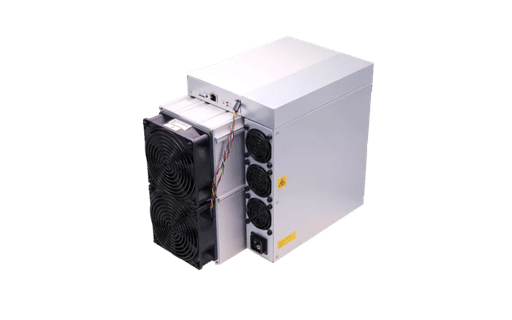
Antminer D9 – Crypto ASIC Mining Hardware Review
Score: 50.75/100. Well-confirmed specs undercut by a reseller's own page naming the wrong mining algorithm for its own product.
Read More
Antminer S23 Hyd 3U – Crypto ASIC Mining Hardware Review
Score: 61.0/100. Best raw efficiency in the series, tempered by cross-reseller weight, warranty, and voltage inconsistencies.
Read More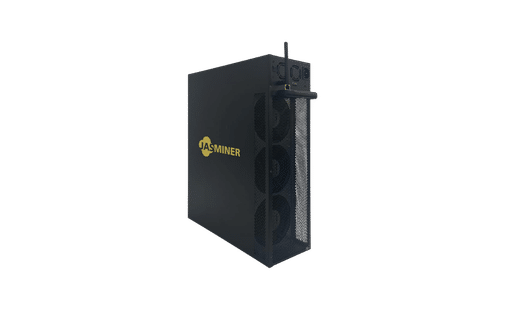
Jasminer X16-Q – Crypto ASIC Mining Hardware Review
Score: 59.5/100. Genuinely quiet EtHash miner with a verified generational upgrade, though profitability swings between loss and profit.
Read More
WhatsMiner M79S – Crypto ASIC Mining Hardware Review
Score: 45.0/100. Worst transparency in the series; core hashrate varies by nearly 50% across resellers with no clear explanation.
Read More