
GridPlus Lattice1:
the only wallet in this series that's never air-gapped, and doesn't pretend otherwise.
We tore apart GridPlus's desktop-bound, always-connected hardware wallet across seven weighted categories; from a genuinely large 5-inch touchscreen, PIN-protected SafeCard secure elements with ATM-grade tamper mesh, and some of the most sophisticated smart-contract decoding we've found in this series, to a fundamental, structural departure from every other device we've reviewed: this device requires constant power and built-in Wi-Fi connectivity, meaning it is never air-gapped, on top of a real, consistent $397 price roughly 2 to 3 times pricier than mainstream competitors; and landed on a score the marketing page won't show you.
Our take, up front: GridPlus, a US-based company founded in 2017, builds a genuinely different kind of device than everything else we've reviewed in this series. The Lattice1 is explicitly a desktop "security terminal," not a pocket-sized cold storage device: it requires constant power, ships with a LAN cable, and includes built-in Wi-Fi both for DApp interaction and over-the-air firmware updates. That's a real, fundamental departure from the air-gapped or briefly-USB-connected model every other device in this series is built around, and worth stating plainly rather than glossing over. What it buys in exchange is genuinely distinctive: SafeCards, credit-card-sized, PIN-protected secure elements that each hold a single key pair (with an expected lifespan around 2,000 insertions), a real, sophisticated tamper-resistant mesh described as the same technology used in bank ATMs, and some of the most advanced smart-contract decoding we've found in this series, covering thousands of contracts across Ethereum, Arbitrum, Optimism, Base, and Polygon in human-readable form. The 5-inch touchscreen is genuinely the largest in this entire series. Multiple sources are explicit and consistent: at $397, plus $30-50 for additional SafeCard packs, this is positioned squarely for active DeFi users, treasury managers, and DAO signers protecting substantial, actively-managed positions, not casual holders; at least one source calls it "overkill for a beginner with $1K." We weighted all of it below.
Each SafeCard functions as an independent, PIN-protected secure element holding a single key pair; private key material is reported to be unexportable without unlocking the card via its PIN. A real, sophisticated tamper-detection mesh, described as the same technology used in bank ATMs, wraps the secure chip and triggers a secure wipe if drilling, X-ray, or other physical intrusion is detected, with battery-backed protection active even when the device is unpowered. Real, open-source firmware has also been independently audited. Here's the real, structural fact that sets this device apart from every other one we've reviewed in this series: the Lattice1 requires constant power connection and includes built-in Wi-Fi for DApp interaction and over-the-air firmware updates, meaning it is never air-gapped and remains persistently network-connected. We found no disclosed security incident specific to this device in our research.
Pros
- Per-card PIN-protected secure elements with reported key-export protection
- Sophisticated, ATM-grade tamper-detection mesh with battery-backed protection
- Open-source and independently audited firmware; no disclosed security incident found
Cons
- Requires constant power and built-in Wi-Fi; never air-gapped, unlike every other device in this series
Real, broad support for Bitcoin, Ethereum, ERC-20 tokens, and NFTs, with seamless MetaMask integration. Real, genuinely advanced smart-contract decoding covers thousands of contracts across Ethereum, Arbitrum, Optimism, Base, and Polygon, displaying human-readable function calls, parameters, and approvals rather than raw hex.
Pros
- Genuinely advanced smart-contract decoding across multiple major EVM networks
- Seamless MetaMask integration and broad browser-based companion app support
Cons
- No precise total coin-count figure found in our research, unlike several competitors
A large 5-inch color touchscreen is genuinely the largest we've found in this series, independently praised as a real, material upgrade for verifying complex transaction details compared to smaller competitor screens. Setup happens entirely on-device rather than through a computer, independently described as taking under 10 minutes. A real, honest, minor complaint from one hands-on reviewer: the box doesn't include paper for writing down the seed phrase.
Pros
- Largest touchscreen in this entire series (5 inches)
- Fast, entirely on-device setup, independently timed at under 10 minutes
Cons
- No paper included for writing down the seed phrase, per one hands-on account
Real, sophisticated tamper-resistant mesh technology is described as equivalent to bank ATM security. SafeCards carry a real, specifically quantified expected lifespan of around 2,000 insertions. Real, structural trade-off: the device requires constant power connection and is explicitly not designed for portability, a genuine departure from every pocket-sized competitor in this series.
Pros
- ATM-grade tamper-resistant mesh technology
- SafeCards rated for a specifically quantified 2,000-insertion lifespan
Cons
- Requires constant power; not designed for portability, unlike every other device in this series
GridPlus is a real, US-based company founded in 2017, with real, open-source and independently audited firmware. Over-the-air Wi-Fi updates mean the device never needs a computer connection for maintenance, a real convenience. We found no disclosed security incident specific to this device in our research. Worth noting: at least one detailed source we found explicitly discloses it has not completed hands-on testing and publishes no numerical rating, a genuinely honest editorial practice.
Pros
- Independently audited, open-source firmware
- No disclosed security incident found in our research
Cons
- Smaller community and track record than the most established competitors
At $397, this is real, consistently described as one of the most expensive hardware wallets on the market, roughly 2 to 3 times the cost of a Ledger Nano X or Trezor Safe 3, with SafeCard packs sold separately adding a further $30-50, for a real, complete starter kit cost around $450. Multiple sources are explicit and consistent: this is "overkill" for smaller holdings or casual users, and genuinely justifiable primarily for active DeFi users or treasury managers protecting substantial, actively-managed positions.
Pros
- Genuinely justifiable for active DeFi users or treasury managers with substantial holdings
Cons
- Real starter kit cost around $450 once additional SafeCards are included
- Multiple sources explicitly call it overkill for casual or smaller-holdings users
Real, distinctive SafeCard-based role delegation and permission structures are genuinely unique among the devices we've reviewed in this series, useful for treasury or DAO-style multi-signer setups. Real, advanced smart-contract decoding across multiple major networks is a genuinely sophisticated extra most consumer-oriented competitors don't attempt.
Pros
- Genuinely unique SafeCard-based role delegation for treasury and DAO use cases
- Advanced, real smart-contract decoding across multiple major EVM networks
Cons
- None significant found in our research
Buy only through GridPlus's official store.
Third-party marketplace listings are a real, documented risk for tampered devices. Buying direct is the only way to be confident your unit hasn't been modified before it reached you.
A different category of device, scored honestly against the wrong yardstick for most readers.
Nearly everything else in this series is judged partly on how well it stays offline. The Lattice1 doesn't try to; it's a desk-bound, always-connected DeFi terminal, and every review we found that actually understands it says so plainly rather than pretending otherwise. Judged on its own terms, that's a coherent, honest design: real per-card secure elements, ATM-grade tamper detection, and smart-contract decoding sophisticated enough to matter for someone signing complex multi-step DeFi transactions weekly. None of that changes the math for a typical reader of a general hardware wallet comparison, who's usually looking for something portable, air-gapped, and reasonably priced. This device isn't trying to be that, and multiple sources say so directly.
The scorecard above is deliberately general. Whether the GridPlus Lattice1 is right for you depends heavily on which of these you already are.
The active DeFi user who regularly signs complex, multi-step EVM transactions
Real, advanced smart-contract decoding across major networks genuinely helps you understand exactly what you're approving before you sign.
The treasury manager or DAO signer who needs role-based, delegated permissions
SafeCard-based role delegation is a genuinely unique feature for multi-signer organizational setups that consumer-focused competitors don't offer.
The desk-based power user who doesn't need portability
If the device will live permanently on your desk, the always-on, always-connected design is a real, acceptable trade-off for the features it enables.
Casual holders, beginners, or anyone who specifically wants a portable, air-gapped device
Multiple sources explicitly call this overkill for smaller holdings, and it's the only device in this series that's never air-gapped by design.
The scorecard covers the headline judgment calls. These four tables cover the specifics we didn't want to bury in prose; exactly what "never air-gapped" means here, how SafeCards actually work, the real, total starter-kit cost, and how it compares against the other wallets we've reviewed.
What "never air-gapped" actually means
| Component | Connectivity |
|---|---|
| Power | Constant wall-outlet connection required; no battery-powered portable use |
| Network | Built-in Wi-Fi, always available for DApp interaction and firmware updates |
| Included accessory | LAN (Ethernet) cable included in the box |
| Private key storage | Remains on the SafeCard's isolated secure element regardless of network state |
The private keys themselves are reported to stay isolated on the SafeCard even while the device is network-connected, but the device itself is never physically disconnected the way air-gapped competitors are by design.
How SafeCards work
| Feature | Detail |
|---|---|
| Form factor | Credit-card-sized smart card |
| Key storage | One key pair per card, on an independent secure element |
| Access control | PIN-protected; reported unexportable without unlocking |
| Expected lifespan | Around 2,000 insertions |
| Extra cards | Sold in packs, roughly $30-50 for 3-5 cards |
Multiple SafeCards let one Lattice1 manage several independent wallets or delegate role-based signing permissions across a team.
The real, total starter-kit cost
| Item | Cost |
|---|---|
| Lattice1 device (includes 1 SafeCard) | ~$397 |
| Additional SafeCard pack (3-5 cards) | ~$30-50 |
| Real total starter cost | ~$450 |
| Comparable Ledger Nano X or Trezor Safe 3 | ~$150-170 |
This is roughly 2 to 3 times the cost of mainstream competitors, a real premium multiple sources agree is justifiable only for specific, high-value DeFi or treasury use cases.
How it compares to other hardware wallets we've reviewed
| Wallet | Air-gapped? | Price | Notable trade-off |
|---|---|---|---|
| GridPlus Lattice1 | No; always-on, Wi-Fi connected | $397 (+$30-50/SafeCard pack) | Not portable; overkill for casual holders |
| Keystone 3 Pro | Yes (QR) | $149 | Two-scan QR workflow; no native staking |
| NGRAVE ZERO | Yes | $398 | EAL7 OS paired with a lower EAL5+ secure element |
| Ledger Nano X | No (Bluetooth) | $99-$149 | Lower-certified chip than Ledger's own cheaper device |
Even among the non-air-gapped devices we've reviewed, the Lattice1 is a categorically different case: Bluetooth-enabled mobile convenience versus a permanently wired, desk-bound terminal.
We don't just want to hand you our number; we want to show you how it sits next to what other review desks and comparison sites have published. Worth flagging directly: one source explicitly discloses it has not completed hands-on testing and publishes no numerical rating, which we've noted rather than assigning it one anyway. Another includes a promotional-style affiliate bundle offer, a real bias signal worth weighing.
Our score lands meaningfully below the aggregated industry average; most sources emphasize the genuine DeFi-specific sophistication without weighting the real value concern for typical readers, or the fundamental departure from air-gapped design, as heavily as our general-purpose methodology does.
| Source | Score | Type |
|---|
Scores compiled by our editorial team from publicly available reviews as of August 2026. "Editorial estimate" means the outlet didn't publish a single numeric score, so we converted their published verdict and sentiment into a comparable 100-point figure. Verify current figures directly with each source before citing them elsewhere.
No, and it doesn't claim to be. It requires constant power and includes built-in Wi-Fi for DApp interaction and over-the-air firmware updates, remaining persistently network-connected, unlike every other device we've reviewed in this series.
A credit-card-sized smart card that functions as an independent, PIN-protected secure element holding a single key pair. Private key material is reported to be unexportable without unlocking the card via its PIN.
The device itself is around $397 and includes one SafeCard. Additional SafeCard packs cost roughly $30-50 for 3-5 cards, bringing a real, complete starter kit to around $450.
They're rated for an expected lifespan of around 2,000 insertions, though it's recommended to handle them carefully and store them in protective cases.
It's described as the same fine wire mesh technology used in bank ATMs, wrapped around the secure chip. If someone attempts to drill, X-ray, or otherwise physically access the chip, the mesh detects it and triggers a secure wipe, with battery-backed protection active even when unpowered.
Multiple sources explicitly say no; it's positioned for active DeFi users, treasury managers, and DAO signers protecting substantial, actively-managed positions, with at least one source calling it "overkill for a beginner with $1K."
Instead of showing a raw hex string before you sign, the Lattice1 decodes and displays the actual function being called, its parameters, and any approvals being granted, in human-readable form, across thousands of contracts on major EVM networks.
Only through GridPlus's own official store. Third-party marketplace listings are a real, documented risk for tampered devices across this entire category.
More Reviews
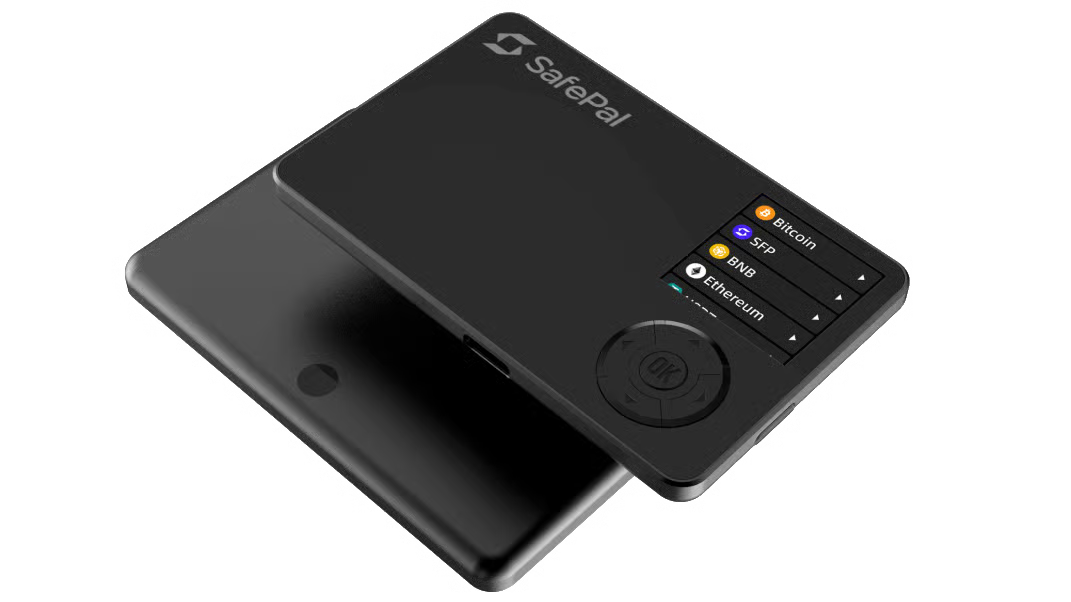
SafePal S1 Pro – Hardware Wallet Review
Score: 64/100. Genuine aluminum-and-glass upgrade over the S1, running the exact same underlying security model.
Read More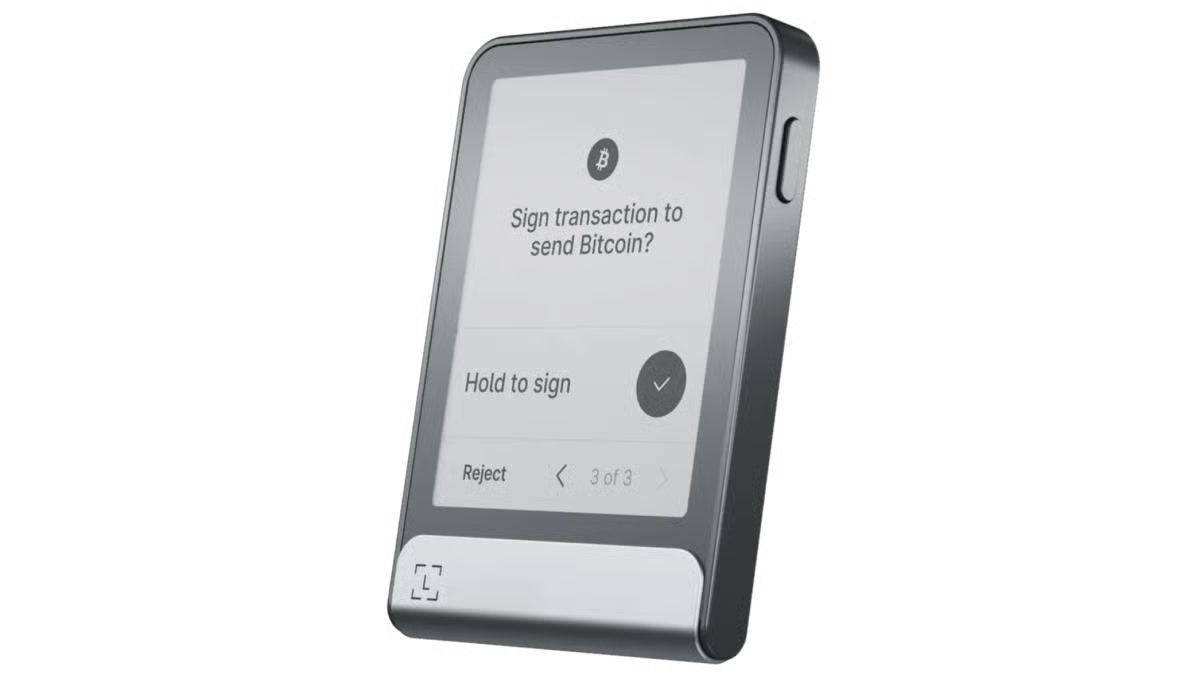
Ledger Flex – Hardware Wallet Review
Score: 76/100. Best chip Ledger makes, but closed-source firmware, the Recover controversy, and two breaches still linger.
Read More
BitBox02 – Hardware Wallet Review
Score: 71/100. Swiss-made, open-source, and genuinely clever, but sources disagree on whether multisig still works.
Read More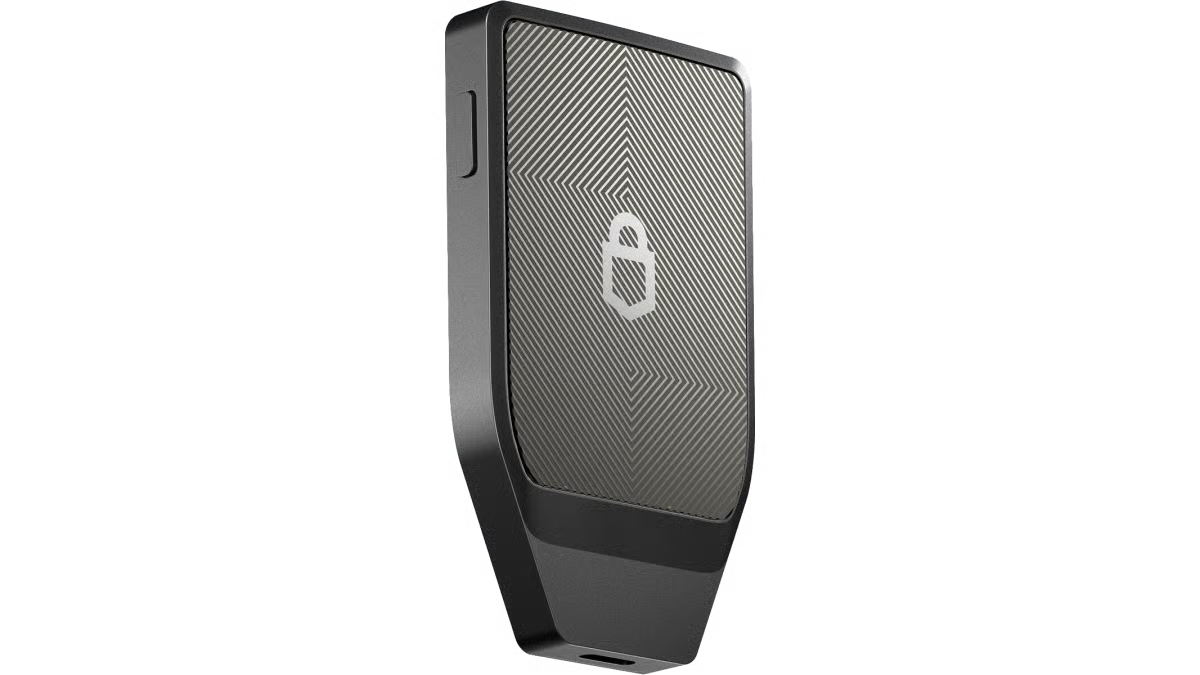
Trezor Safe 7 – Hardware Wallet Review
Score: 78/100. Fully auditable TROPIC01 chip, undercut by a real Ledger Donjon laser fault-injection disclosure.
Read More