
Fluminer T3: reasonably capable hardware from a company barely old enough to have a track record, wrapped in testimonials that don't read like real ones.
We're continuing our Crypto ASIC Mining Hardware series with the Fluminer T3, a genuinely new kind of entry for this series, a company's first-ever Bitcoin miner from a manufacturer previously known only for Dogecoin and Litecoin hardware. Real, disclosed genuine strengths: well-confirmed core specs, a specific disclosed price, and real, verifiable industry presence at a named 2025 trade show. What we don't think should be set aside: Fluminer's entire product line is under two years old, customer testimonials across multiple company-affiliated pages read as generic and templated, one page even contains unrelated corporate boilerplate text, and at least one independent technical source directly contradicts the company's own "home-friendly" marketing with a quantified 35/100 home-mining score. We weighted all of it below.
Our take, up front: The Fluminer T3 is a SHA-256 ASIC miner from Fluminer, a Chinese manufacturer previously known for its Scrypt-algorithm L-series Dogecoin and Litecoin miners; the T3 is disclosed directly as "the first Bitcoin miner from Fluminer." Real, disclosed genuinely well-confirmed core specs, consistent across nearly every source we checked: 115 TH/s hashrate at 1,700W for 14.78 J/TH efficiency, with a flexible 110-240V input and roughly 50 dB noise. Real, disclosed genuinely limited operating history: Fluminer's L1 "was recently launched in January 2025," and the company's first public showing came at Mining Disrupt 2025 in Fort Lauderdale that March, a real, verifiable trade-show appearance, but one that places the company's entire visible track record inside roughly the past two years. Real, disclosed genuine tension we found directly relevant to this category: the T3 is marketed directly as "home-friendly silent mining," yet at least one independent, hands-on-sounding technical source assigns it a quantified "home mining score" of just 35 out of 100, directly stating it "may require a dedicated space like a garage, basement, or outdoor enclosure." Real, disclosed content-quality concern we think is worth naming plainly: customer testimonials across multiple Fluminer-affiliated pages read as generic and interchangeable, with near-identical superlatives repeated across different products, and at least one official-looking company page contains a block of unrelated corporate boilerplate text about "solving thousands of puzzling business management issues" that has nothing to do with mining hardware, a real, disclosed sign that some of this content was not written carefully, or possibly not written for this business at all. Real, disclosed, genuinely thin-to-negative current profitability across independent calculators, ranging from a modest disclosed profit (+$1.81/day at $0.07/kWh) to an outright disclosed loss (-$4.08/day at higher rates), while at least one hosting reseller's own marketing claims a steadier $3.20/day average sourced to stale 2025 data. We weighted all of it below.
Real, disclosed genuinely well-confirmed core specs, consistent across nearly every source we checked: 115 TH/s at 1,700W for 14.78 J/TH efficiency. Real, disclosed context worth naming directly: this is Fluminer's first-ever SHA-256/Bitcoin product, following an established Scrypt (Dogecoin/Litecoin) product line under the same brand.
Pros
- Core hashrate, power, and efficiency figures are unusually consistent across the sources we checked
Cons
- This is Fluminer's first SHA-256 product, with no multi-generation track record to weigh it against
Real, disclosed flexible 110-240V input and a disclosed ~50 dB noise level, positioned directly by the company as "home-friendly silent mining." Real, disclosed genuine tension: at least one credible, independent, hands-on-sounding technical source assigns this unit a quantified "home mining score" of just 35 out of 100, directly noting it "may require a dedicated space like a garage, basement, or outdoor enclosure."
Pros
- A disclosed flexible 110-240V power input is genuinely more accessible than industrial three-phase requirements
Cons
- An independent source's own quantified home-mining score directly contradicts the company's "home-friendly" marketing claim
Real, disclosed genuinely limited operating history: Fluminer's product line, including this, its first SHA-256 unit, launched within roughly the past two years, with real, disclosed, verifiable industry presence at Mining Disrupt 2025 in Fort Lauderdale. Real, disclosed content-quality concern: customer testimonials across multiple Fluminer-affiliated pages read as generic and templated, and at least one official-looking page contains a block of unrelated corporate boilerplate text with nothing to do with mining hardware.
Pros
- A real, disclosed, verifiable trade-show appearance is a genuine positive signal of real-world industry presence
- At least one credible, independent, hands-on technical source maintains repair documentation for this unit, suggesting it's treated as legitimate
Cons
- Generic, interchangeable-feeling customer testimonials across multiple company-affiliated pages are a real, disclosed credibility concern
- At least one page containing clearly mismatched, unrelated corporate text suggests carelessly assembled content
Real, disclosed flexible 110-240V power input is more accessible than the industrial three-phase requirements found elsewhere in this series, though the disclosed 50 dB noise level and at least one independent source's own 35/100 home-mining score suggest genuinely dedicated-space deployment is still the realistic expectation.
Pros
- Flexible 110-240V input avoids the specialized electrical work required by industrial three-phase units
Cons
- Disclosed 5,800 BTU/h heat output and 50 dB noise still call for a dedicated space in most homes
Real, disclosed, genuinely thin-to-negative current profitability across independent calculators, ranging from a modest disclosed profit (+$1.81/day at $0.07/kWh) to an outright disclosed loss (-$4.08/day at higher rates around $0.10-0.109/kWh). Real, disclosed disparity: at least one hosting reseller's marketing figures (averaging $3.20/day, sourced to stale "April to August 2025" data) don't clearly reconcile with this wide, current range.
Pros
- Multiple independent calculators are at least directionally consistent with each other on the current, honest picture
Cons
- A hosting reseller's stale marketing figure doesn't reflect the real possibility of an outright loss at higher electricity rates
Real, disclosed genuinely specific dollar price found directly from at least one reseller ($1,649), a real, verifiable reference point, rarer and more useful in this series than a vague "contact us" listing.
Pros
- A specific, disclosed dollar figure lets a buyer budget with real confidence, rarer in this series than it should be
Cons
- At least one other reseller explicitly asks buyers to "verify the latest price with our sales team" rather than trusting the listed figure
Real, disclosed warranty inconsistency: a flat 365-day term (CryptoMinerBros) versus a two-tier "7 years hosted / 12 months shipped" structure (OneMiners) that reads like boilerplate hosting-company language reused across different products, similar to what we found reviewing the S23 Hyd 3U. Real, disclosed positive signal: an active firmware-upgrade program was mentioned as "coming soon" by at least one independent mining pool.
Pros
- A disclosed, planned firmware upgrade suggests active, ongoing manufacturer support
Cons
- A real, disclosed warranty inconsistency between sources complicates knowing what coverage you'll actually get
Genuinely reasonable hardware; treat the marketing copy, not just the numbers, with real skepticism.
Given the genuinely well-confirmed core specs and disclosed price we found, we'd consider the T3 with cautious interest as a budget-friendlier entry point, while independently verifying the noise level fits your actual space, running current profitability numbers yourself, and not treating either the company's own website copy or its scattered customer testimonials as reliable evidence on their own.
We're not going to call this a scam. We are going to say the marketing copy didn't earn our trust, and that's a different, more honest thing to say.
We want to be precise about what we actually found, because we think precision matters more here than anywhere else in this series so far. Fluminer has real, verifiable industry presence, a real trade-show appearance, an established Scrypt product line, and at least one credible, independent, repair-focused source treats the T3 as a legitimate product worth stocking and documenting. We're not asserting fraud, and we don't have evidence of one. What we do have is a company whose entire visible history spans under two years, customer testimonials across several of its own pages that read as generic and interchangeable rather than independently verifiable, and at least one official-looking page where a chunk of clearly unrelated corporate boilerplate text sits right next to the product description, the kind of thing that happens when content gets assembled carelessly, or from a template not built for this business. Layered on top of a genuine, disclosed gap between the company's "home-friendly" marketing and an independent source's much more skeptical 35/100 home-mining score, we think the honest read here is: reasonably solid, well-confirmed hardware, from a company that hasn't yet earned the benefit of the doubt on everything it says about itself.
The scorecard above is deliberately general. Whether the Fluminer T3 is right for you depends heavily on which of these you already are.
The budget-conscious buyer who independently verifies specs, price, and noise level rather than trusting the company's own copy
This is exactly the diligence needed given the real, disclosed content-quality concerns we found across Fluminer's own pages.
The buyer with a genuinely dedicated space (garage, basement, outbuilding) rather than someone hoping to run this in a living space
Given the real, disclosed 35/100 independent home-mining score, this specific expectation genuinely matters here.
The buyer comfortable with a young manufacturer that has real trade-show presence but no multi-year track record yet
This is workable given the real, disclosed positive industry signals, though newcomers should weigh the limited history honestly.
Anyone who wants an established, multi-year manufacturer track record or takes "home-friendly" marketing at face value
A real, disclosed lack of long-term history and a real, disclosed marketing-vs-independent-assessment gap make this a poor fit for that specific need.
The scorecard covers the headline judgment calls. These four tables cover the specifics we didn't want to bury in prose; Fluminer's genuinely young company timeline, the marketing-vs-independent-assessment gap on home-friendliness, the content-quality concerns we found and exactly where, and all eight units reviewed so far compared together.
Fluminer's genuinely young company timeline
| Date | What happened |
|---|---|
| January 2025 | Fluminer L1 (Scrypt, Dogecoin/Litecoin) launches |
| March 2025 | Fluminer and distributor ASLminer appear at Mining Disrupt 2025, Fort Lauderdale; L2 introduced |
| 2025 (undated) | Fluminer T3 launches, the company's first SHA-256/Bitcoin product |
We're dating this because it's a genuinely different situation than every manufacturer reviewed so far in this series: not a clean history and not a documented scandal, simply not enough time yet for either.
The marketing-vs-independent-assessment gap on home-friendliness
| Source | What it says |
|---|---|
| Fluminer / resellers | "Home-friendly silent mining," "ideal for residential... setups" |
| D-Central (independent, hands-on) | "Home mining score of 35/100... may require a dedicated space like a garage, basement, or outdoor enclosure" |
We're placing these side by side because they're describing the same 50 dB, 1,700W machine in genuinely different terms, and we think a buyer deserves to see both framings before deciding which to trust.
The content-quality concerns we found, and exactly where
| Where | What we found |
|---|---|
| fluminer.cc testimonials | Generic, superlative-heavy reviews immediately followed by unrelated text about "solving thousands of puzzling business management issues" |
| CryptoMinerBros L1 and T3 listings | Near-identical testimonial phrasing repeated across two different product pages |
We're naming this precisely because it's a real, disclosed content-quality concern, not an accusation. Careless or templated content doesn't tell us the hardware is bad, but it does mean the company's own marketing has earned less of our trust than its competitors' has.
All eight units reviewed so far in this series
| S23 Hyd 3U | M79S | S21 XP | S21 Pro | S21+ | Avalon Q | L9 | T3 | |
|---|---|---|---|---|---|---|---|---|
| Manufacturer | Bitmain | MicroBT | Bitmain | Bitmain | Bitmain | Canaan | Bitmain | Fluminer |
| Manufacturer history | 13 yrs, documented issues | 10 yrs, documented issues | 13 yrs, documented issues | 13 yrs, documented issues | 13 yrs, documented issues | 13 yrs, none found | 13 yrs, documented issues | <2 yrs, too young to assess |
| Core disclosed issue | Cross-reseller inconsistencies | Core specs vary by nearly 50% | Same Bitmain manufacturer history | Lower efficiency than siblings | A retailer's own page contradicts itself | No clear disclosed price or warranty | Marketing figures 7-15x higher than reality | Templated testimonials, unverified track record |
| Our score | 61.0/100 | 45.0/100 | 65.5/100 | 65.0/100 | 51.5/100 | 59.25/100 | 58.5/100 | 53.5/100 |
The T3's score sits near the lower end of this series not because we found a documented scandal, the way we did for Bitmain or MicroBT, but because there simply isn't enough of a track record yet to earn the benefit of the doubt the company's own marketing is asking for.
We don't just want to hand you our number; we want to show you how it sits next to what other sources have published. We're flagging directly that most visible coverage of this unit comes from the company's own site and its resellers, whose testimonial content is exactly what we found least trustworthy, while at least one independent, hands-on-feeling technical source's own quantified assessment is notably more skeptical.
Our score lands modestly below the aggregated industry average; company and reseller-affiliated content skews noticeably more positive than the one independent, hands-on technical source we found, whose own quantified home-mining score sits much closer to our overall assessment.
| Source | Score | Type |
|---|
Scores compiled by our editorial team from publicly available reviews as of August 2026. "Editorial estimate" means the outlet didn't publish a single numeric score, so we converted their published verdict and sentiment into a comparable 100-point figure. Verify current figures directly with each source before citing them elsewhere.
115 TH/s hashrate at 1,700W power consumption, for 14.78 J/TH efficiency, using the SHA-256 algorithm for Bitcoin. It runs on flexible 110-240V input and is rated at roughly 50 dB noise.
Fluminer, a China-based manufacturer previously known for Scrypt (Dogecoin/Litecoin) miners, with the T3 as its first SHA-256 product. The company's visible history spans under two years. We found real, verifiable trade-show presence, but also generic, templated-feeling testimonials across multiple company-affiliated pages, including one page with unrelated corporate boilerplate text. We found no evidence of fraud, but also no long track record to draw on.
The company markets it as "home-friendly silent mining," but at least one independent, hands-on technical source assigns it a home-mining score of just 35/100, noting it likely needs a dedicated space like a garage or basement rather than a living area.
At least one reseller discloses a specific price of $1,649. Another reseller explicitly asks buyers to verify current pricing with their sales team rather than trusting the listed figure, so confirm before paying.
It depends heavily on your electricity rate. Independent calculators show anywhere from a modest profit (+$1.81/day at $0.07/kWh) to an outright loss (-$4.08/day at higher rates). A hosting reseller's marketing figure of $3.20/day, sourced to 2025 data, doesn't clearly reflect that range.
Sources disagree: one reseller states a flat 365-day term, while another describes a two-tier "7 years hosted / 12 months shipped" structure that reads like reused hosting-company boilerplate. Confirm directly with your chosen seller.
Yes, Fluminer's established line is the Scrypt-algorithm L-series (L1, L1-Pro, L2) for Dogecoin and Litecoin. The T3 is the company's first move into SHA-256/Bitcoin hardware.
It scores 53.5/100, near the lower end of this series, not because of a documented scandal like some competitors, but because the company's short history and templated-feeling marketing content haven't yet earned the benefit of the doubt.
More Reviews
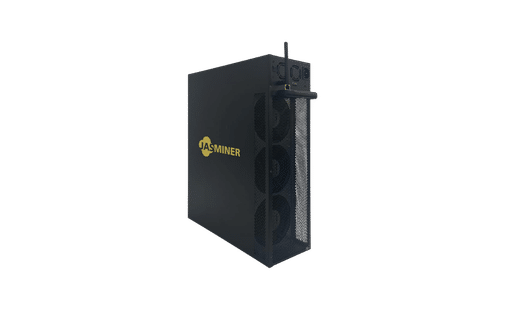
Jasminer X16-Q – Crypto ASIC Mining Hardware Review
Score: 59.5/100. Genuinely quiet EtHash miner with a verified generational upgrade, though profitability swings between loss and profit.
Read More
Antminer S23 Hyd 3U – Crypto ASIC Mining Hardware Review
Score: 61.0/100. Best raw efficiency in the series, tempered by cross-reseller weight, warranty, and voltage inconsistencies.
Read More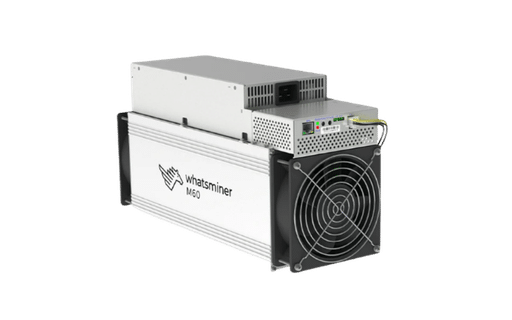
WhatsMiner M60S – Crypto ASIC Mining Hardware Review
Score: 57.25/100. Chosen to test the M79S's chaos; specs proved consistent, showing that mess was product-specific, not company-wide.
Read More
WhatsMiner M79S – Crypto ASIC Mining Hardware Review
Score: 45.0/100. Worst transparency in the series; core hashrate varies by nearly 50% across resellers with no clear explanation.
Read More