
Antminer L9: a genuinely clever piece of engineering, sold with marketing figures that are 7 to 15 times too high.
We're continuing our Crypto ASIC Mining Hardware series with the Antminer L9, our first Scrypt-algorithm miner, built for Litecoin and Dogecoin rather than Bitcoin. Real, disclosed genuine strengths: genuinely well-confirmed specs across four honestly-explained binned variants, and a real, disclosed merged-mining capability that earns both LTC and DOGE from the same hashrate at once. What we don't think should be set aside: this is the same manufacturer, Bitmain, whose disclosed history applied to every prior review in this series, current profitability is honestly described by independent sources as barely break-even, and at least one hosting reseller's own marketing figures run 7 to 15 times higher than current, independent calculations. We weighted all of it below.
Our take, up front: The Antminer L9 is Bitmain's current flagship Scrypt-algorithm ASIC miner, built for Litecoin and Dogecoin rather than Bitcoin, launched in mid-to-late 2024 as the successor to the L7. Real, disclosed genuinely well-confirmed core specs, honestly explained by at least one credible technical source: the L9 ships in four hashrate variants, 15, 16, 16.5, and 17 GH/s, all sharing the same 0.21 J/MH efficiency, same physical dimensions, and same disclosed noise level, with the difference between tiers coming from "natural chip performance variance during manufacturing, not different hardware," a legitimate binning situation rather than spec confusion. Real, disclosed genuinely distinctive technical property: merged mining, meaning a single L9 secures both the Litecoin and Dogecoin networks simultaneously at full hashrate, earning rewards from both chains at once with no efficiency loss on either, a property of the Scrypt algorithm itself that Dogecoin adopted specifically to share security with Litecoin. Real, disclosed genuinely useful, buyer-oriented price disclosure, rare in this series so far: at least one independent source specifically calculates that the priciest 17 GH/s variant costs roughly $800 more than the 15 GH/s variant for only "$0.40 to $0.50" in extra daily earnings, directly advising most buyers toward the cheaper tiers instead. Real, disclosed, currently thin profitability, described honestly by an independent source as "roughly break-even" at $0.08/kWh, "nets only about $1 per day," consistent with independent calculator figures. Real, disclosed, genuinely severe disparity we found directly relevant to this category: at least one hosting reseller's own marketing figures, averaging $14.19 to $15.62 per day and sourced to "April to August 2025" data, run roughly 7 to 15 times higher than current, independent calculations, an even more severe stale-marketing gap than found reviewing the S23 Hyd 3U earlier in this series. Real, disclosed structural context: this is the same manufacturer, Bitmain, whose disclosed Antbleed and ASICBOOST history, and reported 2025 national-security scrutiny, applied to every prior review in this series and apply here too. We weighted all of it below.
Real, disclosed genuinely well-confirmed core specs, honestly explained by at least one credible technical source: four hashrate variants (15/16/16.5/17 GH/s) all sharing 0.21 J/MH efficiency, with tier differences coming from manufacturing chip variance, not different hardware, a legitimate binning situation. Real, disclosed genuinely distinctive technical property: merged mining, securing both Litecoin and Dogecoin simultaneously at full hashrate with no efficiency loss on either.
Pros
- Merged mining is a genuinely distinctive, disclosed technical property unique to this algorithm among units reviewed in this series
- The four-tier binning structure is honestly explained by at least one source as manufacturing variance, not spec confusion
Cons
- Efficiency can't be directly compared to the SHA-256 units already reviewed in this series, since Scrypt is a fundamentally different algorithm
Real, disclosed standard air-cooled Antminer form factor, consistent physical dimensions and noise (75 dB) across all four disclosed variants, four high-speed fans. Real, disclosed specific, practical detail: dual-C20 power inputs required to safely deliver its power draw.
Pros
- Consistent, disclosed dimensions and noise across all four hashrate tiers simplify what a buyer can expect physically
Cons
- A disclosed 75 dB noise level carries over the same home-deployment limitation found across Bitmain's other air-cooled units in this series
Real, disclosed same manufacturer, same well-documented history already established across every prior Bitmain review in this series: the 2017 Antbleed firmware controversy, the covert ASICBOOST scandal, and reported 2025 Homeland Security scrutiny "for national security reasons."
Pros
- Bitmain's broad, disclosed service and distribution network extends to its Scrypt product line as well
Cons
- The same disclosed Antbleed and ASICBOOST history applies to every Bitmain product, this one included
Real, disclosed genuinely substantial power draw (3,360-3,570W depending on variant) requiring dual-C20 power inputs, generally consistent with the broader Bitmain air-cooled family's deployment profile already reviewed in this series.
Pros
- Dual-C20 power input requirements are disclosed specifically, reducing guesswork on cabling
Cons
- A 3,360-3,570W draw exceeds typical single home-circuit capacity in most regions
Real, disclosed, currently genuinely thin margins, honestly described by an independent source as "roughly break-even... nets only about $1 per day" at $0.08/kWh, consistent with independent calculator figures. Real, disclosed, genuinely severe disparity: at least one hosting reseller's own marketing figures, averaging $14.19 to $15.62 per day and sourced to "April to August 2025" data, run roughly 7 to 15 times higher than current, independent calculations.
Pros
- At least one independent source was directly honest that current margins are thin, not hyped
Cons
- A stale hosting-reseller marketing figure running 7 to 15 times higher than current data is a severe, disclosed transparency problem
Real, disclosed genuinely useful, specific price-delta disclosure, rare in this series: at least one independent source specifically states the 17 GH variant costs roughly $800 more than the 15 GH variant, and directly advises against paying it given the marginal daily-earnings difference.
Pros
- A specific, disclosed dollar delta between variants, paired with honest guidance against overpaying, is genuinely rare and valuable
Cons
- No single, official Bitmain-published price exists for any of the four disclosed variants
We did not find a clearly disclosed, specific warranty term for the L9 in our research, a real, disclosed information gap.
Pros
- Bitmain's broader, generally disclosed one-year warranty norm across its Antminer line offers a reasonable baseline expectation
Cons
- No specific, disclosed warranty term was found anywhere in our research for this specific unit
Genuinely clever engineering; run your own numbers before trusting any hosting company's daily-earnings claim.
Given the genuinely distinctive merged-mining capability and well-confirmed specs we found, we'd consider the L9 with real interest for Litecoin and Dogecoin mining specifically, while pricing the cheaper 15 or 16 GH variant first, and running current, independent profitability numbers yourself rather than trusting any single hosting company's marketing figures.
We've seen stale marketing numbers before in this series. We haven't seen them off by a factor of ten before.
We want to give real credit here: merged mining is a genuinely clever piece of algorithm design, one machine earning two separate coins at once, and at least one independent source did something we wish we saw more often in this series, explicitly telling buyers not to pay $800 more for the top-tier variant because the extra daily earnings don't justify it. That's the kind of honest, disclosed guidance that works against a seller's own margin. What we can't look past is the other side of the same coin: a hosting reseller's own marketing figures for this exact hardware, averaging roughly $14 to $15 a day, sit 7 to 15 times higher than what current, independent calculators actually show, which is closer to $1 to $2 a day at typical electricity rates. We've flagged stale profitability marketing before in this series, but never a gap this wide. Layer in the same Bitmain manufacturer history that's applied to every review so far, and we think this lands as genuinely solid, well-documented hardware that a reader should approach with their own current numbers, not a reseller's year-old chart.
The scorecard above is deliberately general. Whether the Antminer L9 is right for you depends heavily on which of these you already are.
The Litecoin or Dogecoin miner who specifically wants merged-mining efficiency from a single, well-confirmed unit
This is exactly where the L9's real, disclosed, distinctive merged-mining property delivers genuine value.
The buyer who prices the cheaper 15 or 16 GH variant first rather than assuming the top tier is worth the premium
Given the real, disclosed $800 price gap for marginal extra earnings, this specific habit genuinely matters here.
The operator already running an L7 fleet evaluating whether the upgrade math makes sense for their specific situation
This is a real, disclosed, genuinely useful upgrade case, though the payback period depends heavily on your current setup.
Anyone relying on a hosting company's advertised daily-earnings figures without independently checking current numbers
A real, disclosed 7-to-15-times gap between marketing figures and current data makes this a poor fit for that approach.
The scorecard covers the headline judgment calls. These four tables cover the specifics we didn't want to bury in prose; the four binned variants explained honestly, the marketing-vs-reality profitability gap laid out with real numbers, the price-delta math one source did for buyers, and all seven units reviewed so far compared together.
The four binned variants, explained honestly
| Variant | Shared specs |
|---|---|
| 15 GH/s | 0.21 J/MH, 195×290×379mm, 75 dB, 3,360W, same hardware |
| 16 GH/s | 0.21 J/MH, 195×290×379mm, 75 dB, 3,360W, same hardware |
| 16.5 GH/s | 0.21 J/MH, 195×290×379mm, 75 dB, 3,360-3,465W, same hardware |
| 17 GH/s | 0.21 J/MH, 195×290×379mm, 75 dB, 3,570W, same hardware |
We're showing all four because one credible source explained clearly that the difference is manufacturing chip variance, not different hardware, exactly the kind of clarification that turns a confusing multi-SKU lineup into a legitimate one.
The marketing-vs-reality profitability gap, with real numbers
| Source | Daily figure | Basis |
|---|---|---|
| Independent source (current) | ~$1/day at $0.08/kWh | "Roughly break-even" as of mid-2026 |
| MiningNow calculator (current) | +$1.96/day at $0.07/kWh | Live network conditions |
| OneMiners hosting listing | $14.19–$15.62/day average | Sourced to "April to August 2025" data |
We're putting the actual figures side by side because a 7-to-15-times gap isn't a rounding difference, it's the kind of number that could genuinely mislead a buyer's purchase decision if taken at face value.
The price-delta math one source did for buyers
| Figure | |
|---|---|
| Price premium, 17 GH vs. 15 GH | ~$800 |
| Extra daily earnings from that premium | ~$0.40 to $0.50 |
| Time to recover the price difference through extra hashrate alone | ~4 years |
We're including this because it's a genuinely rare example in this series of an independent source doing the buyer's math for them, and the math argues directly against paying for the flagship tier.
All seven units reviewed so far in this series
| S23 Hyd 3U | M79S | S21 XP | S21 Pro | S21+ | Avalon Q | L9 | |
|---|---|---|---|---|---|---|---|
| Manufacturer | Bitmain | MicroBT | Bitmain | Bitmain | Bitmain | Canaan | Bitmain |
| Algorithm | SHA-256 | SHA-256 | SHA-256 | SHA-256 | SHA-256 | SHA-256 | Scrypt |
| Coins mined | BTC/BCH | BTC/BCH | BTC/BCH/BSV | BTC/BCH/BSV | BTC/BCH/BSV | BTC | LTC + DOGE |
| Core disclosed issue | Cross-reseller inconsistencies | Core specs vary by nearly 50% | Same Bitmain manufacturer history | Lower efficiency than siblings | A retailer's own page contradicts itself | No clear disclosed price or warranty | Marketing figures 7-15x higher than reality |
| Our score | 61.0/100 | 45.0/100 | 65.5/100 | 65.0/100 | 51.5/100 | 59.25/100 | 58.5/100 |
The L9 is our first Scrypt-algorithm unit in this series, mining an entirely different asset class than every SHA-256 unit before it; its score reflects genuinely well-confirmed hardware weighed against the most severe profitability-marketing gap we've found so far.
We don't just want to hand you our number; we want to show you how it sits next to what other sources have published. We're flagging directly that much of the coverage of this unit comes from hosting resellers whose own marketing figures are part of the stale-profitability problem we found, which pulls general sentiment in a more optimistic direction than current, independent data supports.
Our score lands modestly below the aggregated industry average; reseller-driven coverage that reuses stale profitability figures skews general sentiment more optimistic than current, independent data supports, though at least some genuinely honest, technical sources pull the aggregate back down closer to our own number.
| Source | Score | Type |
|---|
Scores compiled by our editorial team from publicly available reviews as of August 2026. "Editorial estimate" means the outlet didn't publish a single numeric score, so we converted their published verdict and sentiment into a comparable 100-point figure. Verify current figures directly with each source before citing them elsewhere.
15 to 17 GH/s hashrate at roughly 3,360-3,570W (depending on variant), for 0.21 J/MH efficiency, using the Scrypt algorithm for Litecoin and Dogecoin. It's Bitmain's successor to the L7, launched in mid-to-late 2024.
Merged mining lets one machine secure both Litecoin and Dogecoin simultaneously at full hashrate, earning rewards from both chains at once with no efficiency loss on either. It's possible because Dogecoin adopted the Scrypt algorithm specifically to share security with Litecoin.
At least one independent source specifically calculates that the 17 GH/s variant costs roughly $800 more than the 15 GH/s variant for only $0.40-0.50 in extra daily earnings, meaning it would take about four years to recover that premium through hashrate alone. The 16 or 16.5 GH/s variants are generally the better value.
Current, independent figures show it's marginally profitable at typical electricity rates, roughly $1-2 per day. Be cautious of hosting-reseller marketing claiming $14-15 per day; we found this figure sourced to stale 2025 data running 7 to 15 times higher than current calculations.
Bitmain, the same manufacturer behind every other Bitmain-branded unit reviewed in this series. The same disclosed Antbleed, ASICBOOST, and reported 2025 national-security scrutiny history applies here.
Roughly 75 dB, consistent across all four disclosed hashrate variants, similar to Bitmain's air-cooled SHA-256 units already reviewed in this series.
No single, official Bitmain-published price exists across the four variants. We found a disclosed price delta of roughly $800 between the cheapest and priciest tier, but no absolute baseline figure.
It scores 58.5/100, our first Scrypt-algorithm unit mining Litecoin and Dogecoin rather than Bitcoin. The score reflects genuinely well-confirmed hardware weighed against the most severe profitability-marketing gap found anywhere in this series so far.
More Reviews
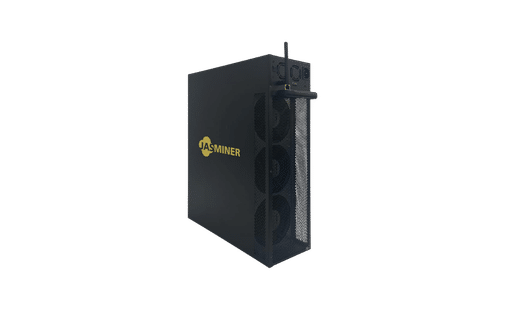
Jasminer X16-Q – Crypto ASIC Mining Hardware Review
Score: 59.5/100. Genuinely quiet EtHash miner with a verified generational upgrade, though profitability swings between loss and profit.
Read More
Antminer S23 Hyd 3U – Crypto ASIC Mining Hardware Review
Score: 61.0/100. Best raw efficiency in the series, tempered by cross-reseller weight, warranty, and voltage inconsistencies.
Read More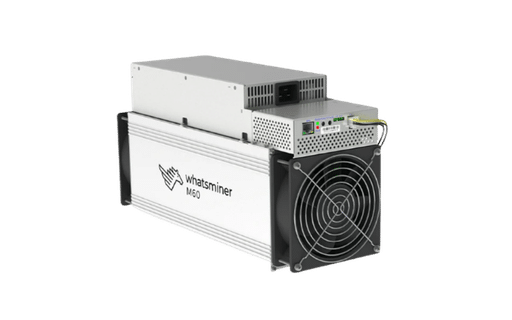
WhatsMiner M60S – Crypto ASIC Mining Hardware Review
Score: 57.25/100. Chosen to test the M79S's chaos; specs proved consistent, showing that mess was product-specific, not company-wide.
Read More
WhatsMiner M79S – Crypto ASIC Mining Hardware Review
Score: 45.0/100. Worst transparency in the series; core hashrate varies by nearly 50% across resellers with no clear explanation.
Read More