
Antminer L7: the L9's predecessor, and the first unit in this series that independent sources openly admit isn't worth buying anymore.
We're continuing our Crypto ASIC Mining Hardware series with the Antminer L7, the direct predecessor to the L9 we reviewed earlier in this series. Real, disclosed genuine strengths: well-confirmed specs sourced directly from Bitmain's own store, a real, disclosed low current price reflecting its legacy status, and the same merged-mining capability its successor carries forward. What we don't think should be set aside: at least one independent source states plainly that the L7 "is no longer a competitive miner," current profitability is consistently negative across multiple calculators, and its warranty term is notably shorter than the newer Bitmain units already reviewed in this series. We weighted all of it below.
Our take, up front: The Antminer L7 is Bitmain's previous-generation Scrypt-algorithm ASIC miner, first released in November 2021 and manufactured in Indonesia, the direct predecessor to the Antminer L9 we reviewed earlier in this series. Real, disclosed genuinely well-confirmed specs, sourced directly from Bitmain's own official store page: 9.16-9.5 GH/s hashrate (variant-dependent) at 3,225-3,425W for 0.35-0.38 J/MH efficiency, with an officially disclosed ±10% tolerance. Real, disclosed genuinely honest current assessment we found directly relevant to this category: an independent source states plainly, as of an April 2026 update, that "the Antminer L7 is no longer a competitive miner, as you would need extremely low electricity prices to make a profit," a real, disclosed, mature verdict rather than a concealed problem. Real, disclosed, consistently negative current profitability across multiple independent calculators: -$8.22/day at $0.10/kWh, and still -$0.46/day even at a much lower $0.07/kWh rate. Real, disclosed genuinely useful direct comparison to its own successor: at 0.35-0.38 J/MH, the L7 is roughly 40% less efficient than the L9's 0.21 J/MH, the exact upgrade math independently laid out in our L9 review. Real, disclosed genuinely low current price reflecting its legacy status, with a real, disclosed spread from roughly $770-890 at one source to $1,599 at Newegg. Real, disclosed genuinely shorter warranty term specific to this older unit: 6 months from the manufacturer, notably shorter than the roughly 12-month baseline found across the newer Bitmain units already reviewed in this series. Real, disclosed structural context: this is the same manufacturer, Bitmain, whose disclosed Antbleed and ASICBOOST history, and reported 2025 national-security scrutiny, applied to every prior Bitmain review in this series and apply here too. We weighted all of it below.
Real, disclosed genuinely well-confirmed specs, sourced directly from Bitmain's own official store page: 9.16-9.5 GH/s (variant-dependent) at 3,225-3,425W for 0.35-0.38 J/MH, with an officially disclosed ±10% tolerance. Real, disclosed genuinely honest current assessment: an independent source states plainly that "the Antminer L7 is no longer a competitive miner," roughly 40% less efficient than its own direct successor, the L9 (0.21 J/MH).
Pros
- Specs are officially confirmed via Bitmain's own store page, with disclosed tolerance ranges
Cons
- An independent source directly states this hardware is "no longer a competitive miner" at today's difficulty
- Roughly 40% less efficient than its own direct successor, the L9, already reviewed in this series
Real, disclosed standard air-cooled Antminer design with quad-fan cooling, consistent 75 dB noise, integrated APW12 PSU included.
Pros
- Years of real-world deployment history give this design a genuinely proven, disclosed track record
- Integrated PSU included simplifies setup relative to units requiring a separate purchase
Cons
- A disclosed 75 dB noise level firmly limits this to dedicated industrial or farm-style deployment
Real, disclosed same manufacturer, same well-documented history already established across every prior Bitmain review in this series: the 2017 Antbleed firmware controversy, the covert ASICBOOST scandal, and reported 2025 Homeland Security scrutiny "for national security reasons."
Pros
- A long, disclosed real-world deployment history gives this specific model genuine field-reliability data most newer units lack
Cons
- The same disclosed Antbleed and ASICBOOST history applies to every Bitmain product, this one included
Real, disclosed genuinely substantial power draw (3,225-3,425W) requiring 220-240V industrial-grade input, consistent with the broader Bitmain Scrypt lineup and its own successor already reviewed in this series.
Pros
- A disclosed, well-documented power profile means deployment planning is straightforward for experienced operators
Cons
- A 3,225-3,425W draw requiring 220-240V input rules out casual or home deployment entirely
Real, disclosed, consistently negative current profitability across multiple independent calculators: -$8.22/day at $0.10/kWh, and still -$0.46/day even at a much lower $0.07/kWh rate, honestly, directly described by an independent source as no longer viable "unless electricity costs are extremely low."
Pros
- Multiple independent sources are directly, consistently honest that this unit is no longer broadly profitable
Cons
- Current profitability is negative even at electricity rates most operators would consider favorable
Real, disclosed genuinely low current price point reflecting its legacy status, with a real, disclosed spread ($770-890 at one source vs $1,599 at Newegg), though the sheer availability of specific dollar figures is itself a positive relative to several newer units in this series.
Pros
- Specific, disclosed dollar figures from multiple named sources let a buyer budget with real confidence
Cons
- A real, disclosed price spread of roughly 2x between the lowest and highest source complicates knowing a fair current price
Real, disclosed, genuinely shorter warranty term specific to this legacy unit: 6 months from the manufacturer, notably shorter than the roughly 12-month baseline found across most other, newer Bitmain units already reviewed in this series.
Pros
- A disclosed warranty term does exist, even if shorter than newer units in the same product family
Cons
- A disclosed 6-month term is meaningfully shorter than the roughly 12-month baseline found across newer Bitmain units in this series
Genuinely, honestly obsolete for most buyers; the L9 exists for a reason.
Given the consistently negative current profitability we found across independent sources, we would not recommend the L7 for new deployment at typical electricity rates; if you're specifically drawn to its low upfront price, run the numbers for your exact electricity rate first, and seriously weigh whether the L9's roughly 40% efficiency advantage makes more sense for new capital.
Every other low score in this series came from something hidden. This one is honestly, openly disclosed, and we think that's worth noting on its own.
We want to draw a real distinction here, because we think it matters. The M79S scored low because resellers couldn't agree on basic specs. The S21+ scored low because a listing contradicted itself. The L7 scores low for a completely different reason: it's an aging piece of hardware, and multiple independent sources say so plainly, in public, without us having to dig for it. "No longer a competitive miner" isn't a hidden flaw we uncovered, it's a direct quote from a source dated this year. We think that's a meaningfully better situation for a buyer than the alternative, even though the resulting number lands in a similar place. The L7 was genuinely excellent hardware in 2021, replacing roughly 19 of its own predecessor in a single chassis, and it still works exactly as designed today. It's just been fairly and openly surpassed, first by its own direct successor, the L9, which we reviewed earlier in this series at roughly 40% better efficiency. If you already own one, or can get one cheaply enough for your specific electricity rate, this isn't a bad machine. As a new purchase at typical rates, the math plainly doesn't work, and unlike some of the other findings in this series, nobody's trying particularly hard to hide that from you.
The scorecard above is deliberately general. Whether the Antminer L7 is right for you depends heavily on which of these you already are.
The existing L7 owner deciding whether to keep running current hardware rather than someone shopping new
This is exactly where the L7's real, disclosed, proven reliability still delivers genuine value without new capital risk.
The buyer with genuinely very low, specifically verified electricity costs who's run the current numbers themselves
Given the real, disclosed consistently negative profitability at typical rates, this specific situation genuinely matters here.
The operator comparing the L7's low upfront price against the L9's higher price and better efficiency for their specific fleet math
This is a real, disclosed, genuinely useful comparison worth running before committing either way.
New buyers at typical electricity rates, or anyone expecting this to compete with current-generation Scrypt hardware
A real, disclosed, honestly-stated obsolescence and consistently negative current profitability make this a poor fit for that expectation.
The scorecard covers the headline judgment calls. These four tables cover the specifics we didn't want to bury in prose; the L7 placed directly against its own successor, the consistently negative profitability figures across sources, the disclosed price spread, and all nine units reviewed so far compared together.
The L7, placed directly against its own successor
| Antminer L7 (2021) | Antminer L9 (2024) | |
|---|---|---|
| Hashrate | 9.16-9.5 GH/s | 15-17 GH/s |
| Power | 3,225-3,425W | 3,360-3,570W |
| Efficiency | 0.35-0.38 J/MH | 0.21 J/MH |
| Warranty | 6 months | Not clearly disclosed |
We're placing these directly side by side because they're the same product line, three years apart, and the efficiency gap, roughly 40% in the L9's favor, is the single clearest number in this pairing.
The consistently negative profitability figures, across sources
| Source | Electricity cost | Daily profit |
|---|---|---|
| ASIC Miner Value | $0.10/kWh | -$8.22 (loss) |
| MiningNow | $0.07/kWh | -$0.46 (loss) |
| CryptoNews.net (qualitative) | Typical rates | "Unlikely" to be profitable |
We're showing all three because, unlike several other units in this series, these sources actually agree with each other, a real, disclosed, honest consensus rather than a contradiction to untangle.
The disclosed price spread
| Source | Price |
|---|---|
| CryptoNews.net (vendor range) | $770-$890 |
| Newegg | $1,599 |
We're including this because even a legacy unit's price is worth verifying directly; a roughly 2x spread between sources is real money either way.
All nine units reviewed so far in this series
| S23 Hyd 3U | M79S | S21 XP | S21 Pro | S21+ | Avalon Q | L9 | T3 | L7 | |
|---|---|---|---|---|---|---|---|---|---|
| Manufacturer | Bitmain | MicroBT | Bitmain | Bitmain | Bitmain | Canaan | Bitmain | Fluminer | Bitmain |
| Released | 2025-26 | 2025-26 | 2024-26 | 2023-24 | 2025 | 2025 | 2024 | 2025 | 2021 |
| Core disclosed issue | Cross-reseller inconsistencies | Core specs vary by nearly 50% | Same Bitmain manufacturer history | Lower efficiency than siblings | A retailer's own page contradicts itself | No clear disclosed price or warranty | Marketing figures 7-15x higher than reality | Templated testimonials, unverified track record | Openly, honestly obsolete at today's difficulty |
| Our score | 61.0/100 | 45.0/100 | 65.5/100 | 65.0/100 | 51.5/100 | 59.25/100 | 58.5/100 | 53.5/100 | 44.75/100 |
The L7 lands near the bottom of this series, but for a genuinely different reason than the other low scorers: it's not a trust or transparency problem, it's just old, and honestly, openly described that way by multiple independent sources.
We don't just want to hand you our number; we want to show you how it sits next to what other sources have published. We're flagging directly that this is one of the more honest corners of the internet we've checked in this series: independent sources are fairly open about this hardware's declining competitiveness, which brings general sentiment closer to our own number than usual, though older reseller listings still market it somewhat more positively than current economics support.
Our score lands modestly below the aggregated industry average; most current, independent coverage is honest about this hardware's age and declining competitiveness, though older reseller listings still carry more positive framing than current profitability data supports.
| Source | Score | Type |
|---|
Scores compiled by our editorial team from publicly available reviews as of August 2026. "Editorial estimate" means the outlet didn't publish a single numeric score, so we converted their published verdict and sentiment into a comparable 100-point figure. Verify current figures directly with each source before citing them elsewhere.
9.16-9.5 GH/s hashrate (variant-dependent) at 3,225-3,425W, for 0.35-0.38 J/MH efficiency, using the Scrypt algorithm for Litecoin and Dogecoin. First released in November 2021, manufactured in Indonesia.
Generally no, at typical electricity rates. Independent calculators show consistently negative daily profit, from -$8.22/day at $0.10/kWh to still -$0.46/day at $0.07/kWh. At least one independent source states plainly it's "no longer a competitive miner" without extremely low electricity costs.
The L9, its direct successor reviewed earlier in this series, delivers roughly 40% better efficiency (0.21 J/MH vs. 0.35-0.38 J/MH) at a higher hashrate. For new purchases, the L9's efficiency advantage generally outweighs the L7's lower upfront price.
Prices vary by source, from roughly $770-890 at one vendor to $1,599 at Newegg, reflecting its status as a legacy unit. Confirm the current price with your chosen seller.
6 months from the manufacturer for new units, notably shorter than the roughly 12-month baseline found across newer Bitmain units reviewed elsewhere in this series.
Bitmain, the same manufacturer behind every other Bitmain-branded unit reviewed in this series. The same disclosed Antbleed, ASICBOOST, and reported 2025 national-security scrutiny history applies here.
Generally not as a new purchase at typical electricity rates. It's a genuinely reliable, historically significant unit, but multiple independent sources agree current economics don't favor it against newer hardware like the L9.
It scores 44.75/100, near the bottom of this series, but for a different reason than other low scorers: this reflects honestly, openly disclosed obsolescence rather than a hidden trust or transparency problem.
More Reviews
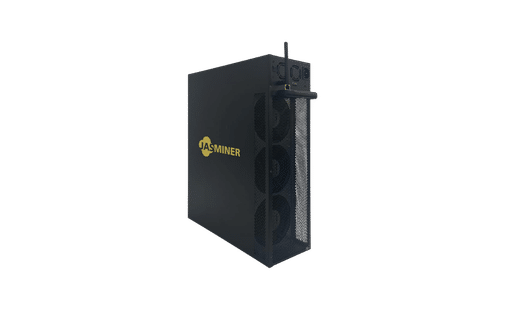
Jasminer X16-Q – Crypto ASIC Mining Hardware Review
Score: 59.5/100. Genuinely quiet EtHash miner with a verified generational upgrade, though profitability swings between loss and profit.
Read More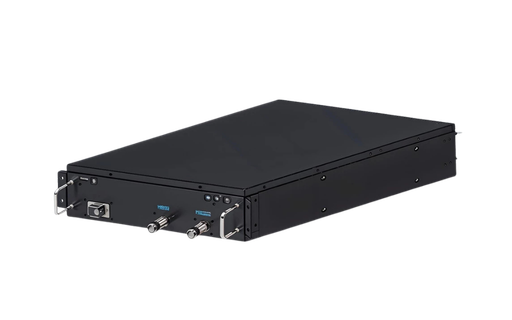
Antminer S23 Hyd 3U – Crypto ASIC Mining Hardware Review
Score: 61.0/100. Best raw efficiency in the series, tempered by cross-reseller weight, warranty, and voltage inconsistencies.
Read More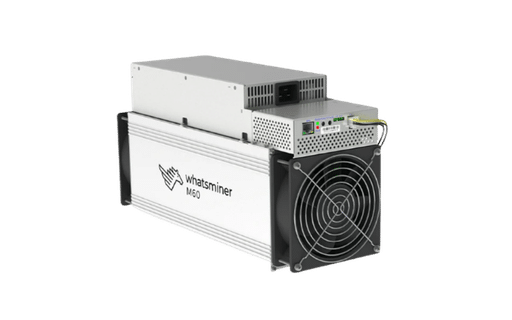
WhatsMiner M60S – Crypto ASIC Mining Hardware Review
Score: 57.25/100. Chosen to test the M79S's chaos; specs proved consistent, showing that mess was product-specific, not company-wide.
Read More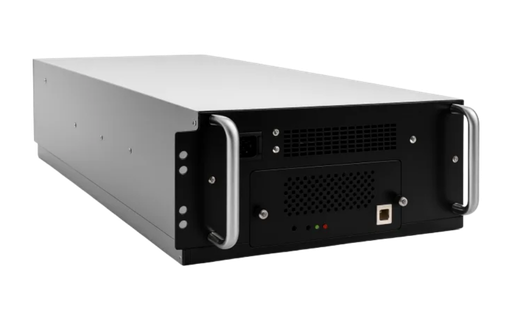
WhatsMiner M79S – Crypto ASIC Mining Hardware Review
Score: 45.0/100. Worst transparency in the series; core hashrate varies by nearly 50% across resellers with no clear explanation.
Read More