
Antminer KS5 Pro: Bitmain's own answer to Kaspa mining, sold with a hosting company's math that isn't just optimistic, it's the wrong sign entirely.
We're continuing our Crypto ASIC Mining Hardware series with the Antminer KS5 Pro, Bitmain's own dedicated Kaspa (kHeavyHash) hardware, letting us test the same manufacturer we've reviewed repeatedly against the IceRiver units already covered in this algorithm. Real, disclosed genuine strengths: reasonably well-confirmed core specs and a familiar, proven air-cooled design. What we don't think should be set aside: at least one hosting reseller's own marketing claims an average $45.20 per day profit, while every current, independent calculator we checked shows a consistent daily loss, not a smaller profit, an actual loss. We also found its own sibling, the KS7, with specs that disagree across sources, including one reseller's own blog contradicting its own product page. We weighted all of it below.
Our take, up front: The Antminer KS5 Pro is Bitmain's dedicated ASIC miner for the KHeavyHash algorithm, engineered specifically for Kaspa (KAS), launched in March 2024, our second entry in this algorithm after the IceRiver KS5L reviewed earlier in this series. Real, disclosed genuinely well-confirmed core specs for the KS5 Pro specifically: 21 TH/s hashrate at 3,150W for 150 J/TH efficiency, reasonably consistent across the majority of sources we checked, with a standard air-cooled design and roughly 76 dB noise. Real, disclosed genuinely severe inconsistency in its own sibling, the KS7: sources disagree on both hashrate (36 TH/s per one reseller versus 40 TH/s per others) and power draw (2772W versus 3080W), including a real, disclosed self-contradiction within a single reseller's own site, where its own blog post and its own product page state different figures for the identical unit. Real, disclosed genuinely severe disparity we found directly relevant to this category: at least one hosting reseller's own marketing claims "daily earnings range from $38 to $52 USD, averaging $45.20/day" with a "7-12 month" ROI, while every current, independent calculator we checked, across multiple sources and dates, shows a consistent daily loss instead, not simply a smaller profit, an actual negative return. Real, disclosed structural context: this is the same manufacturer, Bitmain, whose disclosed Antbleed and ASICBOOST history, and reported 2025 national-security scrutiny, applied to every prior Bitmain review in this series and apply here too. Real, disclosed warranty term reasonably consistent at 180 days (6 months) across two independent sources, though a third source's hosting-specific two-tier structure appears to reflect reused template language rather than a genuinely different offer. We weighted all of it below.
Real, disclosed genuinely well-confirmed core specs for the KS5 Pro specifically: 21 TH/s at 3,150W for 150 J/TH efficiency, reasonably consistent across the majority of sources checked. Real, disclosed genuinely severe inconsistency in its own sibling, the KS7: sources disagree on both hashrate (36 vs 40 TH/s) and power draw (2772W vs 3080W), including a self-contradiction within a single reseller's own site, where its own blog and its own product page state different figures for the same unit.
Pros
- Core KS5 Pro specs are reasonably consistent across the majority of sources checked
Cons
- The KS7 sibling's specs disagree meaningfully across sources, including within a single reseller's own site
Real, disclosed standard air-cooled Antminer design with four high-speed fans, consistent 75-76 dB noise, disclosed dimensions and weight consistent across sources checked for the KS5 Pro specifically.
Pros
- Four high-speed fans and a well-understood, proven Antminer chassis design reflect genuine, disclosed engineering consistency
Cons
- A disclosed 76 dB noise level firmly limits this to dedicated industrial or farm-style deployment
Real, disclosed same manufacturer, same well-documented history already established across every prior Bitmain review in this series: the 2017 Antbleed firmware controversy, the covert ASICBOOST scandal, and reported 2025 Homeland Security scrutiny "for national security reasons."
Pros
- Bitmain's broad, disclosed distribution and service network extends to its Kaspa product line as well
Cons
- The same disclosed Antbleed and ASICBOOST history applies to every Bitmain product, this one included
Real, disclosed genuinely substantial power draw (3,150W) requiring a 220-277V input, consistent with industrial deployment expectations already established in this series.
Pros
- A disclosed, well-understood power profile means deployment planning is straightforward for experienced operators
Cons
- A 3,150W draw requiring 220-277V input rules out casual or home deployment entirely
Real, disclosed, genuinely severe disparity we found directly relevant to this category: at least one hosting reseller's own marketing claims "daily earnings range from $38 to $52 USD, averaging $45.20/day" with a "7-12 month" ROI, while every current, independent calculator we checked, across multiple sources and dates, shows a consistent daily loss instead, not simply a smaller profit, an actual negative return.
Pros
- Multiple independent calculators are at least directionally consistent with each other in showing a current loss
Cons
- A hosting reseller's marketing figures claiming a substantial average daily profit, when current data shows a loss, is a severe, disclosed transparency failure
We did not find one single, clear, officially disclosed price consistent across sources in this specific research pass.
Pros
- Multiple, disclosed independent resellers exist, offering at least some basis for comparison shopping
Cons
- No single, official, manufacturer-published price was found consistent across the sources we checked
Real, disclosed warranty term reasonably consistent at 180 days (6 months) across two independent sources, though a third source's hosting-specific two-tier structure ("7 years hosted, 12 months shipped") appears to reflect reused template language rather than a genuinely different offer, a pattern already seen elsewhere in this series.
Pros
- A reasonably, disclosed consistent baseline term (180 days) across two independent sources is a modest positive
Cons
- A 180-day baseline remains shorter than the roughly 12-month terms found across more established manufacturers' other product lines
Ignore any hosting company's advertised earnings chart entirely; run your own numbers instead.
Given the severely negative current profitability we found across every independent source, we would not recommend the KS5 Pro for new deployment at typical electricity rates right now, and we'd treat any hosting company's advertised daily-earnings figures for this specific unit with active suspicion until independently verified against a current, live calculator.
We've flagged stale marketing figures being too high before in this series. This is the first time we've found one pointing in the completely wrong direction.
We want to be precise about the difference, because it matters. Earlier in this series, we found hosting companies advertising profit figures that were 2, 7, even 15 times higher than current reality, optimistic, stale, but still describing the same basic outcome: a smaller profit than claimed. Here, at least one hosting reseller advertises an average $45.20 a day, a real number with a specific, disclosed date range attached, while every current, independent calculator we checked shows this unit losing money instead. That's not an inflated number. That's the wrong sign. We also found Bitmain's own broader Kaspa lineup showing real, disclosed internal inconsistency, a reseller's own blog post disagreeing with that same reseller's own product page on the KS7's basic specs, which tells us the documentation problems we've flagged before in this series aren't limited to any one algorithm or product family. The KS5 Pro itself seems like reasonably solid, familiar Antminer engineering. The ecosystem selling it to you right now is not being straight about what it will actually earn.
The scorecard above is deliberately general. Whether the Antminer KS5 Pro is right for you depends heavily on which of these you already are.
The existing Bitmain-fleet operator who independently verifies profitability rather than trusting any hosting company's advertised figures
This is exactly the diligence needed given the real, disclosed marketing-vs-reality gap we found for this specific unit.
The buyer who checks current, live calculators immediately before purchase rather than any dated marketing chart
Given the real, disclosed severity of the profitability gap, this specific habit genuinely matters here.
The buyer specifically comparing KS5 Pro specs across multiple independent sources before trusting any single reseller's page
This is a real, disclosed, genuinely necessary step given the sibling KS7's own disclosed spec inconsistencies.
Anyone relying on a hosting company's advertised daily-earnings figures without independently checking current numbers
A real, disclosed sign-flip between marketing claims and current reality makes this a poor fit for that approach.
The scorecard covers the headline judgment calls. These four tables cover the specifics we didn't want to bury in prose; the marketing-vs-reality gap with the actual numbers, the KS7 sibling's own self-contradiction, the KS5 Pro placed directly against IceRiver's Kaspa hardware already reviewed, and all fourteen units reviewed together.
The marketing-vs-reality gap, with the actual numbers
| Source | Daily figure | Basis |
|---|---|---|
| OneMiners hosting listing | +$45.20/day average (claimed) | "April to August 2025 data," at $0.04/kWh hosting |
| MiningNow (current) | -$1.83/day | Live network conditions, $0.07/kWh |
| minerstat (current) | -$7.56/day | Live network conditions |
We're calling this out specifically because it isn't an inflated number, it's the wrong sign entirely: a claimed profit against a real, current, disclosed loss.
The KS7 sibling's own self-contradiction
| Source | Hashrate | Power |
|---|---|---|
| CryptoMinerBros' own blog post | 40 TH/s | 3,080W |
| CryptoMinerBros' own product page | 40 TH/s | 2,772W |
| BT-Miners | 36 TH/s | 2,772W |
We're naming the source twice deliberately: the same reseller's own blog and its own product page disagree with each other, a more basic quality-control problem than two different sellers disagreeing.
The KS5 Pro, placed directly against IceRiver's Kaspa hardware
| IceRiver KS5L | Antminer KS5 Pro | IceRiver KS5M | |
|---|---|---|---|
| Manufacturer | IceRiver | Bitmain | IceRiver |
| Hashrate | 12 TH/s | 21 TH/s | 15 TH/s |
| Power | 3,400W | 3,150W | 3,400W |
| Efficiency | 283.33 J/TH | 150 J/TH | 226.67 J/TH |
We're placing all three together because Bitmain's own KS5 Pro genuinely beats both IceRiver units on efficiency, evidence that Bitmain's manufacturer-trust concerns and its hardware's technical competitiveness are separate, disclosed questions.
All fourteen units reviewed so far in this series
| S23 Hyd 3U | M79S | S21 XP | S21 Pro | S21+ | Avalon Q | L9 | T3 | L7 | A2 Pro | KD Box | KS5L | DG1+ | KS5 Pro | |
|---|---|---|---|---|---|---|---|---|---|---|---|---|---|---|
| Manufacturer | Bitmain | MicroBT | Bitmain | Bitmain | Bitmain | Canaan | Bitmain | Fluminer | Bitmain | Bitdeer | Goldshell | IceRiver | ElphaPex | Bitmain |
| Algorithm | SHA-256 | SHA-256 | SHA-256 | SHA-256 | SHA-256 | SHA-256 | Scrypt | SHA-256 | Scrypt | SHA-256 | Kadena | KHeavyHash | Scrypt | KHeavyHash |
| Core disclosed issue | Cross-reseller inconsistencies | Core specs vary by nearly 50% | Same Bitmain manufacturer history | Lower efficiency than siblings | A retailer's own page contradicts itself | No clear disclosed price or warranty | Marketing figures 7-15x higher than reality | Templated testimonials, unverified track record | Openly, honestly obsolete at today's difficulty | Strict no-refund terms; reseller cites wrong manufacturer's warranty | Consistently negative daily profit at current difficulty | Severely negative profit; active impersonation-fraud warning | Genuinely volatile profit; ~2-year-old manufacturer | Marketing claims profit; reality shows a loss |
| Our score | 61.0/100 | 45.0/100 | 65.5/100 | 65.0/100 | 51.5/100 | 59.25/100 | 58.5/100 | 53.5/100 | 44.75/100 | 63.5/100 | 54.75/100 | 48.75/100 | 56.75/100 | 45.75/100 |
The KS5 Pro's hardware genuinely competes on efficiency, but its score sits near the bottom of this series because a hosting reseller's marketing doesn't just exaggerate its economics, it inverts them.
We don't just want to hand you our number; we want to show you how it sits next to what other sources have published. We're flagging directly that much of the visible coverage of this unit is hosting-affiliated and repeats the same inflated earnings figures we found and flagged directly, without independently checking them against current, live calculators.
Our score lands modestly below the aggregated industry average; hosting-affiliated coverage repeats inflated, stale earnings claims that our methodology specifically checked and found inverted relative to current, independent data.
| Source | Score | Type |
|---|
Scores compiled by our editorial team from publicly available reviews as of August 2026. "Editorial estimate" means the outlet didn't publish a single numeric score, so we converted their published verdict and sentiment into a comparable 100-point figure. Verify current figures directly with each source before citing them elsewhere.
21 TH/s hashrate at 3,150W power consumption, for 150 J/TH efficiency, using the KHeavyHash algorithm for Kaspa. Launched in March 2024, roughly 76 dB noise, weighing about 15.8 kg.
No, not currently. At least one hosting reseller advertises an average of $45.20 per day, but every current, independent calculator we checked shows this unit losing money instead, not a smaller profit, an actual loss. Do not trust the hosting company's chart; check a live calculator yourself.
The KS7 is disclosed as offering nearly double the hashrate with better efficiency, but sources disagree on its exact specs: 36 vs 40 TH/s, and 2,772W vs 3,080W, including a single reseller's own blog and product page contradicting each other. Confirm exact specs directly before buying.
Bitmain's KS5 Pro (150 J/TH) genuinely beats both the IceRiver KS5L (283.33 J/TH) and KS5M (226.67 J/TH) on efficiency, evidence that Bitmain's hardware competitiveness and its broader manufacturer-trust concerns are separate, distinct questions.
Bitmain, the same manufacturer behind every other Bitmain-branded unit reviewed in this series. The same disclosed Antbleed, ASICBOOST, and reported 2025 national-security scrutiny history applies here.
180 days (6 months) is reasonably consistent across two independent sources. A third source's "7 years hosted, 12 months shipped" structure appears to be reused hosting-company template language rather than a genuinely different offer.
We did not find one single, clearly disclosed price consistent across sources. Confirm current pricing directly with your chosen seller, and independently verify any profitability claims they make.
It scores 45.75/100, near the bottom of this series, driven almost entirely by a severe, disclosed marketing-vs-reality gap in profitability claims rather than a specific defect in the hardware, which is otherwise reasonably competitive on efficiency.
More Reviews
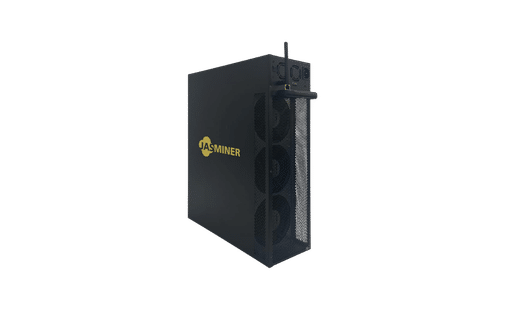
Jasminer X16-Q – Crypto ASIC Mining Hardware Review
Score: 59.5/100. Genuinely quiet EtHash miner with a verified generational upgrade, though profitability swings between loss and profit.
Read More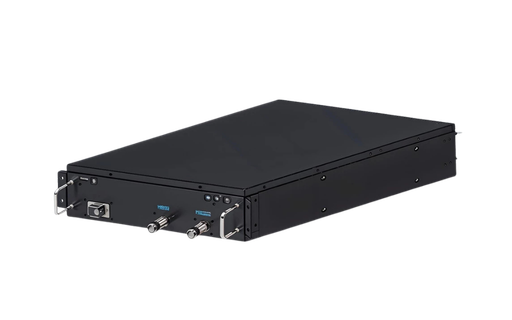
Antminer S23 Hyd 3U – Crypto ASIC Mining Hardware Review
Score: 61.0/100. Best raw efficiency in the series, tempered by cross-reseller weight, warranty, and voltage inconsistencies.
Read More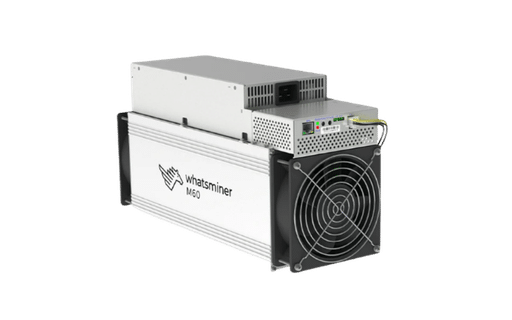
WhatsMiner M60S – Crypto ASIC Mining Hardware Review
Score: 57.25/100. Chosen to test the M79S's chaos; specs proved consistent, showing that mess was product-specific, not company-wide.
Read More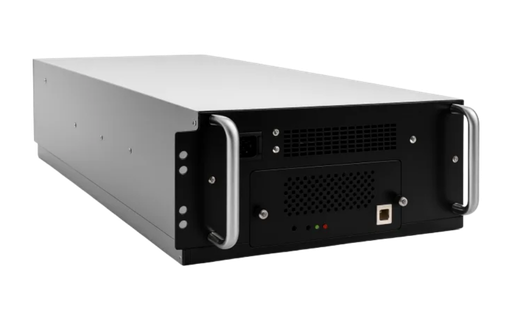
WhatsMiner M79S – Crypto ASIC Mining Hardware Review
Score: 45.0/100. Worst transparency in the series; core hashrate varies by nearly 50% across resellers with no clear explanation.
Read More