What are Blockchain Forks?
A fork is a change in the rules of a blockchain. Because blockchains are distributed systems; run by thousands of independent computers; everyone must follow the same protocol for the network to stay synchronized. When someone proposes new rules or upgrades, the network can either adopt them, reject them, or split into separate versions. That split is what we call a fork.
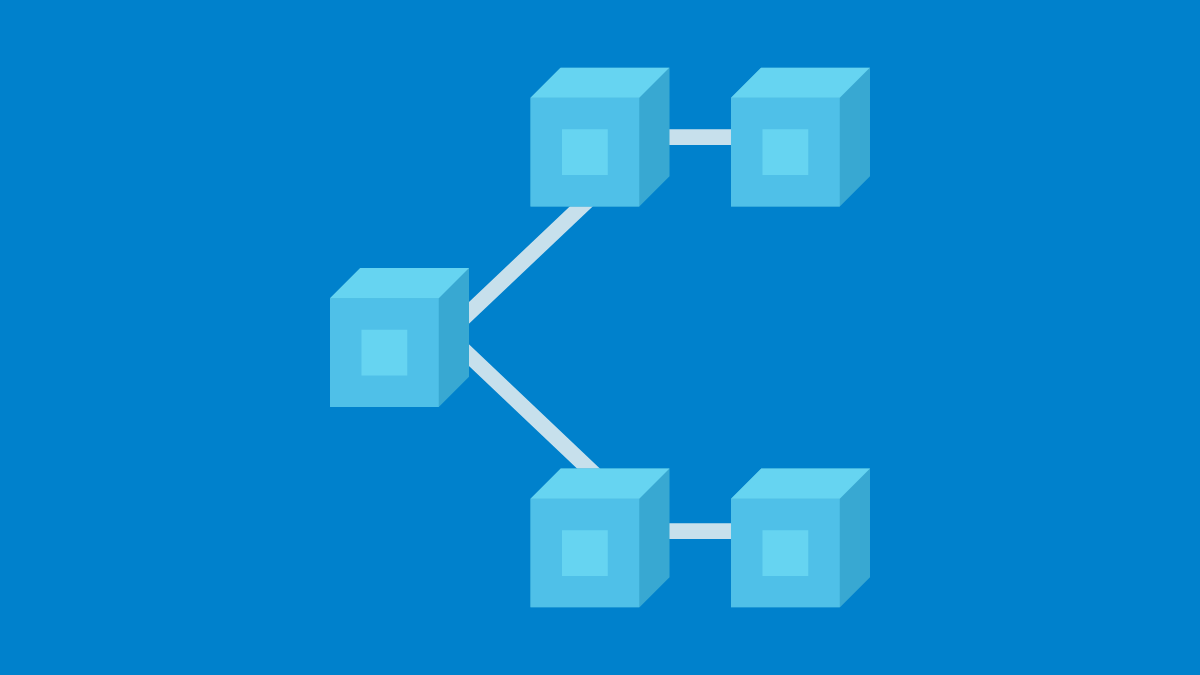
You can think of a fork like a road dividing into two paths. Up until the split, everyone follows the same route. Once the fork happens, users and miners (or validators) choose which path to continue down based on which rules they support.
Forks generally fall into two main categories:
1. Soft Forks
A soft fork introduces changes that are backward-compatible. This means updated nodes can follow the new rules, while older nodes can still recognize the updated blocks as valid. The network doesn’t need everyone to upgrade at once, and the chain usually stays unified.
Dream of it like tightening a rule instead of replacing it; such as lowering a speed limit. Those who know about the change will follow the new limit, but those who don’t are still technically “compatible” with the road system.
A famous example is Bitcoin’s SegWit update, which adjusted how data is stored in transactions without breaking compatibility.
2. Hard Forks
A hard fork creates rules that are not compatible with older versions. Nodes running the old rules will reject blocks produced under the new rules, leading to a permanent split if consensus isn’t unanimous.
In the road analogy, this is like building a barrier: cars on the old path cannot cross into the new one.
Hard forks can be intentional upgrades; such as Ethereum’s London or Shanghai upgrades; or accidental splits caused by disagreements.
Bitcoin Cash was created through a hard fork from Bitcoin when the community disagreed about block size limits and scaling strategies.
Forks usually occur for one of several reasons:
Upgrades: Adding new features or improving performance
Security fixes: Patching vulnerabilities
Scaling improvements: Changing limits to allow more transactions
Governance disagreements: When communities can’t agree on the future direction
Bug recovery: Rolling back mistakes, such as the Ethereum DAO hack in 2016, which led to the creation of Ethereum Classic
Some forks create new coins; others simply update the existing chain smoothly. Not every fork is contentious. In fact, many blockchains undergo routine soft forks or coordinated hard fork upgrades without drama.
A useful analogy is software updates on your phone. If an app update is backward-compatible, you and a friend with an older version can still communicate. That’s a soft fork. If the update makes the new version incompatible; your friend can’t read your messages anymore; that’s a hard fork.
Forks are crucial because they shape the evolution of blockchain networks, represent community decision-making, and occasionally produce entirely new ecosystems.

Recap
Blockchain forks are changes to a blockchain’s rules that determine how the network operates. Because blockchains are decentralized and run by many independent participants, any rule change must be adopted collectively.
When updates occur, the network can either remain unified or split into separate paths.
Comment
Despite their immutability and decentralization, blockchains can still evolve; even if community members disagree with each other.
From small update to drastic changes, forks are the representation of a community’s vision regarding a blockchain. As long as there are people with a desire to operate on a specific version of a blockchain, even a hard fork can’t kill a project.
FAQ
Does every fork create a new cryptocurrency?
No. Most forks; especially soft forks and coordinated hard fork upgrades—do not create new coins. New cryptocurrencies only emerge when a hard fork results in a lasting split where both chains continue independently.
Are forks a sign that something went wrong?
Not necessarily. Many forks are planned upgrades that improve performance, security, or features. While some forks arise from conflicts, others are routine and widely supported.
Why do some forks fail while others succeed?
Forks succeed when they solve a real problem, gain community support, and have active development and adoption. Forks fail if there’s little demand, poor planning, or lack of developer backing. Essentially, a fork needs both technical improvement and a supportive user base to thrive; without either, it often fades quickly.
What happens to my crypto during a fork?
In most cases, nothing changes for users. If a hard fork creates a new chain, holders of the original coin may receive an equivalent balance on the new chain, but this depends on the fork and the wallets or exchanges involved.
Who decides when a fork happens?
Forks are proposed by developers, but adoption depends on the broader network; miners, validators, node operators, exchanges, and users. Consensus determines whether a fork succeeds.
Can a blockchain avoid forks entirely?
Practically speaking, no. Forks are an inherent part of decentralized systems because they allow networks to upgrade, fix issues, and resolve disagreements without relying on a central authority.
Are hard forks risky?
They can be. Contentious hard forks may confuse users, split communities, or introduce technical risks. However, well-planned hard forks with broad support are a common and necessary part of blockchain development.
Why are forks important to blockchain philosophy?
Forks embody decentralization and governance by choice. They allow communities to decide the future direction of a network and, if necessary, to peacefully diverge rather than submit to a single controlling authority.
More Blockchain fundamentals
What is the Environmental debate about Crypto?
What is the Environmental debate about Crypto? The environmental aspect and energy consumption of blockchain; especially those using Proof of Work; has become one...
Keep learningWhat is Blockchain?
Think of blockchain as a public notebook that everyone owns a copy of. Whatever gets written in it is permanent and visible to all.
Keep learningWhat is Scalability?
What is Scalability? Scalability refers to a blockchain’s ability to handle increasing amounts of activity; more users, more transactions, more applications; without slowing down,...
Keep learningWhat is Web3?
Web3 is the idea of a decentralized internet powered by blockchain.
Keep learningWhat is Ethereum?
What is Ethereum? Ethereum is a decentralized platform designed to run applications without relying on a central authority. While Bitcoin focuses mainly on being...
Keep learningWhat are Smart Contracts?
A smart contract is a self-executing computer program deployed on a blockchain. It contains rules and conditions written directly into code.
Keep learningWhat is Proof of Stake?
What is Proof of Stake? Proof of Stake (PoS) is a consensus mechanism that secures a blockchain by relying on economic incentives rather than...
Keep learningWhat are Blockchain Nodes?
A node is simply a computer that participates in a blockchain network. Each node stores a copy of the blockchain and helps verify transactions.
Keep learning