
Disclosure: This post may contain affiliate links. If you sign up or make a purchase through our links, we may earn a commission at no extra cost to you. We only recommend products and services we believe add value.

Bitget
85
Bitget is a crypto exchange specializing in derivatives and spot trading, offering advanced tools, deep liquidity, and a user-friendly interface for traders worldwide.
Type
Spot + Perps
Trading Pairs
900+
Leverage
Up to 125x
Signup Offer
Up to 6,200 USDT
Pros and Cons
Industry-Leading Copy Trading
Low and Competitive Fees
Strong Liquidity and Derivatives Offering
Large Asset Selection and Advanced Tools
Cons
Limited Regulatory Coverage in Major Markets
Not Beginner-Friendly
Customer Support Limitations
Past Security and Transparency Concerns

Overview
Bitget is a rapidly growing cryptocurrency exchange known for its emphasis on derivatives trading and social trading features. Founded in 2018, Bitget has expanded its global presence by targeting both retail and professional users, positioning itself as a platform that blends advanced trading tools with community-driven investment strategies.
The platform offers spot trading alongside a wide range of derivatives products, including perpetual futures and margin trading. Bitget also stands out for its copy trading functionality, allowing users to automatically replicate the strategies of experienced traders. In addition, it provides staking, savings products, and a native wallet, with an interface that balances ease of use for beginners and depth for more advanced participants.
A key differentiator for Bitget is its focus on social trading and accessibility. The exchange has built a strong ecosystem around copy trading, enabling less experienced users to participate in complex markets with reduced barriers to entry. At the same time, it continues to expand its derivatives offerings and liquidity, while maintaining security measures and adapting to evolving regulatory expectations across jurisdictions.
Overall, Bitget is best described as a socially driven, derivatives-focused exchange that combines community engagement with a broad product suite. It is particularly well suited for users interested in copy trading and active market participation, while still offering enough functionality to support more experienced traders seeking diverse trading opportunities.
Pros and Cons
Industry-Leading Copy Trading
Bitget is widely recognized as one of the largest copy trading platforms, allowing users to replicate strategies from experienced traders with detailed performance metrics.
Low and Competitive Fees
Trading fees are generally low (around ~0.1% or less), with additional discounts available through VIP tiers and the BGB token.
Strong Liquidity and Derivatives Offering
The platform provides deep liquidity in major pairs and a robust derivatives market with high leverage, making it attractive for active traders.
Large Asset Selection and Advanced Tools
Bitget supports hundreds of cryptocurrencies and offers features like trading bots, margin trading, and automation tools, creating a comprehensive trading ecosystem.
Cons
Limited Regulatory Coverage in Major Markets
Bitget is restricted or unavailable in key jurisdictions such as the U.S. and Canada, reflecting gaps in global regulatory compliance.
Not Beginner-Friendly
The platform’s interface and range of advanced tools can feel overwhelming for new users, especially on desktop.
Customer Support Limitations
Users often report slow response times or limited support channels, particularly for complex issues.
Past Security and Transparency Concerns
Although Bitget maintains a protection fund, it has faced criticism over past incidents and limited transparency around certain issues.
Scoring System
Each centralized crypto exchange is evaluated on a 100-point scale using a weighted framework that reflects real-world usability, security, and service reliability. Scores are based on the following categories:
- Security & Compliance (25 points) – Measures platform security practices, regulatory compliance, insurance coverage, history of breaches, and adherence to KYC/AML standards.
- Liquidity & Market Depth (20 points) – Evaluates trading volume, order book depth, slippage, and the ability to execute large trades efficiently across spot and derivatives markets.
- Asset Support & Listings (15 points) – Considers the range of supported cryptocurrencies and tokens, fiat gateways, and access to niche or newly listed assets.
- Trading Features & Tools (15 points) – Assesses the quality of spot, margin, and derivatives trading, staking, lending, advanced charting, and order types.
- User Experience & Interface (10 points) – Reviews onboarding, platform navigation, mobile and desktop app usability, and overall ease of use.
- Customer Support & Reliability (10 points) – Evaluates responsiveness, support channels, dispute resolution, and platform uptime/stability.
- Fees & Value for Money (5 points) – Examines trading fees, withdrawal costs, and competitive pricing relative to available features and services.
Each category contributes a defined portion of the total score. Higher-scoring exchanges demonstrate a strong balance of security, liquidity, usability, and trading features; not just flashy interfaces or a large coin list.
Security and Compliance
22
Security Infrastructure
Bitget implements a multi-layered security model designed to protect both platform integrity and user accounts. This includes standard exchange safeguards such as cold wallet storage, multi-signature authorization, and real-time monitoring systems.
On the user side, protections typically include:
Two-factor authentication (2FA)
Withdrawal whitelisting
Risk control systems for suspicious activity
In addition, Bitget emphasizes internal risk management frameworks covering identity verification, cybersecurity, and blockchain analytics to monitor transactions and prevent misuse.
While these measures align with industry standards, Bitget’s differentiation lies more in its financial safeguards and transparency mechanisms than purely technical architecture.
Protection Fund and Risk Coverage
A key component of Bitget’s security model is its Protection Fund, designed as a financial backstop in extreme scenarios such as hacks or system failures.
The fund is valued in the hundreds of millions of dollars (historically $300M+)
It acts as an emergency reserve to compensate users if losses occur
It is publicly tracked, adding a layer of accountability
This mechanism functions similarly to insurance, although it is not equivalent to regulated deposit protection. It represents a proactive attempt to mitigate systemic risk in a largely unregulated environment.
Transparency and Proof of Reserves
Bitget places strong emphasis on Proof of Reserves (PoR) as a core trust mechanism.
The platform publishes monthly reserve snapshots
Uses Merkle tree verification, allowing users to independently confirm balances
Maintains reserves consistently above 100%, often significantly higher
Recent data shows:
Around 169% reserve ratio (Feb 2026)
Frequently ranging between 180%–190%+ in 2025 reports
This indicates that Bitget holds more assets than user liabilities, providing a buffer against withdrawal surges or market stress.
In practical terms, this makes Bitget one of the more over-collateralized exchanges, at least based on publicly disclosed data.
Incident History and Security Record
Unlike some major exchanges, Bitget has not experienced a large-scale, widely confirmed systemic hack affecting user funds.
This relatively clean track record contributes positively to its security reputation. However, the absence of major incidents should not be interpreted as proof of immunity; crypto exchanges remain inherently high-risk environments.
As with all centralized platforms, users are still exposed to:
Counterparty risk
Operational failures
External attack vectors
Regulatory and Compliance Position
Bitget operates within a fragmented and evolving regulatory framework.
It is not fully licensed in several major jurisdictions
Access may be restricted in regions such as the U.S. and parts of Europe
Compliance efforts focus on regional adaptation rather than a unified global license
The platform highlights internal compliance processes, including identity verification and monitoring systems, but it does not match the regulatory depth of exchanges operating under strict financial oversight.
This creates a trade-off:
Greater global accessibility and flexibility
Lower regulatory certainty for users
Liquidity & Market Depth
19
Overall Liquidity Profile
Bitget maintains high trading volumes across both spot and derivatives markets, with especially strong activity in perpetual futures. This contributes to a generally liquid environment, enabling efficient trade execution for most users.
The platform consistently ranks among the top exchanges for derivatives volume, which enhances liquidity in leveraged products and supports tighter spreads in major trading pairs.
However, in spot markets, liquidity is slightly less dominant compared to top-tier exchanges, placing Bitget in a strong mid-to-upper tier position overall.
Market Depth and Order Book Quality
For major assets such as BTC and ETH pairs, Bitget provides:
Tight bid-ask spreads under normal market conditions
Deep order books within close price ranges
Efficient absorption of medium-to-large orders
This makes it suitable for:
Active traders
Day trading and scalping strategies
Moderate-size institutional trades
That said, compared to the deepest global exchanges, order book depth may thin out more quickly at larger order sizes, potentially increasing price impact for very large trades.
Derivatives Liquidity Strength
Bitget’s strongest liquidity advantage lies in its derivatives markets, where it has built a significant presence.
Key strengths include:
High open interest across major contracts
Consistent funding rate activity
Deep liquidity for perpetual futures
This environment supports:
High-leverage trading
Complex strategies (hedging, arbitrage)
Efficient entry and exit even during active market conditions
As a result, Bitget is particularly attractive for derivatives-focused traders.
Altcoin Liquidity Distribution
Liquidity across altcoins is more uneven, which is typical for most exchanges:
Mid-cap assets: Generally adequate liquidity with manageable spreads
Low-cap tokens: Lower depth, wider spreads, and higher slippage risk
This means that while Bitget offers a wide range of assets, execution quality can vary significantly outside major trading pairs.
Performance During Volatility
During periods of high market volatility, Bitget generally maintains functional markets with continued order execution.
However, as with all exchanges, volatility can lead to:
Spread widening
Reduced near-price liquidity
Increased slippage
Bitget’s derivatives-focused liquidity helps stabilize trading conditions relative to smaller exchanges, but it may still lag behind the very largest platforms in extreme scenarios.
Role of Copy Trading in Liquidity
An interesting factor in Bitget’s liquidity is its copy trading ecosystem. High levels of user participation in copy trading strategies contribute to:
Increased trading activity
Additional order flow in popular markets
More consistent liquidity in certain pairs
This creates a feedback loop where active strategies help sustain market depth.
Asset Support & Listings
13
Range of Supported Assets
Bitget supports hundreds of cryptocurrencies across both spot and derivatives markets, including all major assets such as Bitcoin, Ethereum, and leading stablecoins.
The platform provides:
A wide selection of spot trading pairs (primarily USDT-based)
Expanding derivatives coverage for high-demand assets
Access to both established and trending tokens
This makes Bitget competitive with other large global exchanges in terms of overall asset availability.
Listing Strategy and Speed
One of Bitget’s defining characteristics is its aggressive and fast listing approach.
The platform frequently lists:
Newly launched tokens
Trending narratives (AI, DeFi, gaming, meme coins)
Projects gaining traction on other exchanges
This allows users to access early-stage opportunities, often before assets become widely available across the market.
However, this speed comes with trade-offs:
Higher exposure to volatile or speculative assets
Greater need for user due diligence
Compared to more conservative exchanges, Bitget prioritizes market relevance and demand over strict filtering.
Derivatives Coverage
Bitget provides strong integration between spot and derivatives markets. Many of the most actively traded assets are available as:
Perpetual futures contracts
Leveraged trading instruments
This dual availability increases flexibility, allowing users to:
Trade directional strategies (long/short)
Hedge spot positions
Engage in advanced trading setups
However, derivatives support is typically limited to higher-liquidity assets, with smaller tokens remaining spot-only.
Altcoin and Emerging Asset Exposure
Bitget stands out for its broad altcoin coverage, particularly in emerging sectors.
Users can access:
Mid-cap projects with growing market presence
Early-stage tokens with higher growth potential
A wide range of niche categories
This makes the platform appealing for traders seeking diversification beyond large-cap assets.
At the same time, liquidity and stability can vary significantly across these tokens, increasing execution and volatility risks.
Launchpad and New Listings Ecosystem
Bitget supports new project exposure through listing-related initiatives such as:
Launchpool-style token distributions
Promotional campaigns tied to new listings
Early access trading opportunities
These features encourage user participation in newly listed assets and help drive initial liquidity.
Delisting and Risk Management
Bitget periodically reviews listed assets and may delist tokens that fail to meet internal standards related to:
Trading volume
Liquidity
Project reliability
While this helps maintain market quality, the platform’s broader listing approach means users may still encounter higher-risk assets compared to more selective exchanges.
Trading Features & Tools
13
Bitget offers a feature-rich, trader-centric ecosystem that goes beyond basic spot trading. Its core strength lies in combining derivatives, automation, and social trading into one integrated platform, making it particularly appealing for strategy-driven users.
Spot Trading & Order Types
Bitget provides a standard spot market where users can:
- Buy and sell cryptocurrencies directly
- Access a wide range of trading pairs
- Use basic and advanced order types
While not its main differentiator, the spot market is solid and well-integrated into the broader ecosystem.
Derivatives & Futures
Bitget is heavily focused on derivatives trading, offering:
- USDT-margined and coin-margined futures
- Perpetual contracts
- High leverage (100x+)
This is one of its strongest areas, designed for experienced traders seeking advanced exposure.
Copy Trading
Copy trading is one of Bitget’s flagship tools:
- Users can automatically replicate trades from experienced traders
- Supports spot, futures, and even bot copy trading
- Includes performance metrics and trader rankings
This allows beginners to participate without deep market knowledge while still accessing advanced strategies.
Margin Trading
Bitget supports a unified margin account system, enabling:
- Cross-margin usage across multiple products
- Better capital efficiency
- Simplified portfolio management
It also includes:
- Stop-loss / take-profit tools
- Position management dashboards
- Risk controls for leveraged trading
Staking & Earn Features
Bitget includes a range of Earn products designed for passive income:
- Flexible savings
- Fixed-term staking products
- Auto-invest plans
These tools allow users to generate yield on idle assets without actively trading, expanding the platform beyond pure trading use cases.
Launchpad & Launchpool
Bitget offers early access to new crypto projects via:
- Launchpad (token sales)
- Launchpool (staking-based rewards)
These features allow users to:
- Participate in early-stage projects
- Earn new tokens through staking
This adds a venture-style component to the platform.
Trading Bots & Automation
Bitget offers a comprehensive trading bot ecosystem, including:
- Grid trading bots
- Martingale bots
- Auto-invest (DCA) bots
- Arbitrage and CTA bots
These bots enable:
- 24/7 automated execution
- Strategy-based trading without manual input
- Efficient capital utilization
Bot Copy Trading
A more advanced evolution of automation, bot copy trading allows users to:
- Follow algorithmic strategies created by expert traders
- Automatically mirror bot performance
- Earn without manual configuration
This combines social trading with algorithmic execution, making it unique among exchanges.
Additional Tools & Ecosystem Features
Beyond core trading, Bitget provides a range of supplementary tools:
- AI-driven insights and trading assistants (emerging feature set)
- Market analytics and trader sentiment data
- Affiliate and copy trading income systems
- Integration with third-party tools (e.g., external bots)
Together, these features create a multi-layered trading ecosystem that supports both active and passive strategies.
User Experience & Interface
8
Platform Design and Navigation
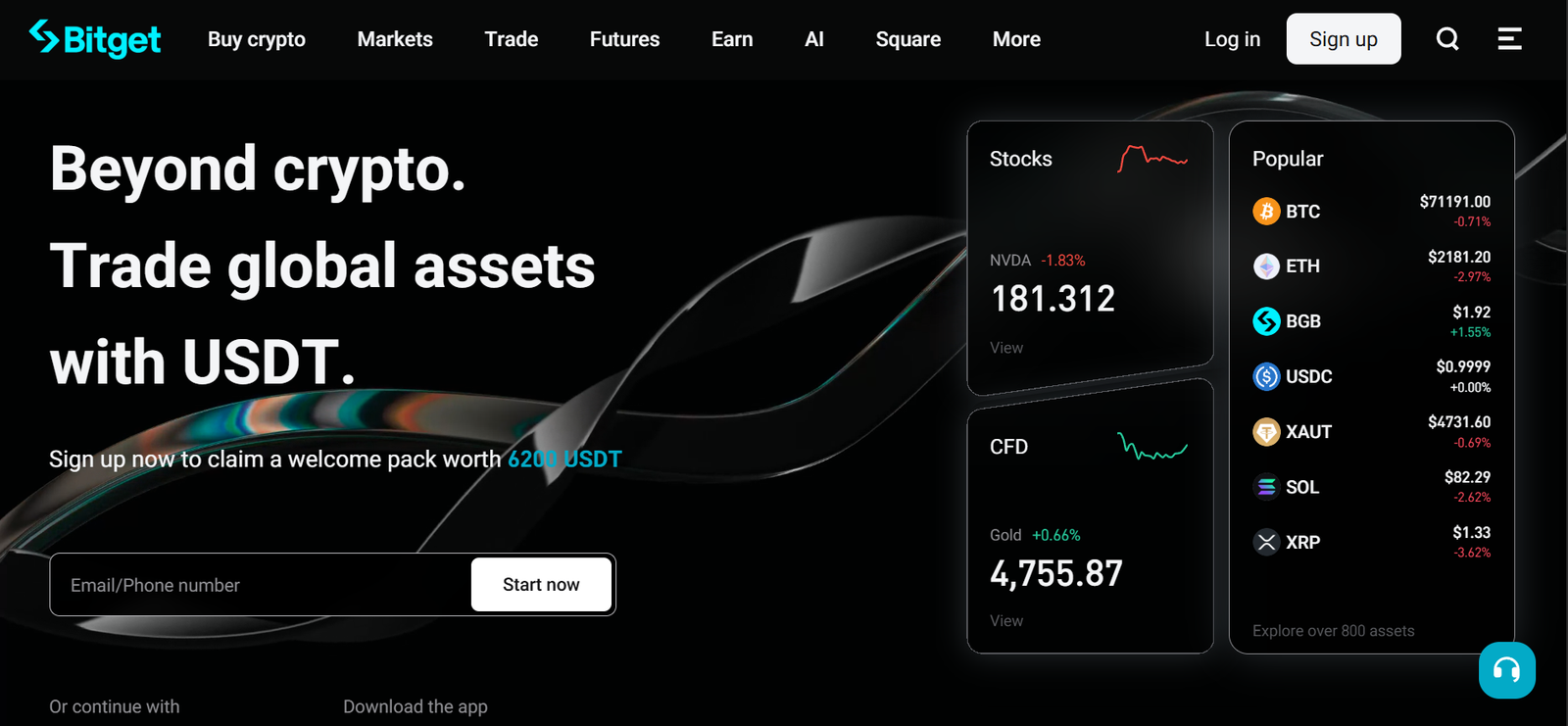
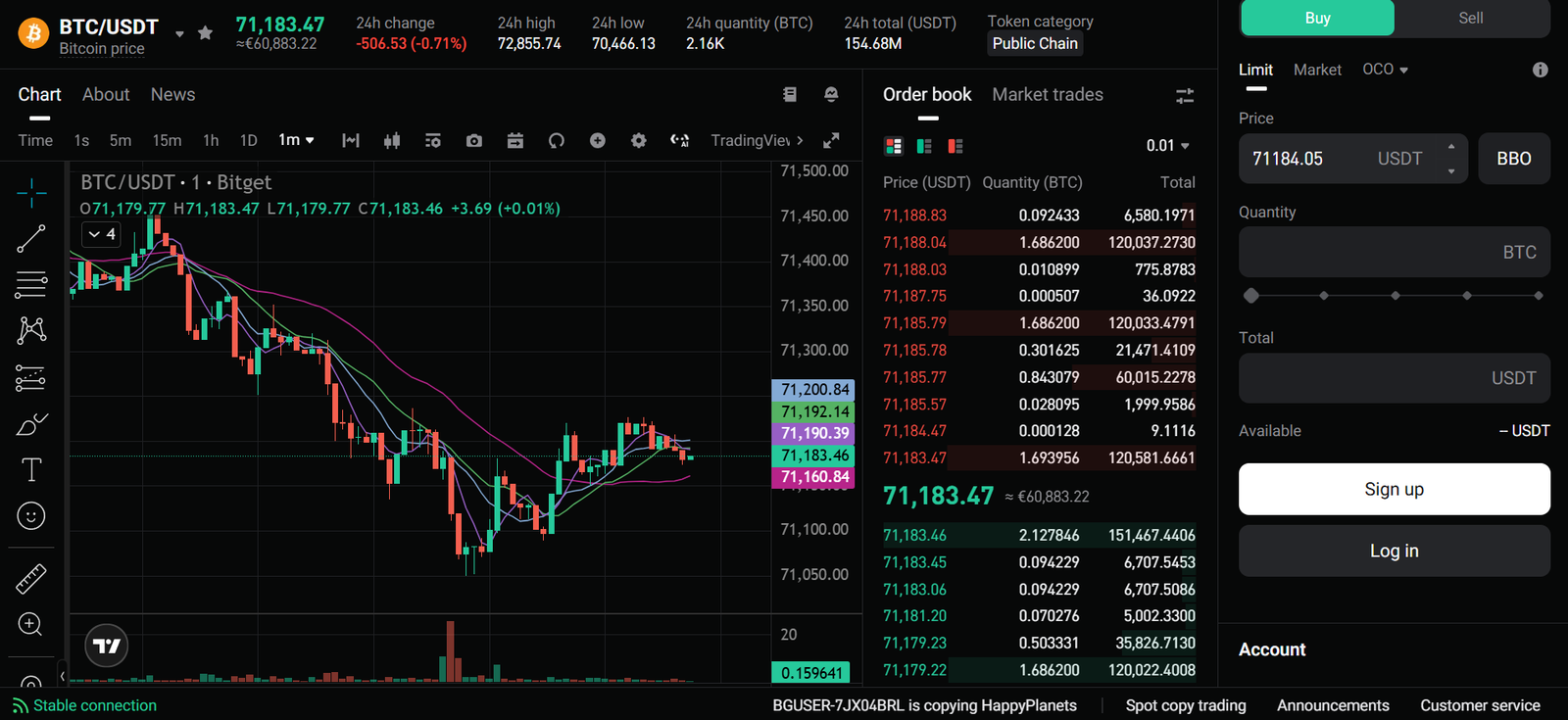
Bitget’s interface is modern and structured similarly to other major trading platforms, with clear segmentation between spot trading, derivatives, copy trading, and account management.
The layout is relatively intuitive once familiar, with:
A central trading panel (charts, order book, trades)
Sidebar navigation for quick access to products
Dedicated sections for copy trading and bots
However, the platform is information-dense, which can feel overwhelming at first, particularly for users unfamiliar with trading environments.
Trading Interface and Tools
The trading interface is built for efficiency and speed. It integrates:
Real-time order books
Trade history and depth charts
Position and margin tracking
Charting is powered by TradingView, offering advanced technical analysis tools such as indicators, drawing tools, and multiple timeframes.
Execution is generally smooth, with fast order placement and minimal friction, which is critical for active traders.
Copy Trading Experience
One of Bitget’s standout UX features is its copy trading interface, which is more refined than most competitors.
Users can:
Browse traders with detailed performance metrics
Filter by ROI, risk level, and trading style
Allocate funds with adjustable parameters
The interface simplifies complex strategies into a more accessible format, making it one of the most user-friendly entry points into advanced trading.
Mobile Experience
Bitget’s mobile app is well-developed and retains most core functionalities of the desktop platform.
It supports:
Full trading capabilities (spot and derivatives)
Copy trading and bot management
Portfolio tracking and account controls
Despite the complexity of features, the app is relatively well-optimized, though it can still feel crowded due to the volume of available tools.
Onboarding and Accessibility
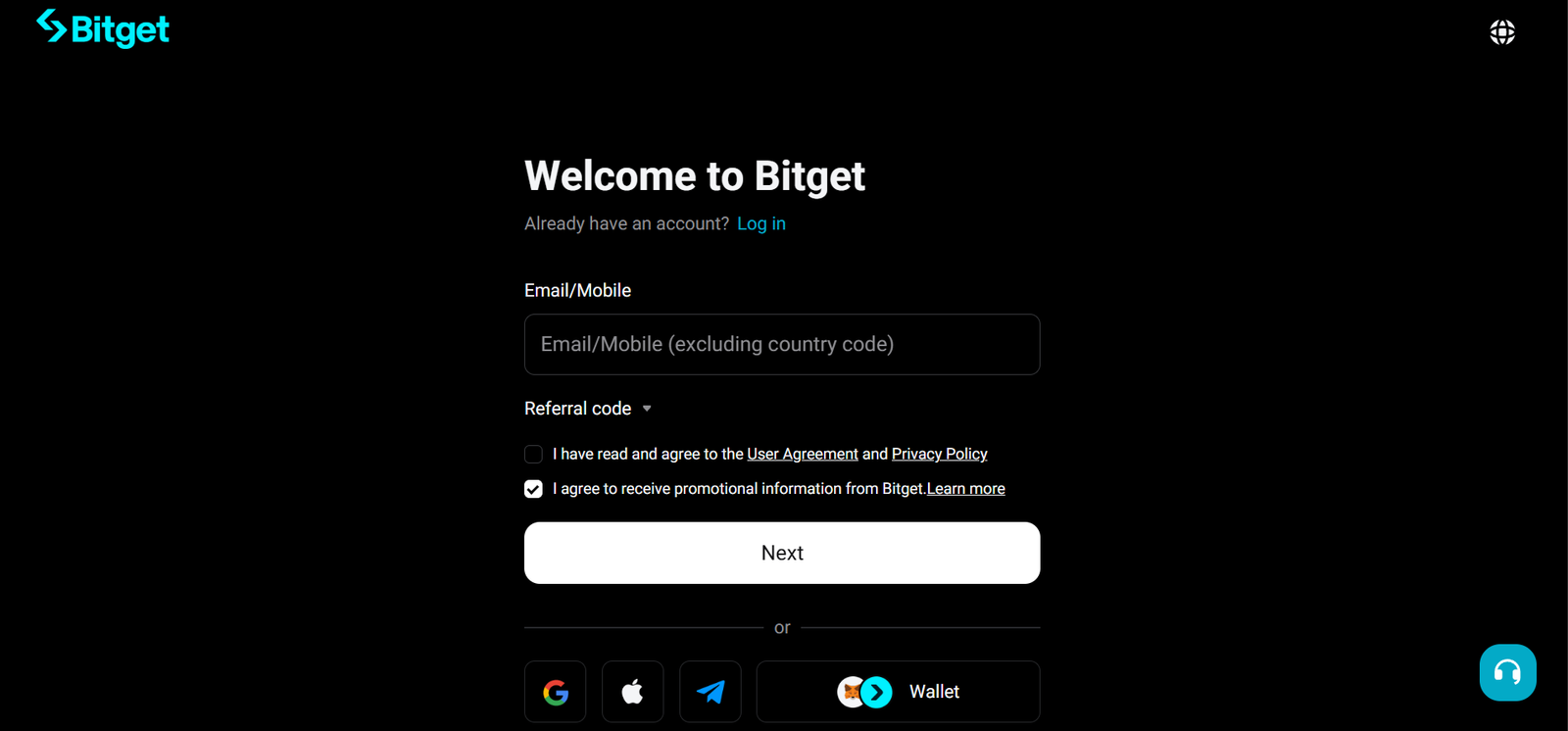
Account registration is straightforward, with a standard onboarding flow including identity verification where required.
However, transitioning from account setup to active trading can be challenging for beginners. Concepts such as leverage, margin, and derivatives are not deeply explained within the interface, requiring users to rely on external resources or prior knowledge.
Bitget does offer demo trading environments and educational materials, but these are secondary to the main platform experience.
Performance and Stability
The platform performs reliably under normal conditions, with:
Fast load times
Stable order execution
Minimal interface lag
During periods of high market activity, Bitget generally maintains functionality, though; as with all exchanges; temporary slowdowns or latency spikes may occur.
Customer Support & Reliability
6
Customer Support Channels
Bitget provides several standard support channels:
24/7 live chat (in-app and web)
Email support
Help center and knowledge base
These channels are generally accessible, and for basic issues (e.g., account setup, password resets), response times can be relatively quick.
However, access to escalated or human-level support can be inconsistent, especially during high-demand periods or complex cases.
Support Quality and Responsiveness
Customer support quality is mixed to poor overall, with a significant gap between simple and complex issue handling.
On some platforms, Bitget’s support is rated around 3.8/5 (moderate satisfaction)
On others, such as Trustpilot, it scores around 2.5/5, with a large share of negative reviews
Commonly reported issues include:
Delayed responses (sometimes days or longer)
Generic or copy-paste replies
Difficulty resolving account-specific problems
More serious complaints often involve:
Locked accounts or withdrawals under review
Lack of clear communication or timelines
Repetitive support loops without resolution
User feedback consistently highlights frustration when dealing with high-stakes issues rather than routine inquiries.
Platform Reliability and Uptime
From a technical standpoint, Bitget performs well under normal market conditions:
Fast execution speeds
Stable interface for day-to-day trading
Smooth operation across desktop and mobile
Many users report that the platform is responsive and reliable during standard usage, making it suitable for active trading environments
Performance Under Market Stress
During periods of high volatility or heavy traffic, reliability becomes less consistent.
Reported issues include:
Temporary app slowdowns or crashes
Delays in order execution
Difficulty accessing accounts during peak activity
Some users have also reported:
Liquidations during app outages
Inability to manage positions in real time
Lack of compensation for technical disruptions
While these issues are not unique to Bitget, they are more impactful due to the platform’s weaker support follow-up.
Withdrawal and Account Reliability
One of the most sensitive areas is fund access and withdrawals.
User reports indicate:
Transactions flagged for manual review without clear timelines
Delayed withdrawals in certain cases
Accounts temporarily restricted during compliance checks
For example, some users describe funds being held “under review” with limited explanation or progress updates
It’s important to note that such measures are often tied to compliance and security processes, but the lack of transparency is a recurring concern.
Trust and Consistency
Bitget presents a two-sided reliability profile:
Strong technical infrastructure for trading
Inconsistent support experience during critical issues
This means:
The platform works well when everything is functioning normally
Confidence drops significantly when users encounter problems requiring intervention
Fees & Value for Money
4
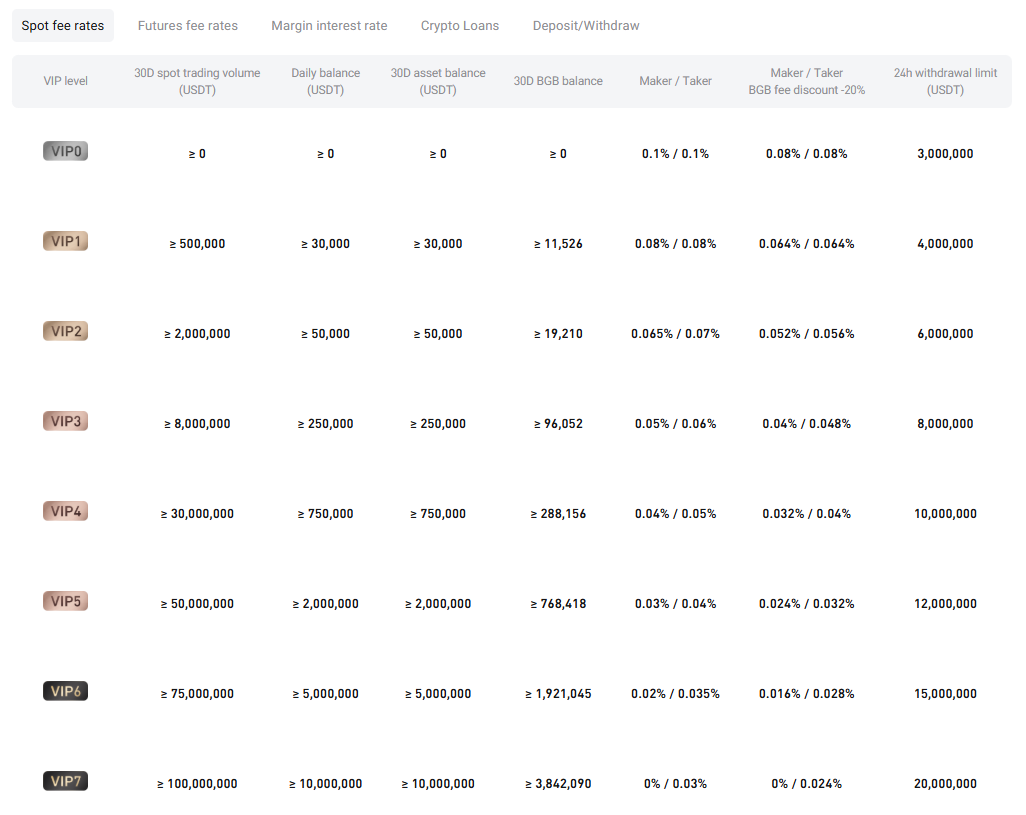
Spot Trading Fees Table – Find all exact numbers regarding the platform’s fees here.
Trading Fees
Bitget follows a standard maker-taker model with competitive baseline rates:
Spot trading:
~0.10% maker / 0.10% taker
Futures trading:
~0.02% maker / 0.06% taker
These rates place Bitget:
In line with industry standards for spot
Among the cheaper platforms for derivatives, especially for maker orders
For active traders using limit orders, futures fees are particularly attractive.
Discounts and VIP Structure
Bitget offers multiple ways to reduce fees:
BGB token discounts (e.g., ~20% reduction on spot fees)
VIP tiers based on trading volume or holdings
Promotional fee reductions (occasionally even lower than standard rates)
This structure rewards:
High-volume traders
Users committed to the Bitget ecosystem
However, casual users may not fully benefit from these optimizations.
Copy Trading Costs
A unique cost component on Bitget comes from its copy trading system:
Users typically pay ~10% profit share to the trader they copy (only on profitable trades)
This is not a traditional fee, but it:
Reduces net returns
Acts similarly to a performance fee in traditional finance
For beginners, this may still be worthwhile given the ease of strategy access.
Non-Trading Fees
Bitget’s non-trading fees are generally reasonable:
Deposits: Usually free for crypto
Withdrawals: Variable depending on network conditions
Margin interest: Applies when borrowing funds
Futures funding rates: Periodic payments between traders (not collected by the exchange)
These costs are standard across most exchanges but can accumulate depending on usage.
Hidden Costs and Execution Factors
Like all exchanges, Bitget’s real trading cost goes beyond listed fees:
Spread and slippage can increase effective cost
Funding rates impact leveraged positions
Market conditions can affect execution quality
This is particularly relevant for:
Low-liquidity pairs
High-volatility periods
Value for Money
Bitget offers strong value depending on user profile:
Active derivatives traders
→ Excellent value due to very low futures feesCopy trading users
→ Good value if strategies are profitable, but costs depend on performance feesCasual spot traders
→ Average value (industry-standard fees, no major advantage)High-volume users with BGB
→ Strong value due to discounts and tier benefits
The Block Note's Score
Aggregated Score
22
19
13
13
8
6
4
Total Score
Who is Bitget Best for
1. Active and High-Frequency Traders
Bitget is particularly well-suited for active traders who execute frequent trades and need:
Fast order execution
Deep liquidity
Low trading fees
The platform’s high daily trading volume and strong liquidity make it effective for strategies that rely on speed and precision.
2. Futures and Leverage Traders
Bitget stands out as a top choice for derivatives traders, offering:
Perpetual futures markets
High leverage (up to 100x+)
Advanced risk management tools
It is widely considered ideal for traders seeking exposure beyond spot markets.
3. Copy Trading and Social Trading Users
One of Bitget’s strongest niches is copy trading, where it is often regarded as an industry leader:
Large pool of experienced traders to follow
Transparent performance metrics
Automated strategy replication
This makes it especially appealing to:
Beginners who want guided exposure
Passive users seeking strategy replication
Users exploring social trading ecosystems
4. Bot and Automation-Focused Traders
Bitget is a strong fit for users interested in algorithmic or semi-automated trading, thanks to:
Grid trading bots
Auto-invest tools
Strategy automation features
These tools allow traders to operate efficiently even in volatile or sideways markets.
5. Global Users Outside Strict Regulatory Regions
Bitget has broad international availability and is especially popular in:
Emerging markets
Regions with limited access to Tier-1 exchanges
It offers a flexible onboarding experience and supports a wide range of assets and trading options globally.
Final Verdict
Bitget
85
Bitget is a crypto exchange specializing in derivatives and spot trading, offering advanced tools, deep liquidity, and a user-friendly interface for traders worldwide.
Type
Spot + Perps
Trading Pairs
900+
Leverage
Up to 125x
Signup Offer
Up to 6,200 USDT
Pros and Cons
Industry-Leading Copy Trading
Low and Competitive Fees
Strong Liquidity and Derivatives Offering
Large Asset Selection and Advanced Tools
Cons
Limited Regulatory Coverage in Major Markets
Not Beginner-Friendly
Customer Support Limitations
Past Security and Transparency Concerns
Bitget Team

Gracy Chen
CEO of Bitget
Read MoreFrequently Asked Questions
What is a centralized crypto exchange (CEX)?
A CEX is a platform that facilitates buying, selling, and trading cryptocurrencies through a company that holds custody of your funds.
How do I create an account on a centralized exchange?
Most exchanges require email verification, identity checks (KYC), and sometimes phone verification. Once verified, you can deposit funds and start trading.
What happens if the exchange gets hacked?
Your funds could be at risk, though some platforms offer insurance or compensation. Always follow best practices and avoid leaving large balances on a CEX.
Can I trade on mobile?
Most exchanges offer mobile apps with full functionality for trading, portfolio tracking, and security management.
How is security measured for these exchanges?
Security includes platform safeguards, regulatory compliance, insurance coverage, and past incidents. Exchanges with strong security practices and transparency score higher.
Why aren’t fees the main scoring factor?
Fees are important, but we weigh them alongside usability, liquidity, support, and asset variety. A low-fee platform with poor security or unreliable support will score lower.
Can an exchange’s score change over time?
Yes. Scores are updated based on security updates, liquidity changes, new features, or regulatory developments.
Do you receive compensation for higher scores?
No. Scores are independent of partnerships or affiliate relationships.
More Reviews
Binance – CEX Review
Binance leads centralized crypto exchanges with high liquidity, low fees, and vast token support; setting the benchmark for speed, security, and global access.
Read More
Coinbase – CEX Review
Coinbase is a beginner-friendly centralized exchange known for its simplicity, compliance, and secure platform; making crypto accessible to millions worldwide.
Read More
Crypto.com – CEX Review
Crypto.com is a centralized exchange blending trading, DeFi, and crypto rewards, offering a secure platform with user-friendly tools for all experience levels.
Read More
Kraken – CEX Review
Kraken stands out among centralized exchanges for its strong security, regulatory focus, and advanced trading tools trusted by professionals worldwide.
Read More