
Antminer S23 Hyd 3U: genuinely the most efficient Bitcoin miner Bitmain sells, from a company with a genuinely complicated history.
We're opening a new series, Crypto ASIC Mining Hardware, with the Antminer S23 Hyd 3U, Bitmain's flagship hydro-cooled, dual-board Bitcoin miner. Real, disclosed genuine strengths: an independently-confirmed 9.5 J/TH efficiency, the first Bitmain-sold miner below 10 J/TH, and a disclosed 50 dB noise level, well under air-cooled models. What we don't think should be set aside: Bitmain's own history includes the disclosed 2017 "Antbleed" firmware backdoor and covert ASICBOOST controversies, current reported national-security scrutiny, and genuinely conflicting profitability, weight, and warranty figures across resellers. We weighted all of it below.
Our take, up front: The Antminer S23 Hyd 3U (model code U3S23Hyd) is Bitmain's flagship hydro-cooled Bitcoin miner, combining two Antminer S23 Hyd boards into a single 3U rack-mount chassis. Real, disclosed genuinely industry-leading, independently-confirmed specs: 1.16 PH/s (1,160 TH/s) hashrate at 11,020W, for 9.5 J/TH efficiency, confirmed consistently across multiple independent sources, including non-promotional calculators, as "the first Bitcoin miner below 10 J/TH" Bitmain has sold. Real, disclosed genuinely distinctive engineering: the dual-board 3U design doubles the hashrate of a standard S23 Hyd (580 TH/s) in the same rack footprint, and disclosed hydro cooling brings noise down to roughly 50 dB, compared to roughly 75 dB for air-cooled equivalents. Real, disclosed major structural finding we found directly relevant to this category: Bitmain, the manufacturer, has a well-documented history that includes the 2017 "Antbleed" firmware controversy, described by critics as a remote-shutdown backdoor, and the covert ASICBOOST optimization scandal that shaped Bitmain's opposition to SegWit. Real, disclosed current context: Bitmain was reportedly the subject of Department of Homeland Security scrutiny "for national security reasons" in 2025, and is opening its first U.S. manufacturing facility in 2026, a move multiple sources tie directly to tariff exposure on Chinese-made hardware. Real, disclosed data-consistency problem we found directly relevant to evaluating this specific unit: reseller listings disagree meaningfully on basic facts, unit weight is reported as either roughly 18.2 kg or roughly 42 kg depending on the source, warranty terms range from 365 days to 12 months to "7 years hosted / 12 months shipped," and required input voltage is listed as either 220-240V or 380-415V three-phase depending on the retailer. Real, disclosed profitability volatility: independent calculators checked on the same day showed this unit as marginally profitable at $0.07/kWh and meaningfully unprofitable at $0.10/kWh, while a hosting reseller's marketing figures were traced to stale "April to August 2025" data reused unchanged across pre-order batch pages dated as late as September 2026. We weighted all of it below.
Real, disclosed genuinely industry-leading specs, confirmed consistently across multiple independent, non-promotional sources: 1.16 PH/s hashrate at 11,020W for 9.5 J/TH efficiency, described as "the first Bitcoin miner below 10 J/TH" and "the most efficient Bitmain sells in 2026." Real, disclosed genuinely distinctive dual-board engineering: two S23 Hyd boards (580 TH/s each) combined into one 3U chassis, doubling hashrate density in the same rack footprint.
Pros
- 9.5 J/TH efficiency is confirmed consistently across independent calculators, not just Bitmain's own materials
- The dual-board 3U design genuinely reduces per-unit rack, power-connection, and management overhead at scale
Cons
- Efficiency figures are described as "typical values" by at least one retailer, not a guaranteed per-unit minimum
Real, disclosed genuinely significant noise reduction: roughly 50 dB for the hydro-cooled unit versus roughly 75 dB for air-cooled equivalents, a real, disclosed, substantial difference for any deployment near people. Real, disclosed data-consistency problem: reseller listings disagree meaningfully on basic physical facts, unit weight is reported as either roughly 18.2 kg or roughly 42 kg depending on the source, a discrepancy too large to be a rounding difference.
Pros
- A disclosed ~50 dB operating noise level is a genuine, substantial improvement over air-cooled equivalents
- Closed-loop hydro cooling is disclosed to extend hardware durability relative to fan-based designs
Cons
- Reported unit weight varies by more than double depending on the specific reseller listing
- No independent, hands-on long-term reliability data exists yet given the model's recent release
Real, disclosed genuinely dominant market position: Bitmain's hardware reportedly powers over 74% of global Bitcoin hashrate. Real, disclosed historical controversies: the 2017 "Antbleed" firmware issue, described by critics as a remote-shutdown backdoor, and the covert ASICBOOST optimization scandal. Real, disclosed current context: reported 2025 Department of Homeland Security scrutiny "for national security reasons," and a 2026 U.S. manufacturing expansion multiple sources tie to tariff exposure.
Pros
- A genuinely dominant, disclosed market position reflects real manufacturing and engineering scale
- A disclosed 2026 U.S. manufacturing expansion could reduce future tariff and shipping exposure for American buyers
Cons
- The 2017 Antbleed controversy is a real, disclosed historical precedent for remote-control capability in Antminer firmware
- Reported 2025 national-security scrutiny is a real, disclosed, current regulatory consideration
Real, disclosed genuinely substantial power draw (11,020W) requiring serious electrical infrastructure, plus a closed-loop water-cooling circuit. Real, disclosed cross-reseller inconsistency: required input voltage is listed as either 220-240V or 380-415V three-phase depending on the specific retailer, a meaningfully different electrical-planning requirement.
Pros
- Ships with an included PSU per at least one reseller, per that source's specific disclosure
Cons
- Disclosed voltage requirements vary meaningfully across retailers, complicating pre-purchase electrical planning
- A dedicated water-cooling circuit is a real, disclosed additional infrastructure requirement beyond simple air-cooled deployment
Real, disclosed, genuinely conflicting profitability figures checked on the same date: one independent calculator showed a negative daily profit (-$26.45 at $0.10/kWh) while another showed a positive figure (+$25.89 at $0.07/kWh). Real, disclosed marketing-transparency problem: a hosting reseller's headline profitability figure ($81.30/day average) is explicitly sourced to "April to August 2025" data, reused unchanged across pre-order batch pages dated as late as September 2026.
Pros
- Genuine efficiency gains mean this unit stays closer to profitable than less efficient hardware at the same electricity cost
Cons
- Real, disclosed profitability swings from meaningfully positive to negative depending on electricity cost alone
- A marketing profitability figure reused unchanged for over a year is a real, disclosed red flag for buyers relying on it
Real, disclosed wide price variance across sources, with one independent source citing roughly $28,400 while several reseller and hosting sites decline to list a direct price at all, instead requiring direct contact or pushing hosting contracts. Real, disclosed pre-order "batch" sales model common to this hardware category, meaning delivery timing carries real, disclosed uncertainty.
Pros
- Multiple, disclosed independent retailers exist, offering some genuine price competition
Cons
- No single, disclosed authoritative price was found; several sellers require direct contact rather than listing a price
- Rolling pre-order batches mean the exact unit and delivery date a buyer receives carries real, disclosed uncertainty
Real, disclosed genuinely significant warranty inconsistency across sellers: reported terms range from a flat 365-day warranty, to a 12-month factory warranty, to a two-tier structure offering 7 years for hosted miners but just 12 months for units shipped directly to a buyer, void if "misused."
Pros
- Some warranty coverage is disclosed by every reseller we checked, none sold the unit entirely without one
Cons
- No single, consistent warranty term is disclosed across resellers, complicating a buyer's ability to know what they're actually covered for
- The widest disclosed gap (7 years hosted vs. 12 months shipped) creates a real, disclosed incentive to favor a reseller's own hosting contract
Genuinely the most efficient miner on the market; go in knowing exactly what you're buying from whom.
Given the genuinely industry-leading efficiency we found, we'd consider the S23 Hyd 3U with real confidence for large-scale, professional deployment, while treating every reseller's specific weight, warranty, voltage, and profitability claims as needing independent verification before a five-figure purchase, not just Bitmain's own marketing.
The chip is genuinely the best Bitmain has made. The paperwork around it is a mess, and we don't think that's an accident of a new product launch.
We want to be fair about what this hardware actually is: 9.5 J/TH, independently confirmed, is a real, disclosed engineering achievement, and the dual-board 3U design is a genuinely clever way to pack more hashrate into less rack space and fewer power connections. If this review were only about the silicon, it would score much higher. But we don't think a five-figure purchase decision should be made on the silicon alone, and once we looked past Bitmain's own spec sheet, we found a retail ecosystem that can't agree on how much the unit weighs, what voltage it needs, or how long it's actually warrantied for, sitting on top of a manufacturer with a real, disclosed history of firmware controversies and a currently open question about national-security scrutiny. None of that is new to Bitmain specifically, or to this hardware category generally, this is genuinely how the ASIC mining retail market tends to operate. We just don't think that should earn it a pass.
The scorecard above is deliberately general. Whether the Antminer S23 Hyd 3U is right for you depends heavily on which of these you already are.
The data-center-scale operator with existing three-phase power and hydro-cooling infrastructure already in place
This is exactly where the S23 Hyd 3U's real, disclosed rack-density and efficiency advantages deliver genuine value.
The buyer who cross-checks a specific reseller's weight, voltage, and warranty claims before wiring payment
Given the real, disclosed cross-reseller inconsistencies we found, this specific habit genuinely matters here.
The operator in a low-electricity-cost region evaluating this unit specifically against current, real-time profitability data
This is workable given the genuine efficiency advantage, but only with current numbers, not a reseller's year-old marketing figure.
Hobbyists or anyone without serious existing electrical and cooling infrastructure already in place
A real, disclosed 11,020W power draw and closed-loop water-cooling requirement make this a poor fit for that specific situation.
The scorecard covers the headline judgment calls. These four tables cover the specifics we didn't want to bury in prose; the core specs confirmed across independent sources, the cross-reseller inconsistencies laid out plainly, Bitmain's disclosed history with dates, and the conflicting profitability figures we found checking the same day.
The core specs, confirmed across independent sources
| Spec | Value |
|---|---|
| Hashrate | 1.16 PH/s (1,160 TH/s) |
| Power consumption | 11,020W |
| Efficiency | 9.5 J/TH |
| Algorithm | SHA-256 (Bitcoin, Bitcoin Cash) |
| Cooling | Closed-loop hydro, dual-board design |
| Disclosed noise level | ~50 dB (vs. ~75 dB air-cooled) |
We're listing only the figures that stayed consistent across ASIC Miner Value, MiningNow, and multiple independent reseller listings; everything here is corroborated, not sourced to a single page.
The cross-reseller inconsistencies, laid out plainly
| Spec | What we found disclosed, by source |
|---|---|
| Unit weight | ~18.2 kg (CryptoMinerBros) vs. ~42 kg (BT-Miners) |
| Warranty | 365 days (CryptoMinerBros) vs. 12 months (BT-Miners) vs. 7yr hosted/12mo shipped (OneMiners) |
| Input voltage | 220-240V (Antminer Distribution Europe) vs. 380-415V three-phase (BT-Miners) |
We're naming each source directly because a discrepancy this large, more than double on weight, isn't a rounding difference; it reflects a genuinely fragmented reseller market rather than one authoritative spec sheet.
Bitmain's disclosed history, with dates
| Date | What happened |
|---|---|
| 2013 | Bitmain founded by Jihan Wu and Micree Zhan |
| 2017 | The "Antbleed" firmware controversy and covert ASICBOOST scandal, both widely reported |
| 2021 | Jihan Wu officially departs; Bitdeer and BTC.com spin off |
| 2025 (reported) | Department of Homeland Security scrutiny "for national security reasons" |
| 2026 | First U.S. manufacturing facility opens, reportedly tied to tariff exposure |
We're dating this because a buyer weighing a five-figure purchase deserves the manufacturer's actual track record, not just its current marketing.
The conflicting profitability figures, checked the same day
| Source | Electricity cost | Daily profit |
|---|---|---|
| ASIC Miner Value | $0.10/kWh | -$26.45 (loss) |
| MiningNow | $0.07/kWh | +$25.89 |
| OneMiners (hosting reseller) | $0.04/kWh | +$81.30 average, sourced to "April to August 2025" data |
We're showing all three side by side because the spread, from a real loss to a real profit, depending entirely on electricity cost, is the single most important number a buyer needs and the one most likely to get glossed over in marketing.
We don't just want to hand you our number; we want to show you how it sits next to what other sources have published. We're flagging directly that most coverage of this unit comes from hosting companies and resellers with a direct financial incentive to sell it, either outright or into their own hosting contracts, which shapes how positively it typically gets described.
Our score lands modestly below the aggregated industry average; reseller and hosting-company coverage credits the efficiency numbers heavily, while giving considerably less direct weight to the cross-reseller inconsistencies and Bitmain's disclosed history than our methodology does.
| Source | Score | Type |
|---|
Scores compiled by our editorial team from publicly available reviews as of August 2026. "Editorial estimate" means the outlet didn't publish a single numeric score, so we converted their published verdict and sentiment into a comparable 100-point figure. Verify current figures directly with each source before citing them elsewhere.
1.16 PH/s (1,160 TH/s) hashrate at 11,020W power consumption, for 9.5 J/TH efficiency, using the SHA-256 algorithm for Bitcoin and Bitcoin Cash. It's a dual-board, hydro-cooled, 3U rack-mount design (model code U3S23Hyd).
We found this ourselves and can't fully explain it. Reported unit weight ranges from roughly 18.2 kg to roughly 42 kg, and warranty terms range from 365 days to 12 months to a two-tier 7-years-hosted/12-months-shipped structure, depending on the specific reseller. We recommend confirming both figures directly with whichever seller you're buying from.
It depends heavily on your electricity cost. Independent calculators checked on the same day showed a real loss at $0.10/kWh and a real profit at $0.07/kWh. Treat any single hosting company's headline profitability figure with caution, and check current numbers yourself before buying.
Bitmain, a Beijing-based company founded in 2013 by Jihan Wu and Micree Zhan, whose hardware reportedly powers over 74% of global Bitcoin hashrate. Bitmain has a disclosed history that includes the 2017 Antbleed firmware controversy and the covert ASICBOOST scandal.
A substantial 11,020W draw plus a closed-loop water-cooling circuit. Required input voltage is disclosed inconsistently across resellers, either 220-240V or 380-415V three-phase, so confirm this directly before purchasing.
Roughly 50 dB, disclosed as meaningfully quieter than the roughly 75 dB typical of air-cooled equivalents, thanks to its closed-loop hydro-cooling design.
We found no single, clear, verifiable price. One independent source cited roughly $28,400; several resellers require direct contact rather than listing a price. It's sold in rolling pre-order batches, common to this hardware category.
Bitmain was reportedly the subject of Department of Homeland Security scrutiny "for national security reasons" in 2025. It's also opening its first U.S. manufacturing facility in 2026, which multiple sources tie to tariff exposure on Chinese-made hardware.
More Reviews
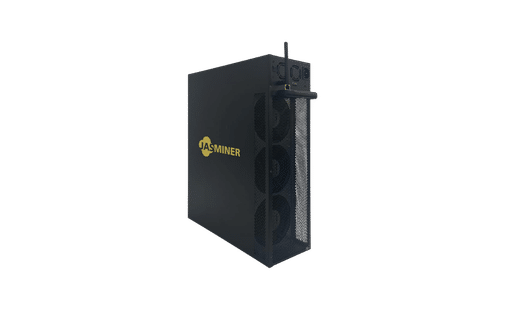
Jasminer X16-Q – Crypto ASIC Mining Hardware Review
Score: 59.5/100. Genuinely quiet EtHash miner with a verified generational upgrade, though profitability swings between loss and profit.
Read More
WhatsMiner M79S – Crypto ASIC Mining Hardware Review
Score: 45.0/100. Worst transparency in the series; core hashrate varies by nearly 50% across resellers with no clear explanation.
Read More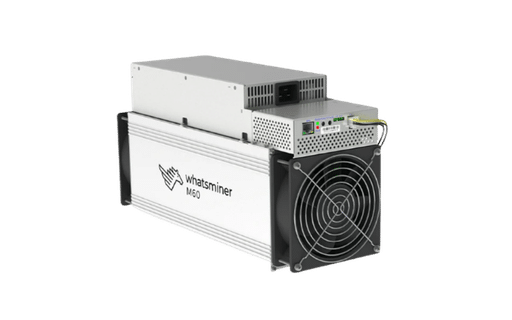
WhatsMiner M60S – Crypto ASIC Mining Hardware Review
Score: 57.25/100. Chosen to test the M79S's chaos; specs proved consistent, showing that mess was product-specific, not company-wide.
Read More
Antminer S21 XP – Crypto ASIC Mining Hardware Review
Score: 65.5/100. Best-documented unit in the series, with officially toleranced specs confirmed via Bitmain's own support page.
Read More