What are peer-to-peer systems?
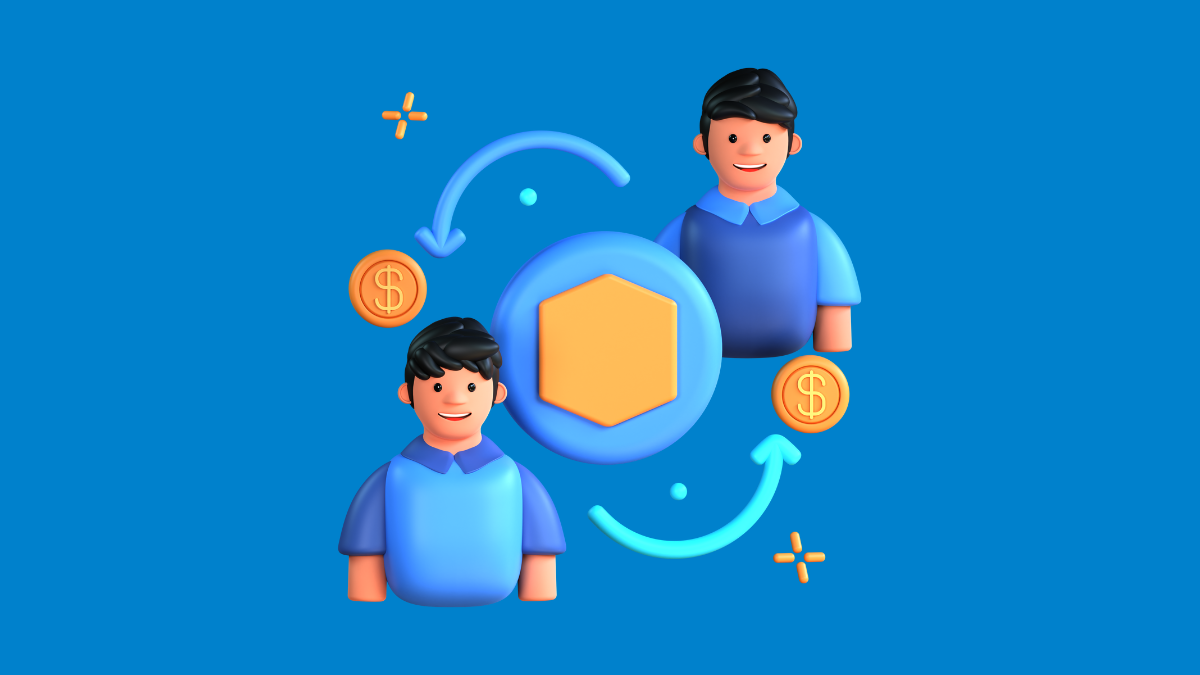
Peer-to-peer (P2P) transactions are the most direct way to exchange value between two people; no banks, no payment processors, no middlemen. It’s how money originally worked: if you hand a friend a $10 bill, that’s a peer-to-peer transaction. The exchange is immediate, final, and requires no third party to approve or record it.
In the digital age, however, things became more complicated. When you send money through a bank or app, the transaction isn’t truly between you and the other person, it’s between your bank and theirs. Both rely on centralized systems to verify balances, process payments, and keep records. Even apps that seem peer-to-peer, like PayPal or Venmo, still use intermediaries. They hold your funds, control access, and can reverse or block transactions.
A true peer-to-peer transaction removes those layers entirely. You send value directly from your account or wallet to another person’s, without needing approval or permission from any central authority. In the world of cryptocurrency, this is made possible through blockchain technology.
Take Bitcoin as an example. When Alice sends Bob 0.01 BTC, she broadcasts a transaction to the Bitcoin network. Computers (called nodes) verify that Alice has enough balance and that her digital signature is valid. Once confirmed, the transaction is added to the blockchain; a public ledger everyone can see. There’s no bank managing it, no company taking a cut, and no middleman holding the funds. The value moves directly, peer-to-peer.
An easy analogy is sending a letter versus sending an email. Traditional financial systems are like sending a letter through a postal service, you hand it over and it travels through a network of intermediaries before reaching the destination. A blockchain-based peer-to-peer system is like sending an email: it goes straight to the recipient, almost instantly, without any central post office.
Peer-to-peer transactions have several advantages:
Speed: Transactions can happen within minutes or seconds, depending on the network.
Low cost: Without banks or payment processors, fees are often minimal.
Accessibility: Anyone with an internet connection and a digital wallet can participate.
Censorship resistance: No one can block, freeze, or reverse your payment once it’s confirmed.
However, P2P systems also introduce new responsibilities. There’s no customer support line to call if you send money to the wrong address or forget your password. You, the user, become your own bank; responsible for security, storage, and transaction accuracy.
Real-world P2P use cases are already widespread. People in countries with unstable banking systems use Bitcoin or stablecoins to send remittances home cheaply and quickly. Freelancers get paid directly in crypto without losing a percentage to payment processors. Even local communities are building decentralized marketplaces where users trade goods and services directly using digital assets.

Recap
Peer-to-peer (P2P) systems allow people to exchange value directly without banks or intermediaries.
Enabled by technologies like blockchain, they offer faster, cheaper, and more open transactions but shift responsibility and risk from institutions to individual users.
Comment
Peer-to-peer systems are heavily dependent on responsible users. And while it seems impossible to even think the whole world will one day be filled with such individuals, it is what we must strive for.
Through education and commitment, we can get rid of unnecessary middlemen and overthrow a system designed to entrap people in ignorance and poverty.
FAQ
Are peer-to-peer systems legal?
In most countries, using P2P systems is legal, but regulations vary by jurisdiction, especially around taxation, reporting, and certain types of transactions.
Do peer-to-peer systems eliminate trust completely?
No. They reduce reliance on institutions, but users still trust the technology, the network, and the rules encoded in the system.
What happens if the network goes down?
Most blockchain-based P2P networks are decentralized and resilient, but congestion, attacks, or bugs can slow or disrupt transactions temporarily.
How do P2P systems prevent fraud without intermediaries?
They rely on cryptography, public ledgers, and consensus rules that make transactions verifiable and difficult to alter once confirmed.
Are P2P transactions always cheaper?
Often, but not always. Network congestion or complex transactions can increase fees, especially during periods of high demand.
Who is responsible if something goes wrong?
The user. Unlike banks, P2P systems usually don’t offer refunds, chargebacks, or customer support.
Can peer-to-peer systems scale to global use?
Scalability is an ongoing challenge, but new technologies like layer-2 networks aim to support millions of transactions efficiently.
Do P2P systems replace banks entirely?
Unlikely. They offer an alternative model for transferring value, while traditional systems continue to serve roles like credit, insurance, and compliance.
More Economy fundamentals
What is Value?
What is Value? Value is a measure of how much something is wanted, needed, or trusted by people. It isn’t fixed or universal. Value...
Keep learningWhat is Money?
What is Money and why we use it? Money is one of humanity’s oldest tools, yet also one of its most misunderstood. It isn’t...
Keep learningWhat is Fiat currency?
What is Fiat currency? Fiat currency is the kind of money most of us use every day: dollars, euros, yen, pesos, and so on....
Keep learningWhat is Trust in money?
What is Trust in money? Trust is the invisible foundation of all money. Without it, no financial system, no matter how advanced, can function....
Keep learningWhat are the problems with Traditional Banking?
What are the problems with Traditional Banking? Traditional banking has been the backbone of the global economy for centuries, providing essential services like saving,...
Keep learningWhat is Inflation?
What is Inflation? Inflation is the gradual rise in prices over time, which reduces the purchasing power of money. When inflation occurs, each unit...
Keep learningWhat is Digital currency?
What is Digital currency? Digital currency is money that exists purely in electronic form; no coins, no bills, no physical representation at all. It’s...
Keep learningWhat is Digital Scarcity?
What is Digital Scarcity? Digital scarcity is the idea that something existing purely in digital form can be limited in supply, just like gold...
Keep learning