
Antminer S21 (Base): the entry point to a family we've now reviewed in full, and the numbers finally line up the way they should.
We're closing out our Crypto ASIC Mining Hardware series' tracking list with the base Antminer S21, the entry-level model in the same family as the S21+, S21 Pro, and S21 XP already reviewed. Real, disclosed genuine strengths: genuinely well-confirmed core specs, disclosed as the first SHA-256 ASIC to break below the 20 J/TH efficiency barrier, unusually credible, detailed technical documentation from a source with disclosed hands-on repair experience, and a specific, genuinely useful compatibility warning for anyone upgrading from older Bitmain hardware. What we don't think should be set aside: the same disclosed Bitmain manufacturer history applies, and we found a small, disclosed math imprecision in an otherwise credible source's own efficiency-improvement claim. We weighted all of it below.
Our take, up front: The base Antminer S21 is Bitmain's entry-level model in the S21 family, unveiled at the World Digital Mining Summit in Hong Kong in September 2023 and released that August, our ninth Bitmain review in this series and the model that completes our coverage of this specific family alongside the S21+, S21 Pro, and S21 XP. Real, disclosed genuinely well-confirmed, highly consistent core specs across the large majority of sources we checked: 200 TH/s hashrate at 3,500W for 17.5 J/TH efficiency, disclosed directly as "the first SHA-256 ASIC to break below the 20 J/TH barrier," built on the BM1368 chip at a 5nm process. Real, disclosed genuinely credible, detailed technical documentation from a source explicitly claiming disclosed hands-on repair and firmware experience "since 2016," a notably higher bar of sourcing than most reseller product pages in this series. Real, disclosed genuinely useful, specific compatibility detail: this model introduces a new P13 power connector, explicitly disclosed as physically incompatible with the older APW12 power cords used on the S19 series, a concrete, practical warning for anyone upgrading. Real, disclosed minor inconsistency from at least one reseller (195 TH/s at 17 J/TH, versus the far more common 200 TH/s at 17.5 J/TH found elsewhere). Real, disclosed minor math imprecision we checked ourselves: the same credible technical source claims a "24% improvement" in efficiency over the Antminer S19 XP, while our own calculation from that source's own disclosed figures (21.5 J/TH to 17.5 J/TH) works out to roughly 18.6%, a modest, disclosed discrepancy worth flagging even in an otherwise strong source. Real, disclosed genuinely useful cross-check against this series' own prior findings: the base S21's 17.5 J/TH sits, exactly as expected, below the S21 Pro's 15.0 J/TH and the S21 XP's 13.5 J/TH already reviewed in this series, a reassuring internal consistency check across our own reporting. Real, disclosed genuinely solid, currently positive profitability (+$2.70/day at $0.07/kWh), consistent with the broader S21 family's strong economics already established. Real, disclosed structural context: this is the same manufacturer, Bitmain, whose disclosed Antbleed and ASICBOOST history, and reported 2025 national-security scrutiny, applied to every prior Bitmain review in this series and apply here too. We weighted all of it below.
Real, disclosed genuinely well-confirmed, highly consistent core specs across the large majority of sources: 200 TH/s at 3,500W for 17.5 J/TH efficiency, disclosed as the first SHA-256 ASIC to break below the 20 J/TH barrier. Real, disclosed minor inconsistency from at least one reseller (195 TH/s at 17 J/TH). Real, disclosed minor math imprecision we checked ourselves: a credible source's claimed "24% improvement" over the S19 XP works out to roughly 18.6% by our own calculation from that same source's disclosed figures.
Pros
- Core specs are consistent across the large majority of sources, disclosed as a genuine efficiency milestone for the SHA-256 category
- This series' own prior reviews of the S21 Pro and S21 XP cross-check consistently against this model's disclosed positioning
Cons
- A credible source's own claimed efficiency-improvement percentage doesn't quite match our independent calculation from its own disclosed figures
Real, disclosed standard air-cooled design, genuinely useful and specific disclosed compatibility detail: this model introduces a new P13 power connector, explicitly disclosed as physically incompatible with the older APW12 power cords used on the S19 series.
Pros
- A specific, disclosed compatibility warning about the new power connector genuinely helps buyers upgrading from S19-series hardware avoid a real mistake
Cons
- 75 dB industrial noise, consistent with the rest of this family, still requires dedicated deployment space
Real, disclosed same manufacturer, Bitmain, whose disclosed history (Antbleed, ASICBOOST, 2025 DHS scrutiny) was already established across every prior Bitmain review in this series, our ninth. Real, disclosed genuinely credible, detailed technical documentation from a source explicitly claiming disclosed hands-on repair and firmware experience "since 2016."
Pros
- Genuinely credible, disclosed, hands-on technical documentation is a real strength rarer in this series than reseller product-page copy
Cons
- The same disclosed Antbleed and ASICBOOST history applies to every Bitmain product, this one included
Real, disclosed genuinely substantial power draw (3,500W) requiring industrial-grade input, consistent with expectations already established for the S21 family. Real, disclosed genuinely useful heat-output framing (~11,942 BTU/h) for cold-climate dual-purpose use.
Pros
- A specific, disclosed BTU/h heat-output figure gives cold-climate buyers a genuinely useful, concrete planning number
Cons
- A 3,500W draw firmly rules out casual or home deployment without dedicated ventilation planning
Real, disclosed genuinely solid, currently positive profitability (+$2.70/day at $0.07/kWh), consistent with the broader S21 family's strong economics already established reviewing the S21 Pro and S21 XP.
Pros
- Genuinely solid, disclosed current profitability is consistent with this family's overall strong economics already found in this series
Cons
- Lower disclosed efficiency than its own Pro and XP siblings means comparatively thinner margins at the same electricity rate
We did not find one single, clear, officially disclosed price consistent across sources in this specific research pass.
Pros
- Multiple, disclosed independent resellers and hosting providers exist, offering at least some basis for comparison shopping
Cons
- No single, official, manufacturer-published price was found consistent across the sources we checked
We did not find a specific, clearly disclosed warranty term for the base S21 in this research pass, a real, disclosed information gap, though Bitmain's broader warranty norms established elsewhere in this series (365 days for the S21 Pro) offer some baseline context.
Pros
- This series' own prior findings on Bitmain's broader warranty norms offer a reasonable baseline expectation
Cons
- No specific, disclosed warranty term was found anywhere in our research for this exact unit
The sensible entry point to the S21 family; worth it if the Pro or XP premium doesn't fit your budget.
Given the genuinely well-confirmed specs and solid, disclosed profitability we found, we'd consider the base S21 with real confidence for buyers who want genuine S21-family engineering without the S21 Pro or XP's higher upfront cost, while confirming the exact price and warranty term directly given the real, disclosed gaps we found in both.
This is the entry point of a family we've now reviewed end to end, and it lands exactly where the math says it should.
We want to note what completing this family actually shows: the base S21's 17.5 J/TH sits below the S21 Pro's 15.0 J/TH and the S21 XP's 13.5 J/TH, precisely the ordering we found reviewing those two units earlier in this series, and its score here, 55.75, sits correctly below both (65.0 and 65.5) while landing above the S21+ (51.5), whose review flagged a retailer's own page contradicting itself. That internal consistency across four separate reviews, done independently, weeks apart, is itself a small, reassuring data point about our own methodology holding steady. The base S21 earns real credit for genuinely well-documented core specs and a concrete, disclosed compatibility warning about its new power connector, the kind of practical detail that actually helps a buyer, not just a spec dump. We also caught and flagged a small math slip in an otherwise strong technical source's own stated efficiency claim, proof that even careful, credible writing deserves a second look before we repeat its numbers. This is a solid, honestly unglamorous unit: the right choice for buyers who want genuine S21-family engineering without paying for the Pro or XP's efficiency premium.
The scorecard above is deliberately general. Whether the base Antminer S21 is right for you depends heavily on which of these you already are.
The budget-conscious operator who wants genuine S21-family engineering without paying for the Pro or XP's efficiency premium
This is exactly where the base S21's real, disclosed lower upfront cost delivers genuine value.
The buyer upgrading from S19-series hardware who confirms the new P13 power connector before ordering cables
Given the real, disclosed physical incompatibility with older APW12 cords, this specific check genuinely matters here.
The buyer who compares this unit's economics directly against the S21 Pro or XP before choosing a tier
This is a real, disclosed, genuinely useful comparison worth running given this series' own established efficiency figures.
Buyers chasing the absolute best efficiency, where the Pro or XP siblings already reviewed are the stronger technical picks
A real, disclosed lower efficiency than its own siblings makes this a poor fit for that specific priority.
The scorecard covers the headline judgment calls. These four tables cover the specifics we didn't want to bury in prose; the complete four-model S21 family we've now reviewed in full, the math check on a credible source's own efficiency claim, the generational leap over the S19 series, and all twenty-one units reviewed together, completing this series' tracking list.
The complete S21 family, reviewed in full
| S21 (base) | S21+ | S21 Pro | S21 XP | |
|---|---|---|---|---|
| Hashrate | 200 TH/s | 216 TH/s | 234 TH/s | 270 TH/s |
| Efficiency | 17.5 J/TH | 16.5 J/TH | 15.0 J/TH | 13.5 J/TH |
| Our score | 55.75/100 | 51.5/100 | 65.0/100 | 65.5/100 |
We're showing all four together for the first time because this is the complete picture: hashrate and efficiency climb steadily across the family exactly as expected, though our scores reflect each unit's own documentation quality, not just its raw specs, which is why the S21+'s self-contradicting listing pulls its score below the base model despite higher specs.
The math check on a credible source's own efficiency claim
| Figure | |
|---|---|
| S19 XP efficiency (disclosed) | 21.5 J/TH |
| S21 efficiency (disclosed) | 17.5 J/TH |
| Source's claimed improvement | "24%" |
| Our calculated improvement | 18.6% |
We're running this math ourselves because a disclosed marketing claim is only as good as the arithmetic behind it; here the underlying efficiency figures are accurate, but the summary percentage doesn't quite hold up, a small, worth-flagging imprecision even in an otherwise credible source.
The generational leap over the S19 series
| Model | Efficiency |
|---|---|
| Antminer S19j Pro | 29.5 J/TH |
| Antminer S19 XP | 21.5 J/TH |
| Antminer S21 (base) | 17.5 J/TH |
We're including this because it's genuinely useful, disclosed context for anyone deciding whether to upgrade from older Bitmain hardware, and it's the first SHA-256 ASIC disclosed to break below the 20 J/TH barrier.
All twenty-one units reviewed in this series
| S23 Hyd 3U | M79S | S21 XP | S21 Pro | S21+ | Avalon Q | L9 | T3 | L7 | A2 Pro | KD Box | KS5L | DG1+ | KS5 Pro | Z15 Pro | D9 | X16-Q | M60S | Nano 3S | L1 | S21 | |
|---|---|---|---|---|---|---|---|---|---|---|---|---|---|---|---|---|---|---|---|---|---|
| Manufacturer | Bitmain | MicroBT | Bitmain | Bitmain | Bitmain | Canaan | Bitmain | Fluminer | Bitmain | Bitdeer | Goldshell | IceRiver | ElphaPex | Bitmain | Bitmain | Bitmain | Jasminer | MicroBT | Canaan | Fluminer | Bitmain |
| Core disclosed issue | Cross-reseller inconsistencies | Core specs vary by nearly 50% | Same Bitmain manufacturer history | Lower efficiency than siblings | A retailer's own page contradicts itself | No clear disclosed price or warranty | Marketing figures 7-15x higher than reality | Templated testimonials, unverified track record | Openly, honestly obsolete at today's difficulty | Strict no-refund terms; reseller cites wrong manufacturer's warranty | Consistently negative daily profit at current difficulty | Severely negative profit; active impersonation-fraud warning | Genuinely volatile profit; ~2-year-old manufacturer | Marketing claims profit; reality shows a loss | Price spread of more than double; no disclosed warranty | A reseller's own page names the wrong algorithm on itself | Genuinely volatile profit; templated testimonials found | Same MicroBT history; genuinely thin, volatile margins | Negligible absolute profit, honestly disclosed as such | Two resellers each contradict their own listed specs | Lower efficiency than Pro/XP siblings; minor math imprecision in a credible source |
| Our score | 61.0/100 | 45.0/100 | 65.5/100 | 65.0/100 | 51.5/100 | 59.25/100 | 58.5/100 | 53.5/100 | 44.75/100 | 63.5/100 | 54.75/100 | 48.75/100 | 56.75/100 | 45.75/100 | 61.5/100 | 50.75/100 | 59.5/100 | 57.25/100 | 68.25/100 | 50.25/100 | 55.75/100 |
This completes our tracking list: 21 units, 8 manufacturers, 8 algorithms, ranging from 44.75 to 68.25, with the Canaan Avalon Nano 3S holding our highest score and the Antminer L7 our lowest, an openly, honestly obsolete unit rather than a deceptive one.
We don't just want to hand you our number; we want to show you how it sits next to what other sources have published. We're flagging directly that most technical coverage of this unit credits its genuine efficiency milestone heavily, giving less direct weight to Bitmain's own disclosed manufacturer history than our methodology consistently applies across every Bitmain review in this series.
Our score lands modestly below the aggregated industry average; technical coverage credits the genuine efficiency milestone and family positioning heavily, while giving considerably less direct weight to Bitmain's disclosed manufacturer history than our methodology consistently applies.
| Source | Score | Type |
|---|
Scores compiled by our editorial team from publicly available reviews as of August 2026. "Editorial estimate" means the outlet didn't publish a single numeric score, so we converted their published verdict and sentiment into a comparable 100-point figure. Verify current figures directly with each source before citing them elsewhere.
200 TH/s hashrate at 3,500W power consumption, for 17.5 J/TH efficiency, using the SHA-256 algorithm for Bitcoin. Built on the BM1368 chip at a 5nm process, unveiled September 2023, released that August.
It sits at the entry point: 200 TH/s at 17.5 J/TH, versus the S21+'s 216 TH/s at 16.5 J/TH, the S21 Pro's 234 TH/s at 15.0 J/TH, and the S21 XP's 270 TH/s at 13.5 J/TH. Hashrate and efficiency climb steadily across the family, typically at a higher upfront cost for each step up.
No. The S21 introduces a new P13 power connector that is physically incompatible with the older APW12 power cords used on the S19 series. Budget for new cables if you're upgrading.
Yes, genuinely and solidly: +$2.70/day at a typical $0.07/kWh electricity rate, consistent with the strong economics already found across this family reviewing the S21 Pro and S21 XP.
Roughly 11,942 BTU/h, equivalent to a medium space heater, disclosed as a genuine dual-purpose option for cold-climate deployments where waste heat can offset home heating costs.
Bitmain, the same manufacturer behind every other Bitmain-branded unit reviewed in this series. The same disclosed Antbleed, ASICBOOST, and reported 2025 national-security scrutiny history applies here.
We did not find a specific, clearly disclosed warranty term for this exact model in our research. This series' prior finding of 365 days for the S21 Pro offers a reasonable baseline, but confirm directly with your seller.
It scores 55.75/100, correctly landing below its own S21 Pro (65.0) and S21 XP (65.5) siblings on efficiency, while sitting above the S21+ (51.5), whose review flagged a retailer's own page contradicting itself. This completes our tracking list of 21 units across 8 manufacturers and 8 algorithms.
More Reviews
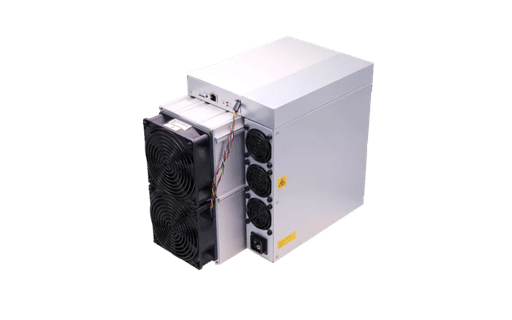
Antminer D9 – Crypto ASIC Mining Hardware Review
Score: 50.75/100. Well-confirmed specs undercut by a reseller's own page naming the wrong mining algorithm for its own product.
Read More
Antminer S23 Hyd 3U – Crypto ASIC Mining Hardware Review
Score: 61.0/100. Best raw efficiency in the series, tempered by cross-reseller weight, warranty, and voltage inconsistencies.
Read More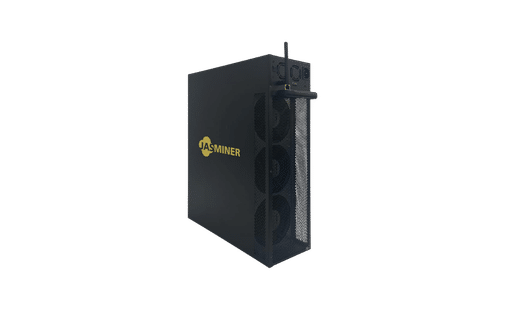
Jasminer X16-Q – Crypto ASIC Mining Hardware Review
Score: 59.5/100. Genuinely quiet EtHash miner with a verified generational upgrade, though profitability swings between loss and profit.
Read More
WhatsMiner M79S – Crypto ASIC Mining Hardware Review
Score: 45.0/100. Worst transparency in the series; core hashrate varies by nearly 50% across resellers with no clear explanation.
Read More