
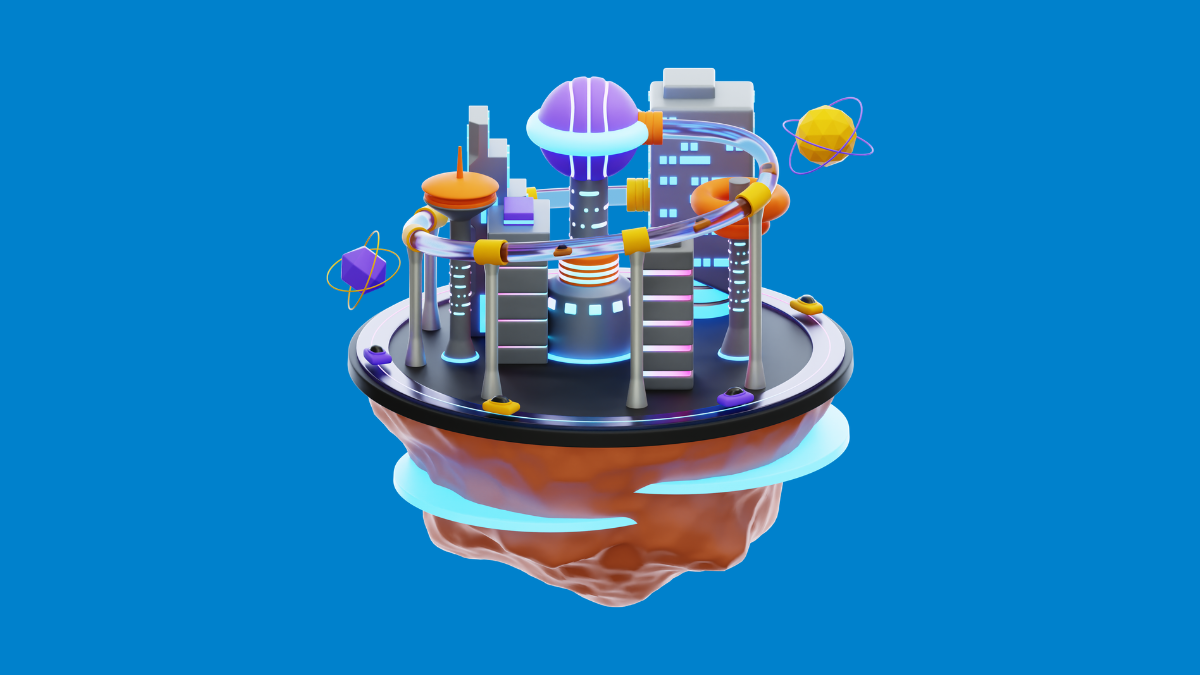
The Metaverse: A Digital Universe Beyond Reality
The Metaverse is a collective virtual space where people interact, work, play, and socialize through digital avatars and immersive technologies. It blends virtual reality (VR), augmented reality (AR), blockchain BlockchainThink of blockchain as a public notebook that everyone owns a copy of. Whatever gets written in it is permanent and visible to all.Keep learning, social media, and gaming into interconnected environments that feel real, persistent, and interactive. While still evolving, the Metaverse represents a shift from the internet as a 2D experience to a 3D, participatory digital universe.
What Is the Metaverse?
The Metaverse is not a single platform; it’s a network of digital worlds where users can:
Move seamlessly between environments.
Own digital assets like virtual land, NFTs, or avatars.
Interact socially, economically, and creatively.
Participate in virtual economies that mimic real-world activities.
Think of it as a parallel digital world layered on or alongside reality, where actions in one environment can have effects elsewhere.
Analogy: Real Life, Digitized
Imagine your favorite city: you can walk down streets, shop in stores, attend concerts, or meet friends at cafés. The Metaverse replicates these experiences digitally. Instead of using your physical body, you navigate as a digital avatar, making decisions, owning property, and participating in events in ways that feel lifelike.
Key Components of the Metaverse
Virtual Reality (VR) & Augmented Reality (AR):
Immersive headsets or AR devices provide a sense of presence, letting users feel physically “inside” the digital space.Avatars:
Digital representations of users, often fully customizable, that allow identity and social interaction in virtual spaces.Digital Assets & NFTs:
Ownership of items such as virtual clothing, art, real estate, or collectibles is tracked on blockchains using NFTs, making assets verifiable and tradeable.Interoperable Platforms:
A true Metaverse would let you move assets or avatars between different virtual worlds, rather than being locked into a single platform.Virtual Economies:
Users can earn, trade, or invest in digital currencies, goods, and services. This can include real-world value and opportunities for income.
Examples of the Metaverse in Action
Gaming Worlds:
Roblox, Fortnite, Decentraland, The Sandbox allow players to explore, build, and trade digital assets.
Virtual Social Spaces:
VRChat and Horizon Worlds let people meet, attend events, and interact socially in fully immersive environments.
Virtual Commerce:
Companies sell digital fashion, NFTs, or virtual real estate for both investment and utility inside games or VR worlds.
Education & Training:
Virtual classrooms, simulations, and corporate training programs use immersive Metaverse spaces for learning.
Concerts & Events:
Artists host live virtual performances, allowing global audiences to participate through avatars.
Crypto and the Metaverse
Cryptocurrency and blockchain are integral to many Metaverse platforms:
Digital Ownership: NFTs prove ownership
 OwnershipOwnership in crypto means control over assets via private keys, allowing users to hold, transfer, or manage funds without intermediaries.Keep learning of virtual items or land.
Currency: Native tokens or stablecoins allow trade and commerce in Metaverse economies.
Decentralization: Some Metaverse platforms aim for governance
GovernanceGovernance in crypto is how decisions about a blockchain or protocol are made, often through token holders voting on changes and proposals.Keep learning and ownership through decentralizedDecentralizationDecentralization is the distribution of control and decision-making across a network instead of a single central authority.Keep learning protocols.


For example:
Decentraland uses MANA tokens for land purchases and transactions.
The Sandbox uses SAND tokens for game development, land, and NFT trades.
Advantages of the Metaverse
Immersive Social Interaction:
Connect with friends, communities, or professional networks in engaging ways.Economic Opportunities:
Virtual real estate, NFTs, and creative services offer new income streams.Creativity and Expression:
Users can build worlds, art, or experiences without the limitations of physical reality.Global Access:
Anyone with internet access can participate, breaking down geographic boundaries.Education and Training:
Safe, realistic simulations allow hands-on learning in controlled environments.
Challenges and Risks
Technology Barriers:
VR/AR equipment can be expensive, and widespread adoption is still limited.Regulation and Legal Issues:
Digital property rights, taxation, and governance in virtual worlds are unclear and evolving.Privacy and Security:
Avatars, transactions, and social interactions generate vast amounts of personal data.Addiction and Mental Health:
Immersive experiences may increase risks of social isolation or excessive screen time.Economic Speculation:
Some virtual assets can be highly volatile, with potential for scams or market bubbles.
Analogy: The Metaverse as a Parallel Economy
Think of the Metaverse like a miniature real world built on the internet:
Land = Virtual real estate
Money = Digital currency or tokens
Work = Virtual jobs or creative projects
Social life = Avatars interacting, attending events, or building communities
It mirrors reality, but rules are programmable, allowing for experimentation, creativity, and innovation beyond physical constraints.
Quick Summary
Definition: A collective, immersive digital space for social, economic, and creative activity.
Core Elements: VR/AR, avatars, digital assets (NFTs), virtual economies, interoperable worlds.
Role of Crypto: Enables ownership, commerce, and governance in virtual worlds.
Advantages: Accessibility, creativity, global social interaction, and economic opportunities.
Challenges: Technology cost, regulation, security, mental health, and economic speculation.
The Metaverse represents the next evolution of the internet; from static websites to fully interactive, persistent, digital worlds where virtual life and real-world economics increasingly intersect.
The tags found in our glossary are there to help you better understand presented definitions. They showcase how certain concepts integrate and interact within the ecosystem.
Rectangular tags signal a concept related to BlockchainBlockchainThink of blockchain as a public notebook that everyone owns a copy of. Whatever gets written in it is permanent and visible to all.Keep learning as a technology. Whereas rounded tags represent Cryptocurrency CryptocurrencyCryptocurrency, often called “crypto,” is a form of digital currency that uses cryptography (advanced math and code) to keep it secure.Keep learning in more of a financial aspect. You’ll also see rectangular dashed tags for Web3
 Web3Web3 is the idea of a decentralized internet powered by blockchain.Keep learning and rounded dashed tags for DeFi
 DeFiDeFi stands for Decentralized Finance. It refers to a collection of applications and platforms built on blockchain that allow people to transact without banks.Keep learning specifically.
Learn more about the relationship between all the tags and their respective concept with our Free Interactive Courses.
Transaction fees
Transaction fees are charges paid to process and validate transactions on a blockchain network.
Keep learning
Oracles
A crypto oracle is a service that feeds external real-world data into blockchains so smart contracts can react to off-chain events.
Keep learning
Real-World Assets (RWAs)
Real-World Assets (RWAs) are physical or traditional financial assets, like real estate or bonds, represented and traded on blockchain networks.
Keep learning
Blockchain
Think of blockchain as a public notebook that everyone owns a copy of. Whatever gets written in it is permanent and visible to all.
Keep learning