
- April 9, 2026
- CEX, Crypto.com
Crypto.com Exchange Review

Disclosure: This post may contain affiliate links. If you sign up or make a purchase through our links, we may earn a commission at no extra cost to you. We only recommend products and services we believe add value.

Crypto.com
84
Crypto.com is a global crypto platform offering trading, staking, and a popular app ecosystem, with strong branding and broad asset support.
Type
Spot + Perps
Trading Pairs
400+
Leverage
Up to 50x
Signup Offer
$50
Pros and Cons
Wide Asset Selection
Strong Ecosystem (Cards, Earn, DeFi)
Beginner-Friendly Mobile Experience
Regulatory Progress & Security Measures
Cons
Higher Costs on the App (Hidden Spreads)
High Withdrawal Fees and Minimums
Complex and Tiered Fee Structure
Customer Support Limitations
Overview
Coinbase is a leading U.S.-based cryptocurrency exchange known for its strong regulatory positioning, user-friendly design, and role as a primary on-ramp for new crypto participants. Founded in 2012, Coinbase has become one of the most recognized names in the digital asset industry and is publicly traded, which subjects it to higher disclosure and compliance standards than most competitors.
The platform offers spot trading for a curated selection of cryptocurrencies, along with staking, custodial services, and institutional-grade products through Coinbase Prime. Coinbase also provides derivatives trading in select jurisdictions and a self-custody wallet that integrates with decentralized applications. Its interface is designed to accommodate beginners, while advanced users can access more sophisticated tools through Coinbase Advanced Trade.
A key differentiator for Coinbase is its regulatory-first approach. The exchange works closely with U.S. and international regulators, prioritizes compliance, and maintains strong relationships with traditional financial institutions. This conservative posture limits the number of supported assets and features compared to offshore exchanges, but it also reduces operational and legal uncertainty for users in regulated markets.
Overall, Coinbase is best characterized as a compliance-driven, accessibility-focused exchange that bridges traditional finance and the crypto economy. It is particularly well suited for beginners, long-term investors, and institutions seeking a familiar and regulated environment, even if more active traders may find its fees higher and product range more limited than global competitors.
Pros and Cons
Wide Asset Selection
Crypto.com supports 400+ cryptocurrencies and 1,000+ trading pairs, giving users access to both major assets and niche tokens.
Strong Ecosystem (Cards, Earn, DeFi)
The platform goes beyond trading with staking, yield products, an NFT marketplace, and its well-known Visa card offering cashback rewards and perks.
Beginner-Friendly Mobile Experience
Its app is designed for ease of use, making it one of the more accessible platforms for buying crypto with fiat and managing assets in one place.
Regulatory Progress & Security Measures
Crypto.com has pursued licenses globally and maintains proof-of-reserves and cold storage protections, strengthening trust and compliance positioning.
Cons
Higher Costs on the App (Hidden Spreads)
While headline fees can be low, buying via card or app often includes higher spreads and fees, making it more expensive than using the exchange interface.
High Withdrawal Fees and Minimums
Crypto withdrawals can be costly and require relatively high minimum amounts, which is a notable drawback for smaller users.
Complex and Tiered Fee Structure
The pricing model varies depending on product (app vs exchange, staking tiers, CRO usage), which can be confusing for beginners.
Customer Support Limitations
Support is primarily chat-based, and response quality or speed can vary, especially for more complex issues.
Scoring System
Each centralized crypto exchange is evaluated on a 100-point scale using a weighted framework that reflects real-world usability, security, and service reliability. Scores are based on the following categories:
- Security & Compliance (25 points) – Measures platform security practices, regulatory compliance, insurance coverage, history of breaches, and adherence to KYC/AML standards.
- Liquidity & Market Depth (20 points) – Evaluates trading volume, order book depth, slippage, and the ability to execute large trades efficiently across spot and derivatives markets.
- Asset Support & Listings (15 points) – Considers the range of supported cryptocurrencies and tokens, fiat gateways, and access to niche or newly listed assets.
- Trading Features & Tools (15 points) – Assesses the quality of spot, margin, and derivatives trading, staking, lending, advanced charting, and order types.
- User Experience & Interface (10 points) – Reviews onboarding, platform navigation, mobile and desktop app usability, and overall ease of use.
- Customer Support & Reliability (10 points) – Evaluates responsiveness, support channels, dispute resolution, and platform uptime/stability.
- Fees & Value for Money (5 points) – Examines trading fees, withdrawal costs, and competitive pricing relative to available features and services.
Each category contributes a defined portion of the total score. Higher-scoring exchanges demonstrate a strong balance of security, liquidity, usability, and trading features; not just flashy interfaces or a large coin list.
Security and Compliance
24
Security Infrastructure
Crypto.com employs a multi-layered security architecture built around a “defence in depth” and zero-trust model. This includes strict access controls, continuous monitoring, and a secure software development lifecycle with both static and dynamic code analysis.
User accounts are protected through multi-factor authentication, biometric login options, passkeys, and withdrawal whitelisting. The platform also enforces strict internal controls over both hot and cold wallet access, reducing the risk of unauthorized fund movement.
Additionally, fiat balances are held in regulated custodial bank accounts in certain jurisdictions, adding a layer of traditional financial infrastructure to user fund protection.
Certifications and Security Standards
One of Crypto.com’s strongest differentiators is its extensive list of security and compliance certifications. The platform holds multiple internationally recognized standards, including:
ISO/IEC 27001 (information security)
ISO/IEC 27701 (privacy management)
PCI DSS Level 1 (payment security)
SOC 2 Type II compliance
It is also assessed at Tier 4 (the highest level) under the NIST Cybersecurity and Privacy Frameworks.
These certifications are typically associated with institutional-grade systems and indicate a structured, audited approach to security and data protection.
Transparency and Proof of Reserves
Crypto.com has implemented Proof of Reserves as part of its transparency framework. Independent audits conducted by Mazars Group confirmed that customer assets are backed on a 1:1 basis, meaning user balances are fully covered by on-chain holdings.
The platform uses Merkle tree verification, allowing users to independently confirm that their balances are included in the reserve audit.
While this adds a layer of verifiability, it is important to note that Proof of Reserves typically does not provide a full picture of liabilities, which remains a broader limitation across the industry.
Incident History and Risk Factors
Crypto.com has not experienced a large-scale systemic breach comparable to some competitors, but it has faced smaller incidents. In early 2022, approximately 400 user accounts were compromised in a hack; however, all affected users were reimbursed and the platform restored operations within hours.
Following the incident, the exchange strengthened its security measures, including enhanced authentication requirements and withdrawal protections. This reflects a pattern seen across the industry, where security frameworks evolve in response to real-world attacks.
Regulatory and Compliance Position
Crypto.com is widely recognized for its proactive regulatory strategy. The company has obtained numerous licenses, registrations, and compliance approvals across multiple jurisdictions, positioning itself as one of the more regulation-aligned global exchanges.
Its compliance model emphasizes:
Regional licensing rather than a single global framework
Integration with traditional financial systems (e.g., banking partners)
Strong focus on data privacy and consumer protection
This approach enhances legitimacy and accessibility in regulated markets, particularly compared to exchanges that operate with minimal oversight.
Liquidity & Market Depth
18
Overall Liquidity Profile
Crypto.com maintains moderate-to-strong liquidity across major assets, supported by consistent trading volume and a large global user base. The platform ranks among the top exchanges by spot volume, which contributes to a generally active market environment.
However, compared to top-tier liquidity leaders, its depth is more limited. Data from industry research shows that within tight price ranges (±$10 around BTC), Crypto.com typically provides between $100K and $500K of order book depth, placing it in the mid-tier range alongside several other exchanges.
This indicates that while liquidity is sufficient for most retail and mid-sized trades, it is not as deep as the largest venues for institutional-scale execution.
Market Depth and Order Book Quality
On its exchange platform (not the retail app), Crypto.com provides structured order books with reasonable depth for major pairs like BTC/USDT and ETH/USDT. Spreads are generally competitive under normal conditions, allowing for relatively efficient execution.
That said, depth tends to thin out more quickly as order size increases compared to top-tier exchanges. This means larger trades may experience more noticeable price impact, particularly during volatile periods.
For smaller-cap altcoins, liquidity can drop significantly. These markets often exhibit:
Wider bid-ask spreads
Lower order book density
Higher slippage risk
This uneven distribution of liquidity is common across the industry but is more pronounced on mid-tier exchanges.
App vs Exchange Liquidity Dynamics
A key distinction with Crypto.com is the difference between its retail app and its exchange interface.
The exchange operates with traditional order books and visible liquidity
The app functions more like a brokerage model, where pricing includes spreads rather than direct order book execution
As a result, users trading through the app may experience wider effective spreads, even if underlying market liquidity is reasonable. This can give the impression of lower liquidity, especially for market orders.
Performance During Volatility
During periods of high volatility, Crypto.com generally maintains functional markets, but liquidity conditions can deteriorate more quickly than on top-tier exchanges.
As with all crypto markets, volatility can lead to:
Spread widening
Reduced near-price depth
Increased slippage
This effect is amplified on platforms with less concentrated liquidity, where market makers may pull orders or widen quotes to manage risk.
Role of Market Structure
Liquidity on Crypto.com is supported by a combination of:
Centralized order books (exchange)
Internal pricing mechanisms (app)
Broader market participation
In addition, the wider crypto ecosystem; including DeFi liquidity pools and cross-exchange activity; contributes to overall liquidity conditions, although liquidity remains fragmented across platforms.
Asset Support & Listings
14
Range of Supported Assets
Crypto.com supports 250+ cryptocurrencies on its exchange, along with over 100 trading pairs and 20+ fiat currencies.
The platform covers all major assets such as Bitcoin, Ethereum, and stablecoins, alongside a wide selection of altcoins across sectors like DeFi, gaming, and AI.
In addition, its broader ecosystem extends beyond the exchange:
The Crypto.com App often supports even more retail-friendly assets
The DeFi wallet integrates 700+ tokens across 30+ blockchains, significantly expanding overall asset exposure
This creates a multi-layered asset offering across centralized and decentralized environments.
Listing Strategy and Asset Selection
Crypto.com follows a more controlled listing approach compared to high-volume altcoin exchanges. Projects must pass internal reviews covering:
Security and technical integrity
Legal and regulatory considerations
Market demand and liquidity potential
This results in:
Fewer speculative or low-quality tokens
A stronger emphasis on established or trending projects
However, it also means the platform is often slower to list new or highly speculative assets compared to competitors focused on rapid listings.
Coverage Across Market Segments
Crypto.com provides balanced exposure across different categories:
Large-cap assets (BTC, ETH, SOL) with full trading support
Mid-cap altcoins with both spot and limited derivatives availability
Emerging tokens added selectively based on traction
That said, coverage is not as extensive in the “long-tail” of smaller tokens. Traders looking for very early-stage or niche assets may find the selection more limited than on altcoin-focused exchanges.
App vs Exchange Asset Availability
A key distinction is the difference between Crypto.com’s platforms:
The main app focuses on accessibility and fiat purchasing
The exchange offers more structured trading pairs and tools
Availability of specific tokens can vary by region due to regulation
This means users may encounter:
Assets available for tracking but not trading
Regional restrictions on certain tokens
Differences between buy/sell availability and full trading support
Delisting and Compliance Impact
Crypto.com actively manages its listings and may restrict or remove assets due to:
Regulatory requirements
Liquidity concerns
Risk management policies
This is particularly relevant in jurisdictions with evolving crypto regulations, where certain assets may become “sell-only” or fully delisted.
While this reduces exposure to problematic assets, it can also limit continuity for traders holding specific tokens.
Trading Features & Tools
12
Crypto.com offers a broad and multi-layered set of trading tools, combining traditional exchange functionality with automation, yield products, and ecosystem integrations. Its feature set is designed to serve both beginners and intermediate users, with increasing depth available on the exchange interface.
Spot Trading & Order Types
Crypto.com provides a full spot trading environment with hundreds of assets and trading pairs. Users can access standard order types such as market, limit, and stop-loss orders, enabling both simple and structured trade execution.
The exchange interface supports a range of advanced trading tools, including:
- Conditional orders
- Stop-loss and take-profit settings
- API access for algorithmic trading
Derivatives & Futures
The platform offers derivatives products including perpetual contracts and futures, with leverage of up to around 50x depending on the asset and jurisdiction.
These tools allow traders to:
- Take long or short positions
- Hedge existing holdings
- Implement short-term trading strategies
While not as extensive as top derivatives exchanges, Crypto.com provides a solid offering for intermediate users.
Margin & Leverage Trading
Crypto.com supports margin trading with both cross and isolated margin modes. This allows users to borrow funds and increase position size, while managing risk through liquidation thresholds and collateral requirements.
This feature bridges the gap between spot trading and more advanced leveraged strategies.
Staking & Earn Features
Crypto.com integrates a wide range of Earn products, which are a core part of its ecosystem:
- Crypto Earn (fixed-term and flexible yield products)
- Staking for network rewards
- Lending and yield-generating services
These tools allow users to generate passive income on idle assets, making the platform appealing for long-term holders and yield-focused strategies.
API & Algorithmic Trading
Crypto.com provides a structured API suite designed for automated and programmatic trading, supporting both retail and professional users.
- REST and WebSocket APIs for real-time market data and trading
- Automated order placement and portfolio management
- Support for custom trading bots and quantitative strategies
- Institutional-grade endpoints for higher-volume users
- Integration with external trading systems and analytics tools
This makes it suitable for developers and traders who want to build or deploy algorithmic strategies across spot and derivatives markets.
Advanced Charting & Interface
Crypto.com offers a clean trading interface supported by advanced charting tools powered by TradingView.
- Full suite of technical indicators (RSI, MACD, moving averages, etc.)
- Multiple chart types and customizable timeframes
- Drawing tools for trend analysis and pattern recognition
- Integrated order placement directly from charts
- Mobile-optimized trading interface with synced layouts
The platform balances simplicity with functionality, making it accessible for beginners while still offering enough depth for technical traders.
Institutional & OTC Trading
Crypto.com offers an OTC (Over-the-Counter) desk for large-volume trades, enabling users to execute block trades without impacting the public order book.
This is particularly useful for:
- High-net-worth individuals
- Institutional participants
- Large portfolio rebalancing
Trading Bots & Automation
Crypto.com includes a range of built-in trading bots that automate execution strategies. These include:
- DCA (Dollar-Cost Averaging) bots
- Grid trading bots
- TWAP and arbitrage bots
These bots allow users to:
- Automate recurring buys/sells
- Trade within defined price ranges
- Reduce emotional decision-making
Additional Tools & Ecosystem Features
Beyond core trading, Crypto.com provides a wide range of supporting tools that expand its functionality:
- Trading Arena (competitions and reward-based trading events)
- Crypto baskets for diversified automated investing
- Sub-accounts and portfolio management tools
- API integrations for external tools and algorithmic strategies
- Web3 and DeFi wallet integration for on-chain access
These features position Crypto.com as more than just an exchange, extending into a full-service crypto ecosystem.
User Experience & Interface
7

Platform Design and Navigation
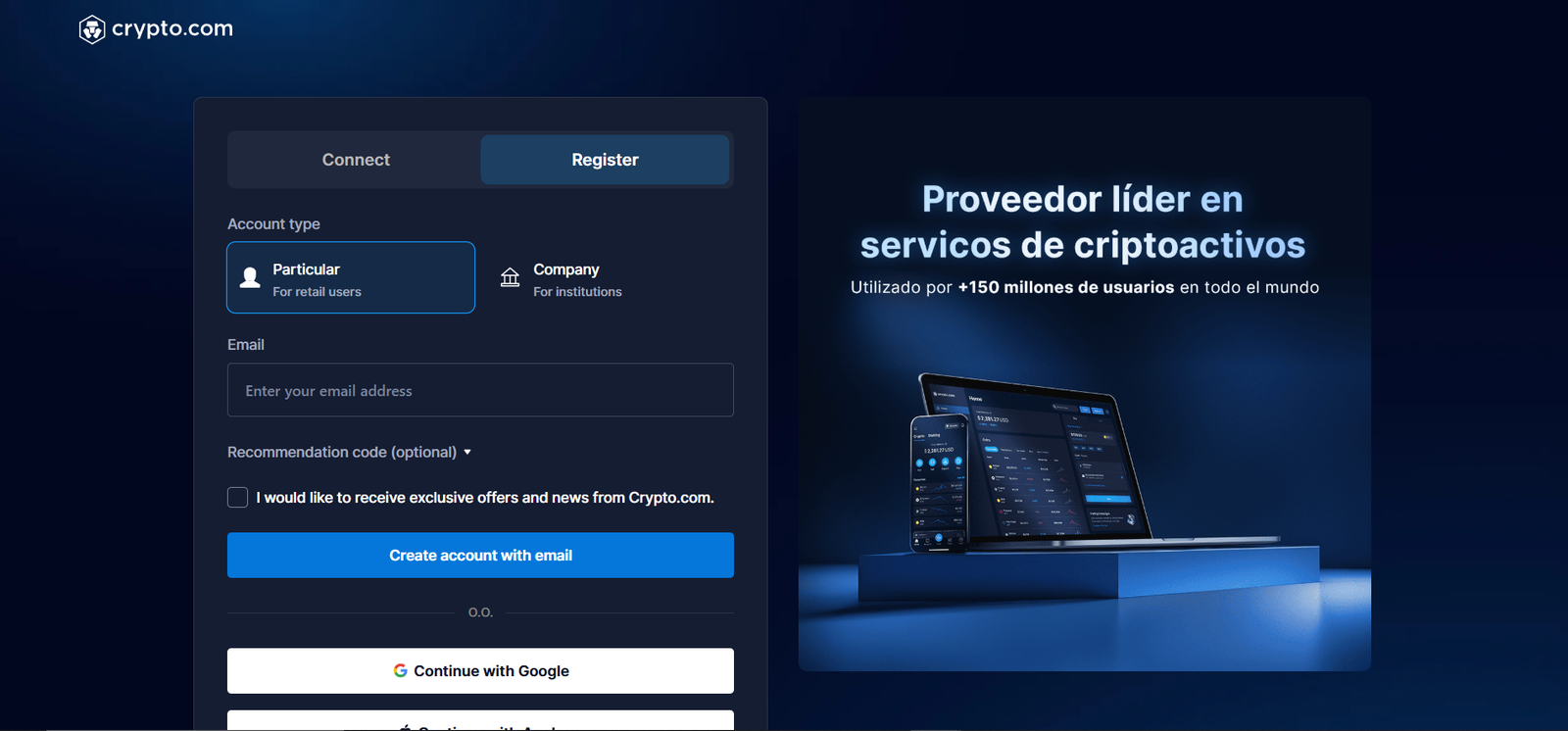
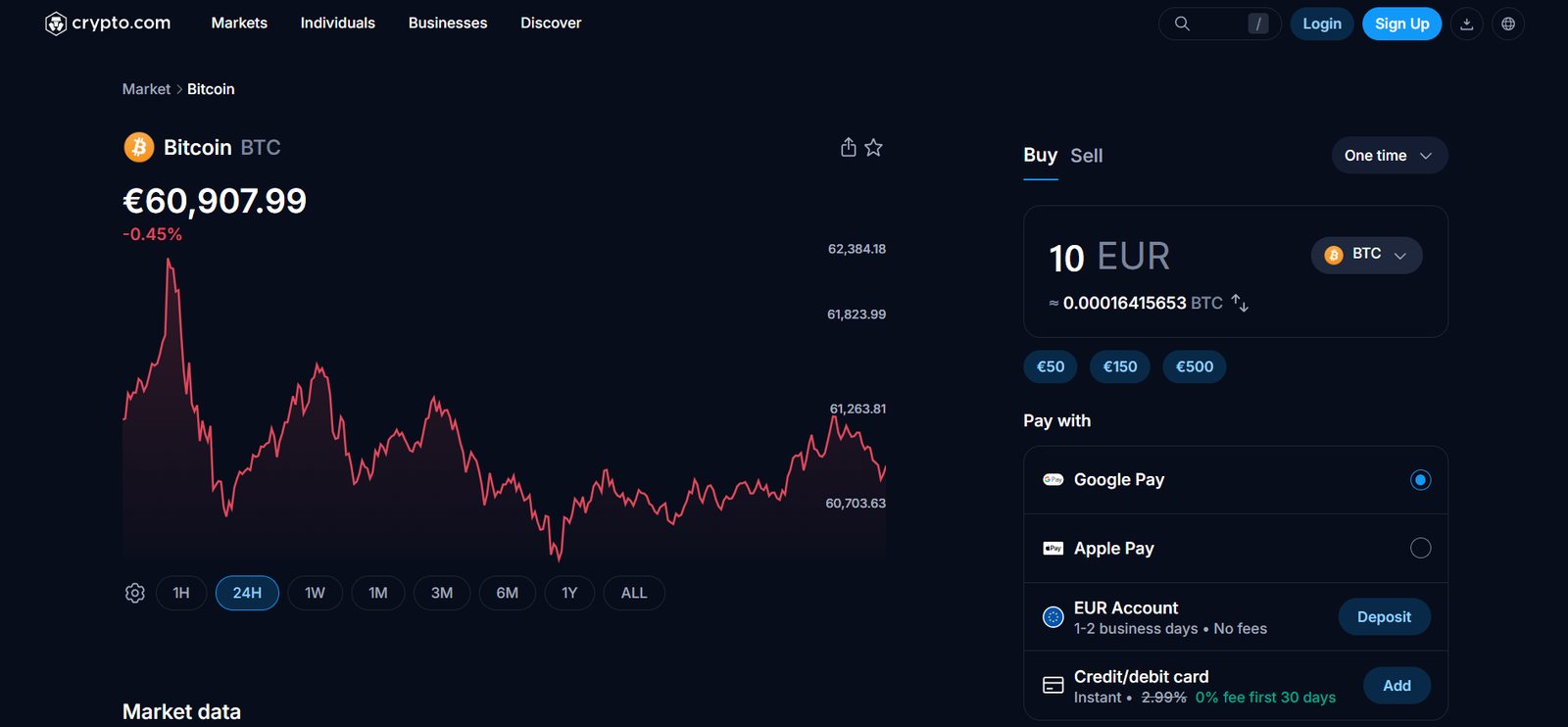
The Crypto.com app is the core of the user experience. It is designed with a clean, modern interface that emphasizes simplicity over technical depth. Key functions such as buying, selling, staking, and card management are accessible within a few taps, and the home screen provides a clear overview of balances, recent activity, and market movements.
Navigation is generally intuitive, with a structure that prioritizes common actions rather than advanced trading workflows. The design follows a “progressive disclosure” approach, where more complex features are introduced gradually as users explore the platform.
This makes the platform highly approachable, particularly for users entering crypto through fiat purchases or everyday usage.
Mobile-First Experience
Crypto.com is fundamentally built around its mobile app, which serves as the primary interface for most users. The app is widely regarded as polished and easy to use, with strong ratings across app stores and a focus on real-time portfolio tracking and quick transactions.
Its mobile-first design enables:
Fast onboarding and account setup
One-tap buying and selling
Integrated access to staking, rewards, and card features
This makes it particularly well suited for users who manage their crypto activity on the go.
Exchange vs App Experience
A key aspect of Crypto.com’s UX is the separation between:
The main app (retail-focused)
The exchange interface (trading-focused)
The app prioritizes simplicity and convenience, often abstracting away order books and trading mechanics. In contrast, the exchange offers a more traditional interface with charts, order books, and advanced tools.
While this dual structure allows the platform to serve both beginners and advanced users, it also creates fragmentation. Users may need to switch between environments to access different features, which can reduce overall workflow efficiency.
Feature Integration and Ecosystem Design
Crypto.com integrates a wide range of services—trading, staking, payments, cards, NFTs, and DeFi—into a single interface. This creates a unified ecosystem where users can manage multiple financial activities without leaving the platform.
The interface is designed to support this integration by grouping features into accessible sections, rather than separating them into entirely different products. As a result, the platform functions more like a fintech app than a pure trading terminal.
However, this breadth can also lead to feature density, where the number of available options begins to impact clarity.
Usability and Learning Curve
For beginners, Crypto.com is relatively easy to use. Buying crypto, tracking a portfolio, and accessing basic features require minimal prior knowledge. The app’s structure reduces friction and lowers the barrier to entry.
At the same time, usability declines as complexity increases:
Advanced trading is less intuitive in the main app
Fee transparency (e.g., spreads) is not always clearly displayed
Some features require navigation across multiple sections
There are also reports that the app can feel cluttered or overwhelming as more services are introduced, particularly for users seeking a simple experience.
Performance and Consistency
In general, the platform performs well for everyday use, with smooth navigation and reliable execution for standard transactions.
However, performance consistency can vary:
The mobile app is optimized for retail usage but may struggle under heavier feature loads
The web exchange provides better tools for traders but is less central to the overall experience
This reflects the platform’s prioritization of accessibility over high-performance trading environments.
Customer Support & Reliability
6
Customer Support Channels
Crypto.com primarily relies on in-app live chat as its main support channel, with limited availability of phone support depending on the product or region.
The platform also provides a help center with guides and FAQs, allowing users to resolve basic issues independently. However, direct human support is generally accessed through chat, which can limit flexibility for more complex cases.
Quality and Responsiveness
Support quality is one of Crypto.com’s most commonly cited weaknesses. While simple inquiries can be resolved relatively quickly, more complex issues; such as account access, withdrawals, or verification; often experience delays or require repeated follow-ups.
Across multiple review platforms, recurring complaints include:
Slow response times
Scripted or generic replies
Difficulty escalating issues
For example, aggregated review data shows consistently low user satisfaction scores (around 1–1.5/5 on some platforms), with users highlighting poor communication and delayed resolutions.
While anecdotal, these patterns align with broader review trends.
Platform Reliability and Uptime
From a technical standpoint, Crypto.com is generally reliable. The platform maintains stable performance for everyday activities such as buying, selling, and portfolio tracking.
Its infrastructure supports:
Consistent app functionality
Reliable transaction processing under normal conditions
Integration across multiple services (trading, payments, cards)
There are no widespread reports of frequent system outages, and the platform is considered dependable for standard retail usage.
Performance Under Stress
During periods of high market volatility, Crypto.com remains operational but may experience:
Slower processing times
Delays in withdrawals or confirmations
Increased reliance on support channels
These issues are not unique to Crypto.com, but the impact is amplified by its weaker support responsiveness. When problems arise, resolution times can become a key point of frustration for users.
Trust and Operational Consistency
Crypto.com presents a dual profile in terms of reliability:
Strong operational infrastructure and security framework
Inconsistent customer experience when issues occur
This creates a situation where the platform works well under normal conditions but may become difficult to navigate when something goes wrong.
Fees & Value for Money
3
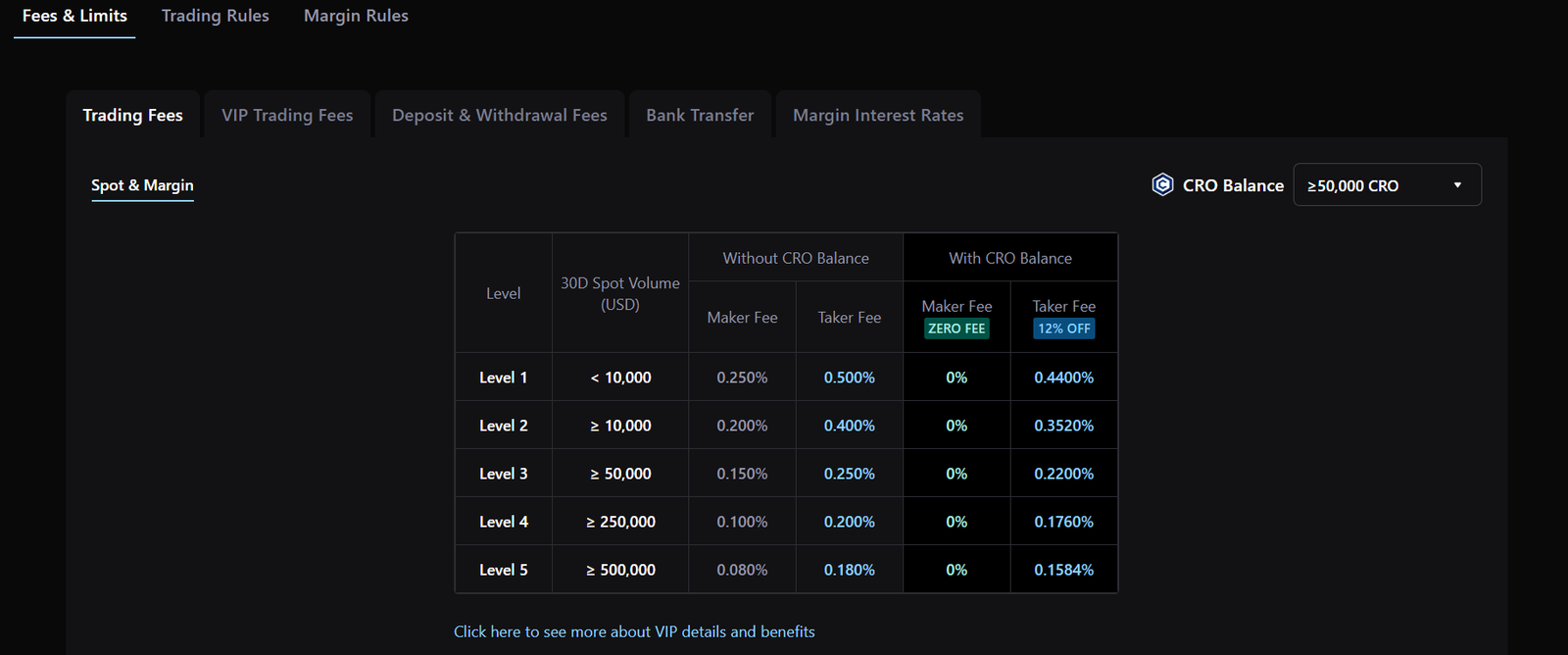
Spot Trading Fees Table – Find all exact numbers regarding the platform’s fees here.
Trading Fees
On the Crypto.com Exchange, fees follow a maker-taker model with tiered pricing based on trading volume and CRO staking.
Entry-level fees can start around 0.40% maker / 0.40% taker for low-volume users
More commonly cited base rates are around 0.075% maker / 0.075% taker, which are competitive in the industry
High-volume users or those staking CRO can reduce fees significantly, even approaching 0% maker fees at top tiers
This structure rewards active traders but is less favorable for casual users who remain in higher fee tiers.
App Pricing and Hidden Costs
A key distinction is between the Crypto.com App and the Exchange.
The app does not use a traditional order book
Instead, trades are executed with built-in spreads and pricing markups
While Crypto.com may advertise low or zero trading fees, the actual cost is embedded in the execution price.
In practice, this often results in:
Higher effective costs than exchange trading
Less transparency on the true cost per trade
This is one of the platform’s most important drawbacks and a major factor in its overall value assessment.
CRO Staking and Discounts
Crypto.com heavily incentivizes users to hold and stake its native token (CRO):
Staking CRO reduces trading fees across tiers
Higher staking levels unlock additional benefits (lower fees, card perks, rewards)
Fee reductions can be substantial for committed users
However, this introduces an additional layer of complexity and risk, as users must hold a volatile asset to access the best pricing.
Non-Trading Fees
Crypto.com’s non-trading fees are mixed:
Deposits: Typically free for crypto; fiat depends on method
Withdrawals: Variable and sometimes relatively high depending on the asset
Card purchases: May include additional processing or administrative fees
Derivatives and advanced products may also include:
Funding rates
Liquidation fees (e.g., ~0.5% in some cases)
These additional costs can accumulate, particularly for active or leveraged traders.
Value for Money
Crypto.com’s value depends strongly on user type:
High-value users (with CRO staking + high volume)
→ Very competitive pricing and strong overall valueCasual or app-based users
→ Higher effective costs due to spreads and hidden feesEcosystem users (cards, staking, rewards)
→ Value comes from bundled benefits rather than trading efficiency
The Block Note's Score
Aggregated Score
24
18
14
12
7
6
3
Total Score
Who is Crypto.com Best for
1. Everyday Crypto Users and Spenders
Crypto.com is particularly well suited for users who want to use crypto in daily life, not just trade it. Its Visa card and cashback rewards system are among the most developed in the industry, making it a strong choice for spending and earning rewards.
This makes it ideal for:
Users making regular purchases with crypto-linked cards
Those interested in cashback and rewards programs
Individuals integrating crypto into everyday finances
2. Beginners and Mobile-First Users
The platform is a strong entry point for newcomers due to its simple onboarding and mobile-first design. Users can quickly buy crypto with fiat, track portfolios, and access basic features without needing deep technical knowledge.
It is best suited for:
First-time crypto buyers
Users who prefer mobile apps over desktop trading
Investors looking for a guided, simplified experience
However, beginners should be aware of the platform’s fee structure and hidden spreads within the app.
3. Long-Term Holders and Yield Seekers
Crypto.com is well aligned with users who follow a long-term investment or yield strategy, particularly those willing to engage with its native token ecosystem.
It works well for:
Users staking assets for passive income
Long-term holders using Earn or savings products
Investors leveraging CRO staking for rewards and fee reductions
The platform’s ecosystem encourages holding and reinvesting rather than frequent trading.
4. Ecosystem-Oriented Users (All-in-One Platform)
Crypto.com functions as an integrated crypto ecosystem, combining trading, payments, staking, DeFi access, and NFTs within one platform.
This makes it attractive for:
Users who want everything in one place
Portfolio builders managing multiple crypto activities
Users moving between CeFi and DeFi environments
Rather than specializing in one area, Crypto.com offers a broad, unified experience.
5. Intermediate Traders (Exchange Users)
While not a trading-first platform, Crypto.com can still serve intermediate traders, particularly those using the exchange (not the app).
It is suitable for:
Traders who understand how to avoid app spreads
Users taking advantage of lower fees via the exchange
Those combining trading with staking or rewards
However, it is generally not the top choice for high-frequency or derivatives-focused professionals.
Final Verdict
Crypto.com
84
Crypto.com is a global crypto platform offering trading, staking, and a popular app ecosystem, with strong branding and broad asset support.
Type
Spot + Perps
Trading Pairs
400+
Leverage
Up to 50x
Signup Offer
$50
Pros and Cons
Wide Asset Selection
Strong Ecosystem (Cards, Earn, DeFi)
Beginner-Friendly Mobile Experience
Regulatory Progress & Security Measures
Cons
Higher Costs on the App (Hidden Spreads)
High Withdrawal Fees and Minimums
Complex and Tiered Fee Structure
Customer Support Limitations
Crypto.com Team

Kris Marszalek
Co-Founder and CEO of Crypto.com
Read MoreFrequently Asked Questions
What is a centralized crypto exchange (CEX)?
A CEX is a platform that facilitates buying, selling, and trading cryptocurrencies through a company that holds custody of your funds.
How do I create an account on a centralized exchange?
Most exchanges require email verification, identity checks (KYC), and sometimes phone verification. Once verified, you can deposit funds and start trading.
What happens if the exchange gets hacked?
Your funds could be at risk, though some platforms offer insurance or compensation. Always follow best practices and avoid leaving large balances on a CEX.
Can I trade on mobile?
Most exchanges offer mobile apps with full functionality for trading, portfolio tracking, and security management.
How is security measured for these exchanges?
Security includes platform safeguards, regulatory compliance, insurance coverage, and past incidents. Exchanges with strong security practices and transparency score higher.
Why aren’t fees the main scoring factor?
Fees are important, but we weigh them alongside usability, liquidity, support, and asset variety. A low-fee platform with poor security or unreliable support will score lower.
Can an exchange’s score change over time?
Yes. Scores are updated based on security updates, liquidity changes, new features, or regulatory developments.
Do you receive compensation for higher scores?
No. Scores are independent of partnerships or affiliate relationships.
More Reviews
Binance – CEX Review
Binance leads centralized crypto exchanges with high liquidity, low fees, and vast token support; setting the benchmark for speed, security, and global access.
Read More
Coinbase – CEX Review
Coinbase is a beginner-friendly centralized exchange known for its simplicity, compliance, and secure platform; making crypto accessible to millions worldwide.
Read More
Kraken – CEX Review
Kraken stands out among centralized exchanges for its strong security, regulatory focus, and advanced trading tools trusted by professionals worldwide.
Read More
KuCoin – CEX Review
KuCoin is a centralized exchange offering a wide altcoin selection, advanced trading tools, and features like futures and staking for global users.
Read More