
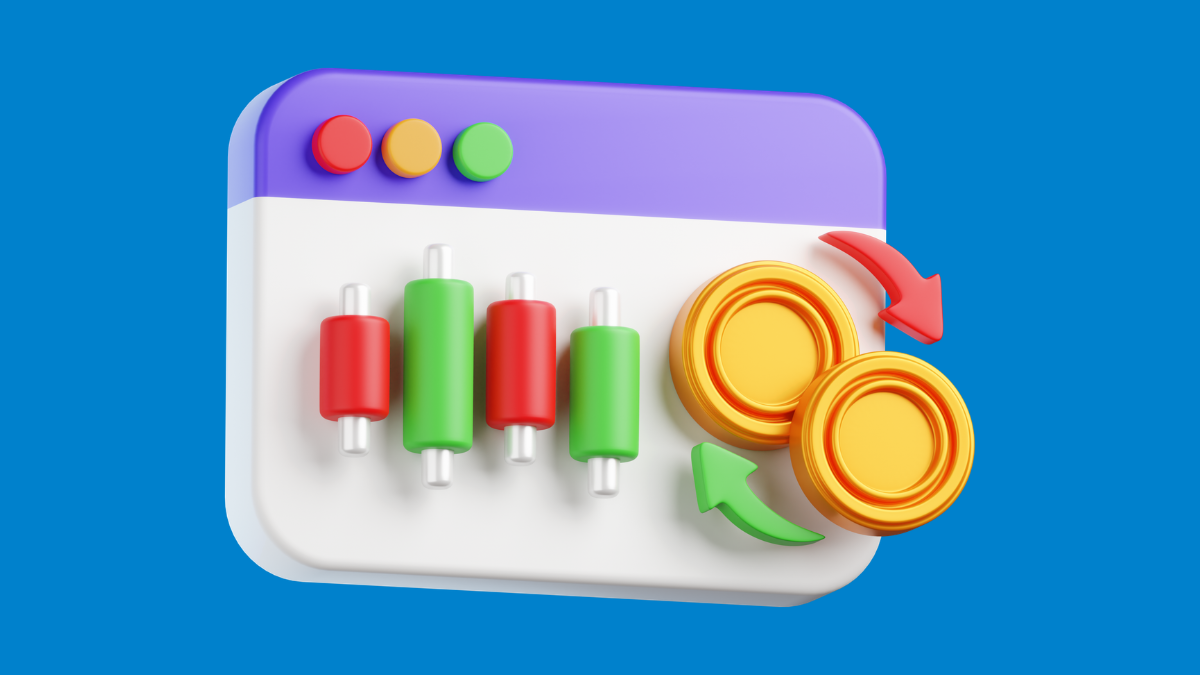
What Crypto Trading Is
Crypto trading involves exchanging one digital asset for another or for fiat currency. Traders attempt to profit from:
- Price volatility
- Market trends
- Arbitrage opportunities
- Long‑term growth
Unlike traditional markets, crypto never closes; trading happens 24/7 across global exchanges.
Types of Crypto Trading
Different trading styles suit different personalities and risk levels:
- Spot trading — buying or selling assets for immediate settlement
- Swing trading — holding positions for days or weeks
- Day trading — multiple trades within a single day
- Scalping — rapid, small trades to capture tiny price movements
- Arbitrage — profiting from price differences across exchanges
- Futures trading — trading contracts that speculate on future prices
- Options trading — using derivatives to hedge or speculate
Each method has its own risk profile and learning curve.
Where Crypto Trading Happens
Crypto trading occurs on two main types of platforms:
- Centralized exchanges (CEXs) — Binance, Coinbase, Kraken
- Decentralized exchanges (DEXs) — Uniswap, Raydium, Curve
CEXs offer liquidity and ease of use.
DEXs offer self‑custody and permissionless access.
Key Concepts Every Trader Must Know
Crypto trading introduces several foundational concepts:
- Liquidity — how easily you can trade without moving the price
- Volatility — how quickly prices change
- Slippage — difference between expected and executed price
- Order types — market, limit, stop‑loss, take‑profit
- Market structure — trends, support, resistance
- Risk management — position sizing, stop‑losses, diversification
Understanding these reduces the likelihood of costly mistakes.
Technical Analysis vs Fundamental Analysis
Crypto traders typically rely on two analytical approaches:
Technical analysis
Uses charts, indicators, and patterns to predict price movements.
Examples: RSI, MACD, moving averages, Fibonacci levels.
Fundamental analysis
Evaluates the underlying value of a project.
Examples: tokenomics, roadmap, team, adoption, network activity.
Most traders combine both.
Risks of Crypto Trading
Crypto trading is high‑risk due to:
- Extreme volatility
- Market manipulation
- Low‑liquidity tokens
- Smart‑contract exploits
- Exchange hacks
- Emotional decision‑making
- Leverage liquidation
Even experienced traders lose money. Risk management is essential.
Best Practices for Beginners
To trade responsibly:
- Start with small amounts
- Use stop‑losses
- Avoid high leverage
- Trade only what you understand
- Keep long‑term holdings separate from trading funds
- Track your trades and performance
- Never trade based on hype or fear
These habits help build discipline and reduce emotional trading.
Crypto Trading vs Investing
A simple comparison:
| Topic | Trading | Investing |
|---|---|---|
| Time Horizon | Short‑term | Long‑term |
| Goal | Profit from volatility | Accumulate value |
| Skillset | Technical analysis, timing | Research, fundamentals |
| Risk | High | Moderate |
| Activity Level | Active | Passive |
Both approaches can coexist in a balanced strategy.
Why Crypto Trading Matters
Crypto trading plays a major role in the ecosystem:
- Provides liquidity
- Enables price discovery
- Supports token launches
- Helps allocate capital to strong projects
- Drives innovation in DeFi
 DeFiDeFi stands for Decentralized Finance. It refers to a collection of applications and platforms built on blockchain that allow people to transact without banks.Keep learning and derivatives
It is a core component of the crypto economy; but one that requires caution.
The tags found in our glossary are there to help you better understand presented definitions. They showcase how certain concepts integrate and interact within the ecosystem.
Rectangular tags signal a concept related to Blockchain BlockchainThink of blockchain as a public notebook that everyone owns a copy of. Whatever gets written in it is permanent and visible to all.Keep learning as a technology. Whereas rounded tags represent Cryptocurrency
 CryptocurrencyCryptocurrency, often called “crypto,” is a form of digital currency that uses cryptography (advanced math and code) to keep it secure.Keep learning in more of a financial aspect. You’ll also see rectangular dashed tags for Web3
 Web3Web3 is the idea of a decentralized internet powered by blockchain.Keep learning and rounded dashed tags for DeFi
 DeFiDeFi stands for Decentralized Finance. It refers to a collection of applications and platforms built on blockchain that allow people to transact without banks.Keep learning specifically.
Learn more about the relationship between all the tags and their respective concept with our Free Interactive Courses.
Altcoin season
Altcoin season is a market phase when alternative cryptocurrencies outperform Bitcoin, often seeing rapid price increases.
Keep learning
Bitcoin
Bitcoin is a decentralized digital currency that enables secure peer-to-peer transactions without relying on a central authority.
Keep learning
Airdrops
Airdrops are free distributions of cryptocurrency tokens to wallets, often used to promote projects, reward users, or encourage adoption.
Keep learning
Cryptocurrency
Cryptocurrency, often called “crypto,” is a form of digital currency that uses cryptography (advanced math and code) to keep it secure.
Keep learning